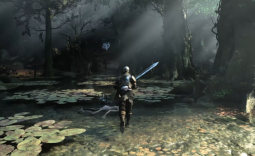


Project Genie, from Google, is a new experimental research prototype available to Google AI Ultra subscribers in the U.S. Although it's only a couple of days old, Project Genie has been making waves across social media because it leverages AI to create fully interactive worlds and environments with realistic physics that you can freely explore.
Project Genie combines Google's general-purpose world model, Genie 3, with Nano Banana Pro and Gemini, allowing users to sketch and shape worlds before jumping in to explore them. And with that, many consider it a significant milestone for AI and a step toward generating video games that you can play in real time from a simple text prompt.
At a glance, it's groundbreaking and feels like a glimpse of a future of AI-generated games, but the resolution is limited to 720p, the frame rate is 24 FPS, and the input latency is anything but responsive or smooth. Plus, you've only got 60 seconds. That said, after Google announced Project Genie on Jan 29, 2026, its impact reached the stock market, causing several notable game-related stocks for companies creating engines and handcrafted open worlds to crash.
The list includes Rockstar and Grand Theft Auto developer Take-Two Interactive, Roblox, CD Projekt Red, Nintendo, and Unity. The latter saw the largest drop, with Unity's share price falling by almost 20% in response to Project Genie.
The reason for these stock prices dropping after the announcement can be chalked up to two things. The fact that Google's new AI tool can generate playable worlds and even games (albeit crude representations of modern-day video games) in real time, while modern AAA-style games are taking longer to develop with larger teams than ever before and increasingly inflated budgets.
Naturally, the word 'prototype' is key with Project Genie, as the creations are limited to movement and brief exploration, with the model having trouble remembering what goes where and failing when it comes to adding game mechanics like objectives. Basically, you're free to explore, and on that note, the detail, physics, and ability of Genie to recreate everything from an underwater scene to a snowy mountain top to even a short snippet that looks a lot like The Legend of Zelda: Breath of the Wild is impressive.
As a tool for game developers, there's no doubt that it would be beneficial for prototyping and visualizing concepts and art in the earlier stages of a game's development, but as it stands, it's still a long way off from being able to create something like Cyberpunk 2077 or Grand Theft Auto 6.