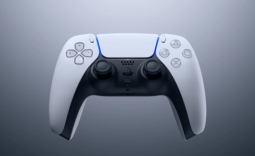
A new Sony patent (PDF) spotted by Insider Gaming shows the company is working on a PlayStation controller without traditional buttons. The design, which could be a game-changer, includes various touch, optical, heat, and pressure sensors. The best way to describe it is like a blank canvas, allowing users to customize and configure a layout that best suits their playstyle or the game they're playing.

As part of Sony's patent, the document notes that a major drawback of existing controllers with physical buttons, sticks, and triggers is their fixed layout and configuration. Different players have different needs, and a single controller design might be too big, too small, or simply uncomfortable for some to use.
This new controller, PlayStation design from Sony, is a bold departure even from the impressive DualSense controller for the PlayStation 5, as it allows users to configure not only where buttons, directional pads, and even virtual analog sticks are placed, but also the number of buttons and how they respond to input.
- Read more: Sony's PS6 controller could feature a touchscreen display and fully modular inputs, according to a new patent
- Read more: The PS6 controller could eliminate stick drift by using magnetic joysticks
- Read more: Turtle Beach's Victrix Pro BFG Reloaded aims to be the ultimate modular pro-grade controller
In a way, it's reminiscent of how traditional controller games are played on smartphones and tablets, using virtual touch controls, except that Sony's design includes optical sensors to track finger and thumb movement even when the controller isn't touching the surface. It's a fascinating design to be sure, and it could be a bold move to pair a controller like this with the PlayStation 6; however, assuming it's going to be a lot pricier to manufacture something like this, it might end up being a pro-like DualSense Edge version of the PS6's main traditional controller.
That said, even though the patent highlights the limitations of today's controllers, something like this would need to include some form of haptic feedback, as one of the big criticisms of touch-based controls is the lack of the direct feedback you get from standard buttons, pads, and sticks.