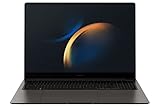
Samsung's Galaxy Book6 Pro is going to have a hefty price hike applied to the laptop, with a 25% increase on its predecessor - at least based on the South Korean market.

Although that won't be much of a surprise to anyone who follows the tech world, given that the RAM price crisis - and also costlier storage - is having a considerable impact on laptops and PCs in general.
VideoCardz spotted that Samsung's imminent laptop, which is built around Intel's new Panther Lake silicon, now has a launch web page for South Korea featuring a countdown timer, which also gives pricing details ahead of the on-sale date of January 27.
The Galaxy Book6 Pro (16-inch) weighs in at 3,510,000 Won which is equivalent to almost $2,400 in the US. If we look at the launch price of the Galaxy Book5 Pro, that was 2,808,000 Won for the higher-end model, so the new laptop works out to be around 25% or so pricier.
That may not translate in exactly the same way when it comes to US pricing - or whatever region you may be in - but it represents a pretty nasty hike. Although as noted, it's hardly an unexpected development - although forecasts that we've been hearing of possible laptop price hikes have been somewhat less severe than this.
The trouble is that the RAM crisis is going to hit higher-end laptops harder, especially as AI notebooks load up on the system memory. As we see with the Galaxy Book6 Pro here, it packs 32GB of LPDDR5X RAM across every configuration, which is going to cost quite a chunk of cash - and that situation will only worsen from here on out.
The cutting-edge Panther Lake CPU won't come cheap, either, but should more than pull its weight, as these next-gen mobile CPUs from Intel are very promising indeed (particularly with the strides taken on the efficiency front, and with the integrated GPU compared to Lunar Lake).