












Valve says it is working closely with developers to get anti-cheat solutions on the Steam Machine, but ultimately it will be up to the individual third-party teams to make it happen.

The lack of anti-cheat support is one of the biggest disadvantages of the Steam Machine. Not being able to play big online games like Call of Duty or Battlefield 6 on the Steam Machine will inhibit its mass-market appeal and impact sales potential. Valve is hopeful that developers and publishers will opt to build their anti-cheat systems on SteamOS, but there's no guarantee. That's not stopping Valve from trying to accelerate the process from the backend, though.
In a recent interview with SkillUp, Valve engineer Pierre-Loup Griffais gives an update on the current status of how anti-cheat will work on Steam Machine.
Q. Have you guys done any re-thinking on that approach now that it's going to be a box that's plugged into a TV in somebody's living room accessing some of these games online?
Pierre:
It's been definitely something we think about and there is more reasons to think about it in that environment you're pointing out. There's more reasons that someone would want to play an online game that requires anti-cheat if they have a machine like that compared to something like a Steam Deck.
Definitely it's something that we've been working on. We've enabled all the TPM APIs that game developers would need to build their anti-cheat systems, we've been working with a bunch of developers--the players in the field that you might expect that are doing a lot of advanced anti-cheat stuff on the client side.
We're trying to make sure that we're working together towards something that can be supported. But at the end of the day, I think supporting something like anti-cheat is kind of a constant effort. You have the system, the infrastructure, you're always rolling out updates--there's a lot of active things that you're doing. I think some of that work by nature, because it's so close to the platform, will have to be SteamOS specific.
So I think it'll be something that some game developers or publishers will have to decide at their own rhythm if they want to develop for SteamOS or not. But we've been trying to help in any way we can along the way.
There's some things that have been on our plate for sure, that we've been working on in the background that will make that easier on their side as well.

Elsewhere in the interview, Pierre indicated that developers were more keen to optimize their games for Valve's hardware as the user base continued to grow, including Steam Deck Verified support and other features.
Perhaps anti-cheat could become one such investment that developers make for their games.
For the work that game developers have been putting into games to make them run better on Steam Deck, Steam Machine, and Frame going forward, we're excited that the type of work that we're seeing being done is actually not porting work, but work that just makes the games better on every platform.
Things like adding different options for control schemes, adding more scalability options for lower-performance machines, improving UI density so it's more legible on small screens or screens that are far away. All of this work is happening right now, and it's getting more games to the Deck Verified finish line.
But all of this stuff will also apply to the Steam Machine and Steam Frame as well, and we're seeing the ramifications of that meaning that the whole Steam catalog is more accessible on any PC and not just our products. We're really excited about that.


 Proton and Linux are 'vectors for cheat developers,' Rust dev Alistair McFarlane says
 Valve's Steam Machine can't run some of the most popular multiplayer games
 Battlefield 6 skips Steam Deck, but will run on other handhelds
 EA exposes staggering Battlefield 6 cheating attempts during beta weekend
 Valve open to a Steam Machine Pro, but mid spec takes focus for now
 Giveaway: 12 Winners Will Score MONTECH NX400 and NX600 CPU Coolers
 Assassin's Creed Odyssey becomes the highest-rated entry in the franchise, thanks to Nolan's 'The Odyssey'
 PlayStation gamers' planned week-long 'PS Blackout' begins today
 Nintendo Switch 2 will rise to £419.99 in the UK, starting September 1
 One retailer says 91% of attempts to buy DDR5 memory are coming from bots
 Jensen Huang signed NVIDIA RTX Pro 6000 graphics card sells for $57,450 at auction
 GTA 6 leaks have reportedly led to a morale drop at Rockstar, with Netflix frustrated as well
 The Blood of Dawnwalker won't hit 60 FPS on any console, PS5 Pro tops out at 40 FPS
 AMD claws back ground against Intel in the CPU market, climbs to 35% share in desktop CPUs
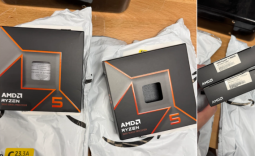 Redditor receives not one but TWO empty boxes of Ryzen 5 9600X from Amazon
 Xbox Series X25 Limited Edition Console is priced at $900, arrives November 2026
 Cooler Master MasterFan A120 Fan Review
 GIGABYTE MO27Q2A Gaming Monitor Review: 1440p, 280Hz, and QD-OLED is a winning combination
 Cooler Master V8 ACE 3DHP BLACK CPU Cooler Review
 ASUS ROG Strix XG129C Review: A $199 Gaming Monitor You Don't Play Games On
 Cooler Master HAF II 500 Mid-Tower Chassis Review
 Corsair HS35 v3 Wireless Gaming Headset Review - An Affordable Winner
 D-Link F518 5G Wi‑Fi 6 AX1800 Mobile Hotspot Review: All-Day Mobile Hotspot
 Bose Lifestyle Ultra Speaker Review - Impressively Detailed Room-Filling Sound
 MSI Z890 Gaming Plus WIFI6E Review - Z890 for under $200
 Mortal Kombat (1995) 4K Ultra HD Blu-ray Review
 Using Multiple Monitors? Change these Windows settings for a Better Experience
 Windows Sandbox is The Windows Security Feature Most People Never Use
 I ditched the Windows 11 context menu for this open-source tool, and here's why
 Windows 11 may be encrypting your drive already, and I checked where my recovery key went
 GIGABYTE's 40 Days of INFINITY celebrates 40 Years of Innovation with stunning GeForce RTX graphics cards and rewards
 I swapped File Explorer for this free file manager and finally got the layout I wanted
 How to tell if someone has been using your Windows PC without your permission
 6 Task Manager tips for troubleshooting Windows performance problems
 ASUS ROG's 20th Anniversary Line-up of Premium PC Gaming Gear has Arrived - Here's Everything You Need to Know
 Six File Explorer tips every Windows user should know