












The Steam Machine was mostly inspired by gamers who hooked up their Steam Decks to TV sets, showing an interesting hardware innovation crossover.

While Nintendo created consoles first, handhelds, second, and then finally a unified handheld-console, Valve's own hardware journey has been a bit different. Valve tried Steam Machines in 2015, which failed due to lack of content. Then Valve pushed the Steam Deck, leading to major learnings, and now 10 years later after their first introduction, the Steam Machine is back in the limelight.
This time around, Valve has taken everything it's learned from the Steam Deck, most notably the significant SteamOS advancements and Deck Verified software spec. The current Steam Machine was ultimately informed by a specific part of the Steam Deck userbase--those that ended up using their Decks as makeshift PC consoles.
In a recent interview with Skill Up, Valve software engineer Pierre-Loup Griffais and designer Lawrence Yang describe the iterative process between the Steam Deck and the Steam Machine, and how both devices are inextricably linked.
Below we have a quick transcript of what was said:
Valve software engineer Pierre-Loup Griffais
As you can imagine, the idea wasn't really groundbreaking. Everyone understood it was something that we could do, even before the Steam Deck. I think after shipping Deck, and seeing a year or two go by and watching all the catalog become closer to Deck Verified and all these tweaks like having default graphical settings--I think that seeing all these great experiences that people were having with it really proved to us that we should be able to pull this off.
Valve designer Lawrence Yang
We shipped the Steam Deck dock around the same time. We saw basically 20% of people who bought a Steam Deck also have a dock, and that doesn't even include the people who got a third-party dock. So there are a lot of people who are actually playing Steam Decks docked to a TV.
This is what actually led to the Steam Controller, because it's like 'oh this kind of sucks, I want to play my Steam games but I don't have all the inputs that I'm used to with my Steam Deck.' So that kind of led to Steam Controller, and then it became 'oh, I'm playing all my games in my living room, wouldn't it be cool if this had a little more power to it.
Pierre-Loup Griffais
Working back from an existing audience of users that are using the thing, the experience, in the way that we're proposing to improve, they are giving us immediate feedback on what works and what doesn't work.
That's really our preferred way of going about it. We're not trying to build something because we think it's a good idea.
We want to make sure that users are into it. For us, having Deck users that were docked that were telling us things about the level of performance they're getting, but also having to leave their controller behind when they're docking the Deck and having to use a third-party controller...all of that really gave us a crisp direction on what we want from that experience.


 Valve reveals new Steam Machine console, 4K 60FPS gaming with FSR, SteamOS, and quick resume
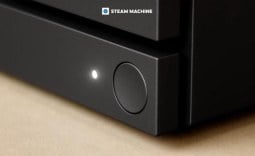 Valve engineers claim release cadence for future Steam Machine versions will be shorter than the Steam Deck
 Valve unveils reservation system for the new Steam controller, here's when you can buy it
 Valve hikes Steam Deck price by up to $300 as chip shortages squeeze games hardware market
 Valve's Steam Controller launches May 4, but says 'we don't have exact timeline details' on Steam Machine
 Giveaway: 12 Winners Will Score MONTECH NX400 and NX600 CPU Coolers
 GTA 6 leaks have reportedly led to a morale drop at Rockstar, with Netflix frustrated as well
 The Blood of Dawnwalker won't hit 60 FPS on any console, PS5 Pro tops out at 40 FPS
 AMD claws back ground against Intel in the CPU market, climbs to 35% share in desktop CPUs
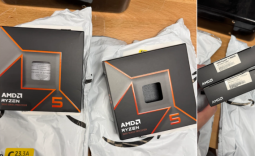 Redditor receives not one but TWO empty boxes of Ryzen 5 9600X from Amazon
 Xbox Series X25 Limited Edition Console is priced at $900, arrives November 2026
 Dave Bautista officially cast as Kratos in Amazon's 'God of War' TV Series, replaces Ryan Hurst
 Take-Two begins the hunt for GTA 6 leaker CyberLeek, subpoenas Microsoft and Discord
 PlayStation 6 handheld not expected to stay under $600, warns leaker
 AMD confirms the Radeon RX 9050 4GB will have a tiny 64-bit bus and just 16MB Infinity Cache
 Intel 'Nova-Lake-S' 28-core CPU with bLLC reportedly draws 296W at PL2
 Cooler Master MasterFan A120 Fan Review
 GIGABYTE MO27Q2A Gaming Monitor Review: 1440p, 280Hz, and QD-OLED is a winning combination
 Cooler Master V8 ACE 3DHP BLACK CPU Cooler Review
 ASUS ROG Strix XG129C Review: A $199 Gaming Monitor You Don't Play Games On
 Cooler Master HAF II 500 Mid-Tower Chassis Review
 Corsair HS35 v3 Wireless Gaming Headset Review - An Affordable Winner
 D-Link F518 5G Wi‑Fi 6 AX1800 Mobile Hotspot Review: All-Day Mobile Hotspot
 Bose Lifestyle Ultra Speaker Review - Impressively Detailed Room-Filling Sound
 MSI Z890 Gaming Plus WIFI6E Review - Z890 for under $200
 Mortal Kombat (1995) 4K Ultra HD Blu-ray Review
 Using Multiple Monitors? Change these Windows settings for a Better Experience
 Windows Sandbox is The Windows Security Feature Most People Never Use
 I ditched the Windows 11 context menu for this open-source tool, and here's why
 Windows 11 may be encrypting your drive already, and I checked where my recovery key went
 GIGABYTE's 40 Days of INFINITY celebrates 40 Years of Innovation with stunning GeForce RTX graphics cards and rewards
 I swapped File Explorer for this free file manager and finally got the layout I wanted
 How to tell if someone has been using your Windows PC without your permission
 6 Task Manager tips for troubleshooting Windows performance problems
 ASUS ROG's 20th Anniversary Line-up of Premium PC Gaming Gear has Arrived - Here's Everything You Need to Know
 Six File Explorer tips every Windows user should know