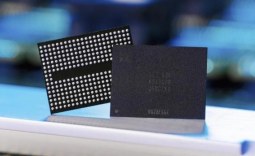
According to Phison CEO Khein-Seng Pua, the severe shortage of NAND flash storage and SSDs has led to prices for TLC 1-terabit NAND doubling in the past six months from $4.80 USD to $10.70 USD. According to Phison's latest financial earnings, the company's October 2025 revenue increased by an impressive 90% year-over-year, driven by a substantial 280% rise in PCIe SSD controller shipments.

As we previously reported, this demand is driven by the AI boom, which is causing the industry as a whole to shift away from traditional hard-disk drives (HDDs) to faster solid-state drives (SSDs). Not to mention the expansion and creation of new data centers and hyperscale systems designed with AI performance and flash memory in mind.
Phison CEO Khein-Seng Pua previously stated that this demand could lead to a major issue with the supply of flash memory and SSDs, which could persist for at least a decade. His most recent comments reinforce this idea, with Khein-Seng Pua warning that new production capacity being built to handle the increased demand won't be online and operational until late 2027.
On top of that, he also said that most manufacturers of SSDs (Phison is behind the SSD controllers found in many cutting-edge PCIe Gen4 and Gen5 SSDS on the market today, alongside eMMC and UFS products) are already "sold out" of capacity right through 2026. To make matters worse for everyday consumers looking to buy storage at some point in the near future, Phison and storage makers are prioritizing enterprise customers who are more than happy (read: have no choice) but to buy up inventory at inflated prices with higher margins.
What does this mean for retail SSD pricing? It will continue to rise, and storage will become increasingly difficult to find as we head into 2026. Not only that, but the AI boom is having the same effect on the DRAM market, which is seeing pricing and availability of memory dry up to the point where we're now reporting on credible rumors that NVIDIA is planning to postpone or even cancel the release of its unannounced GeForce RTX 50 SUPER Series graphics card refresh because there's not enough GDDR7 capacity.