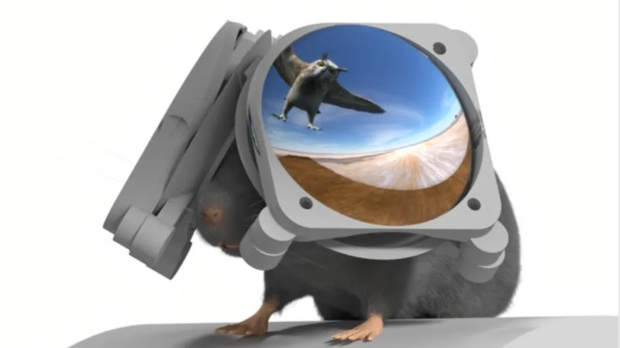





A team of researchers at Northwestern University has developed tiny VR goggles for mice, which are designed to simulate overhead threats while mapping the brain activity of the rodent.
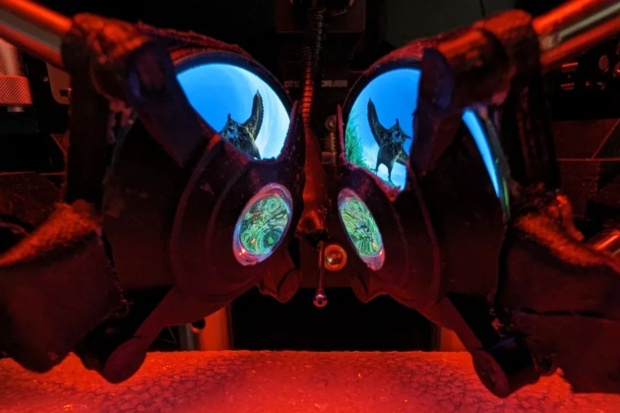
The researchers behind the project have put forward the goal of developing a virtual reality device that is capable of monitoring the brain activity of mice while they think they are under threat. The new virtual reality goggles are part of the quest to understand the brain activity of mice, both outward physical responses and inward responses through neural activity, to what is being displayed on the screen.
The results of the study were published in the journal Neuron on Friday and explain that, unlike conventional human-designed VR headsets where the entire device is worn, the team of researchers instead placed the Miniature Rodent Stereo Illumination VR (or iMRSIV) goggles right in front of the mouse while it was on a treadmill. The goggles take up the entire peripheral vision of the mouse and, according to the researchers, the mice involved in the study took to the method much more quickly than past attempts.
According to the study's results, the way mice react to predatory swooping is "not learned behavior; it's an imprinted behavior. It's wired inside the mouse's brain," per co-first author Dom Pinke.
- Read more: Elon Musk's new Grok AI busted using OpenAI ChatGPT responses
- Read more: Sony releases official PlayStation 5 controller for disabled gamers
- Read more: Scientists discover window back in time to life on Earth 3.5 billion years ago
- Read more: Governments busted spying on every smartphone through push notifications
- Read more: Scientists unveil the world's first Harry Potter invisibility 'cloak'
- Read more: Call of Duty devs triggered over God of War voice actor comments at Game Awards 2023