













Most of the CPU swap stories we cover end badly for the buyer. This one might be different, and that alone makes it worth a look.
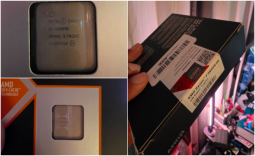
A Reddit post on the r/pcmasterrace subreddit is making the rounds, and it is from a Ukrainian buyer who ordered a tray version of the Ryzen 7 7800X3D for roughly $350 from a local retailer. What showed up instead was a chip marked as a Ryzen 7 9800X3D, a processor the same store was listing for around $475. On paper, that's a free $125 upgrade, and a newer, faster gaming chip to boot.
The catch is that nobody has actually confirmed the chip is legit yet. The buyer hadn't tested it by the time the post went up, and several people in the comments pointed out it would be smart to verify the die is genuine and hasn't been tampered with before treating this as a win. However, the buyer later added an update that it was indeed a legit Ryzen 7 9800X3D, so he really lucked out on that one.
However, there's also the paperwork problem. The purchase receipt says 7800X3D, the box says 9800X3D, and it's unclear how a warranty claim would even work if something goes wrong down the line, especially since tray CPUs like this one usually aren't meant to be sold outside OEM channels in the first place. The buyer speculated that the warehouse might have mixed up two orders, but it is unclear how that argument will hold up under the warranty.

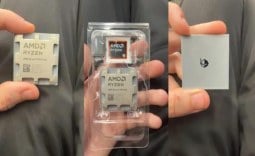
We've written about plenty of swap scams that go the other way. Amazon buyers have received an Intel Core i9-10900K sealed inside a 9800X3D box, found an FX-4100 hiding under 9800X3D packaging, and even opened a 9800X3D missing its actual chiplets entirely. Storage buyers haven't been spared either, with one case involving a Samsung 990 PRO that turned out to be a relabeled 970 EVO. Getting handed a better product than you paid for is rare enough that it stands out.

Still, it's probably worth treating any unexpected swap, good or bad, with a bit of caution. If you ever open a box and find hardware that doesn't match your order, it's worth checking the serial number against the manufacturer's site, inspecting the IHS or label for signs it's been swapped, and running a quick benchmark before assuming everything's fine.

Frequently Asked Questions
TweakBot answers common questions about this news using TweakTown's own coverage from this page and related content from our archive. Tap a question to reveal the answer, or type your own below.
How can I verify the CPU’s model and serial number against AMD’s records to confirm the 9800X3D is genuine?
What are the specific signs of physical tampering to check on the IHS or substrate that TweakTown has reported before?
If the receipt lists a 7800X3D but I received a 9800X3D, how have retailers or users handled warranty claims in similar TweakTown cases?
What steps should I take to preserve evidence (packaging, labels, receipts) if I discover a potential CPU swap, based on prior TweakTown advice?
Have a question not listed here? Ask below and TweakBot will answer it.

It's also a good idea to keep the original packaging and receipt until you've verified the part works, just in case the retailer asks questions later.



 User receives Intel Core i9-10900K in sealed AMD Ryzen 7 9800X3D box from Amazon in CPU swap scam
 Amazon Swap Scam strikes again: Buyer orders Samsung 990 PRO, receives 970 EVO SSD with fake label instead
 Amazon fake CPU warning: user orders AMD Ryzen 7 9800X3D, receives old-school FX-4100 instead
 AMD Ryzen 7 9800X3D CPU + AM5 socket burned out, both physically damaged during installation
 Redditor gets a cheap Ryzen 9 9950X3D, only to find the entire CPU missing under a 3D-printed base
 EA quickly folds after College Football 27 got review bombed on Steam for invasive microtransactions
 Another RTX 5090 power connector melted, and even ASRock TempGuard failed to save this one
 Colorful iGame Shadow II DDR5 memory with CXMT ICs hits 8600 MT/s
 ASRock says there are no plans to sell its Taichi 10th anniversary concept components
 Sony CEO sells $4.7 million worth of stock days after PlayStation announces disc phase out
 Black Flag Resynced is a win for Ubisoft, pirate remaster achieves 2 million sales in 24 hours
 Giveaway: Win an NZXT H6 RGB+ Case, Kraken Elite AIO, RGB Fans and 1200W PSU
 Ubisoft responds to Black Flag Resynced DLC critics by telling them they're 'not a requirement'
 NVIDIA is reportedly preparing the GeForce RTX 5090 SE to sit between the RTX 5080 and 5090
 id founder John Carmack comments on sad fate of studio
 Micron 6600 ION 245.76TB Enterprise SSD Review - Best in Class Programming Speeds
 MOZA MA3F EFCM Flight Control Module Review: authentic Airbus A320 autopilot panel for simulators
 Turtle Beach Stealth Pro II Wireless Gaming Headset Review - Premium Sound, Fantastic Features
 MOZA MGX1000 Instrument Panel Review: a realistic Garmin G1000 replica for immersive flight sims
 Simagic Zeus Formula Steering Wheel Review: premium build and advanced inputs for F1 racing
 GIGABYTE X870E Aero X3D Dark Wood Review - A woody goody
 The Super Mario Galaxy Movie (2026) 4K Ultra HD Blu-ray Review
 KTC H49S66 5K2K (5120x1440) 49-inch 180Hz Gaming Monitor Review
 HighPoint Rocket 1604L Gen5 x16 NVMe Software RAID AIC Review: half the price with full 59 GB/s speed
 Next Level Racing ERS3 Haptic Seat Review: immersive sim racing comfort with integrated haptics
 Don't sell your Windows laptop until you do these things
 6 PC cleaning mistakes to avoid for safer hardware maintenance
 Phison and Intel Take Aim at Local AI's Memory Wall with aiDAPTIV
 How to Remap Keyboard Keys in Windows using Microsoft PowerToys
 7 tips to organize your Windows files for faster, easier access
 Intel Arc G3 Extreme first impressions with MSI's Claw 8 EX AI+ - Incredible power for an extreme price
 How to fix Wi-Fi Adapter Not Working on Windows laptops: troubleshooting tips
 Hisense U7SG 4K TV: Modern Entertainment for the New Age
 6 underrated Microsoft Word features worth using to boost your productivity
 Level Up Your PC Gaming with these Fantastic ASUS Prime Day Deals on GPUs, Motherboards, and More