










South Korea has announced one of the largest semiconductor investments in history. Samsung Electronics and SK Hynix will jointly invest 800 trillion won, roughly $518 billion, to build four new memory fabrication plants in the country's southwest, with an additional 81 trillion won allocated to a high-bandwidth memory packaging hub in the Chungcheong region.
The announcement was made at a presidential briefing attended by Samsung Chairman Lee Jae-yong and SK Group Chairman Chey Tae-won. South Korean President Lee Jae-myung received a deep bow from both executives after they committed to the plan.
The scale goes beyond just the two chipmakers. South Korean technology and energy firms will invest an additional 550 trillion won in new AI data centers over the next decade. Samsung separately published plans to invest 2,100 trillion won through 2040, while SK Group announced 1,400 trillion won earmarked over the same period. Combined, the two memory giants have pledged 3,200 trillion won in total investment, covering both the new southwest cluster and previously announced projects.

The government's goal is to double South Korea's domestic memory production capacity within five years. To support that, it has pledged to fast-track construction approvals and dramatically shorten the standard seven to twelve year build timelines. SK Hynix's Yongin semiconductor cluster, for instance, has had its fourth fab completion date moved from 2045 to 2033. Samsung will proceed with simultaneous construction of its P5 and P6 fabs in Pyeongtaek.
Analysts have been quick to point out that chip plants take years to build and ramp, meaning most of the new capacity will not arrive until well into the next decade. The memory industry has a painful history of boom-and-bust cycles, with SK Hynix nearly going bankrupt in 2001 and both companies posting major losses as recently as 2023.

Frequently Asked Questions
TweakBot answers common questions about this news using TweakTown's own coverage from this page and related content from our archive. Tap a question to reveal the answer, or type your own below.
How will the new memory fabs and HBM packaging hub affect availability and pricing for consumer GPUs and high-performance PCs in the next five years?
Which South Korean regions will see the new fabs and HBM packaging hub, and how might that influence local supply-chain logistics for component makers?
What implications does the accelerated construction timeline have for semiconductor equipment demand and potential delays in sub-2nm projects by TSMC and Intel?
Given the history of boom-and-bust cycles, what risks should buyers and system builders consider when planning purchases based on expected future memory supply increases?
Have a question not listed here? Ask below and TweakBot will answer it.


The expansion will also tighten competition for advanced semiconductor manufacturing equipment, potentially disrupting TSMC's and Intel's pace of scaling sub-2nm production as all parties race to secure the same critical hardware.



 South Korea is investing $520 billion in Samsung and SK Hynix to build more HBM fabs for AI
 SK hynix expands investment plan for new semiconductor cluster in South Korea to $410 billion
 SK Group leading rivals in developing glass substrates for AI chip packaging, made in the USA
 AMD to adopt glass substrate semiconductor tech with its next-gen chips by 2025-2026
 Sound the alarm, DRAM shortage and memory crisis could last until 2030
 Subnautica 2 devs earn $250 million bonus, Krafton agrees to pay contract fee
 Intel brings back 13th and 14th gen 'Raptor Lake' CPUs for China as the focus shifts to DDR4
 Google expands its AI image generation lineup with Nano Banana 2 Lite and Gemini Omni Flash for video
 Will there ever be a Baldur's Gate 4? Hasbro looks to be finding it tricky to secure a dev up to the task of following BG3
 Xbox is 'keeping' Obsidian, has no plans to sell Fallout New Vegas studio
 PlayStation's disc-less future didn't happen overnight, strategy was planned for 'some time'
 Grand Theft Auto 6 to feature community hosted servers under a 'Creator Platform'
 Bethesda puts the full Oblivion Remastered game on its Switch 2 cartridge
 Acer's 1,000Hz monitor hits Amazon, but its fastest mode comes with a catch
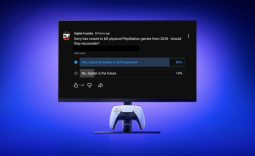 45,000 gamers urge Sony to reconsider killing physical PlayStation games
 HighPoint Rocket 1604L Gen5 x16 NVMe SoftRAID AIC Review: half the price with full 59 GB/s speed
 Next Level Racing ERS3 Haptic Seat Review: immersive sim racing comfort with integrated haptics
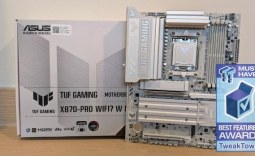 ASUS TUF Gaming X870-Pro WiFi7 W NEO Review - Tuffed up
 GIGABYTE GO27Q24G Gaming Monitor Review: Glossy OLED Gaming at 240Hz
 Lian Li B4-mATX Review: a compact mATX SFF case with excellent airflow and premium features
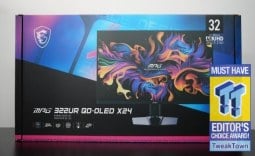 MSI MPG 322UR QD-OLED X24 Review: A Brighter, Tougher 4K 240Hz QD-OLED for $1099
 UGREEN NASync DXP4800 GT Review: powerful 4-bay NAS with AMD Ryzen and dual 10GbE ports
 Dell XPS 14 (2026) Laptop Review - Premium Quality, Impressive Performance
 Ocypus Sigma F36 BK ARGB Cooling Fan Review: high airflow and unified design in one frame
 PCCooler CPS RZ820 Display Review: a flagship-level CPU air cooler with an LCD screen
 Intel Arc G3 Extreme first impressions with MSI's Claw 8 EX AI+ - Incredible power for an extreme price
 How to fix Wi-Fi Adapter Not Working on Windows laptops: troubleshooting tips
 Hisense U7SG 4K TV: Modern Entertainment for the New Age
 6 underrated Microsoft Word features worth using to boost your productivity
 Level Up Your PC Gaming with these Fantastic ASUS Prime Day Deals on GPUs, Motherboards, and More
 GIGABYTE Wants to Kickstart Your New Gaming PC or Upgrade with These Limited-Time Deals
 7 Windows settings to change right after installation for better privacy, security, and performance
 I stopped Windows 11 notifications from interrupting me with Do Not Disturb, Focus, and a priority list
 7 ways to transfer data from Android to Windows PC quickly and easily
 I read the Windows Backup app screen carefully, and it does not back up what most people think