

An NVIDIA GeForce RTX 5090D, in GALAX HOF OC LAB form, has become the first GPU in the RTX Blackwell lineup to break the 4 GHz barrier with a GPU core frequency of 4002 MHz achieved by Team OGS. As expected, this wasn't an out-of-the-box overclock, as it required an Elmor external clock board (ECB) and LN2 cooling to hit 4 GHz.

The world record has been verified and is already live on HWBOT, beating the previous record set by overclocker Splave at 3880 MHz on a GeForce RTX 5090. The GALAX HOF OC LAB variant of the GeForce RTX 5090D is a card built for overclocking, as it's rare for a GPU to ship with dual 16-pin power connectors and an impressive 36-phase power delivery design.
When paired with the Elmor ECB, the stock 27 MHz was increased by 6.3% to 28.7 MHz, which then flows on to all GPU frequencies. The Elmor ECB board can also increase GDDR7 speeds, but this record is all about the GPU core frequency. The 4 GHz record was validated using the GPUPI v3.3 - 32B synthetic benchmark, which means the completion time of 35 seconds and 377 milliseconds is the new record to beat.

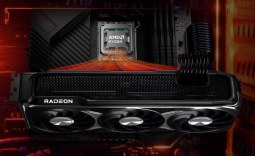
Now, it's worth noting that the 4 GHz barrier doesn't apply to Radeon cards, as the current GPU frequency record of almost 4.8 GHz was set on the mainstream Radeon RX 9060 XT earlier this year. As for Team OGS's build, the NVIDIA GeForce RTX 5090D was paired with the Intel Core i9 14900KF processor and 32GB of Corsair Vengeance DDR5 memory, with Thermal Grizzly Kryonaut Extreme and the Bitspower Strata LN2 GPU Pot for cooling.

Story Q&A
Powered by TweakBot
From TweakTown's coverage of this story.
Does the Elmor external clock board require any BIOS or firmware changes on the RTX 5090D to raise the stock 27 MHz base to 28.7 MHz?
Are there any specific motherboard or CPU compatibility requirements (like VRM quality or PCIe lane stability) noted in the article for achieving the GPUPI verification run at 4 GHz?
Want something else? Ask TweakBot.

It'll be interesting to see how long this record will hold and whether it opens the door to more 4+ GHz records for the GeForce RTX 50 Series.