













Intel's Foundry business has been slowly ramping up over the past year or so. At long last, Intel has started shipping its Panther Lake and Wildcat Lake chips built on the in-house 18A production node. Intel's manufacturing operations got off to a slow, rocky start, but the latest earnings show that the Foundry brought in $5.1 billion in revenue in Q1 2026.
It looks like the Foundry is up and running like a well-oiled machine, since Intel CEO Lip-Bu Tan has confirmed that the company is on track to meet its goals. Speaking at the J.P. Morgan TMT Conference in Boston, Lip-Bu Tan stated that Intel now forecasts the 14A node to enter risk production in 2028, with high-volume manufacturing following in 2029. The company plans to offer the 14A node to external customers in addition to its own in-house usage.

Intel has also recently secured Tesla as a major external customer for its next-gen 14A node, a huge deal for its manufacturing ambitions. CEO Lip-Bu Tan previously expressed frustration with the challenges the Foundry faced, stating that securing an external customer was almost "existential" to the company's continued existence in the manufacturing business. With 14A now on track for risk production in 2028, the tides seem to have turned in Intel's favor.
The CEO also noted that this timeline is similar to TSMC's, as its A14 node is expected to enter risk production around the same time. Therefore, the two manufacturing giants are expected to be direct competitors, which will be interesting to see after Intel's decades of loyalty to TSMC. Currently, the 14A node is at the 0.5 PDK stage, but it needs to reach PDK 0.9 before customers will submit their final designs.

Beyond 14A, the company is on track to meet the timelines of 10A and 7A nodes, per CEO Lip-Bu Tan. However, these nodes are still in very early stages of conception, and are not expected to enter pre-production until 14A has attained trial status. That said, these future production processes have been formally added to the roadmap so Intel can continue to evolve and advance its manufacturing business.
The CEO also claimed that Intel was revealing its long-term manufacturing roadmap so early because many customers rely on these roadmaps to make critical business decisions years in advance. Intel is trying to rival TSMC by mirroring its long-term approach, hoping to attract customers and build a lasting relationship with them. It may even work, considering we have massive clients like Apple considering Intel over TSMC for their next-generation chips.


 Intel is now trying to keep up with AI demand by using scrap dies
 Intel posts very strong Q1 2026 earnings as the AI boom starts to focus on CPUs
 Intel's new 18A-P node will reportedly provide 9% higher performance and 18% better efficiency than 18A
 Intel's 18A-P process node is now in risk production, will power next-gen Xeon 'Diamond Rapids' processors
 Intel's new Panther Lake CPUs powered by new in-house Intel 18A process node on American soil
 Xbox Game Pass subscribers reportedly at 30 million, down from a high of 34-35 million
 Microsoft's job cuts go beyond Xbox, with 2.1% of its global workforce affected
 Intel's next-gen Nova Lake-S CPUs to feature Xe3 graphics, similar to recent Panther Lake mobile SoCs
 Ghost in the Shell and Cyberpunk fans will definitely want to check out this new keyboard from IQUNIX
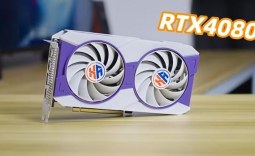 Rare GeForce RTX 4080M tested, a Frankenstein 100W mobile GPU in desktop form
 Xbox wants to reach 'more than a billion people each day,' which is ridiculous
 Indie developer asks Valve to change its 2-hour refund policy as 55,000 players refunded his game after finishing it
 Samsung's 2026 profit to surpass its entire 40-year cumulative earnings
 First 'agentic ransomware' run entirely by a large language model discovered
 PlayStation disc phaseout petition hits 120,000 signatures in just four days
 Simagic Zeus Formula Steering Wheel Review: premium build and advanced inputs for F1 racing
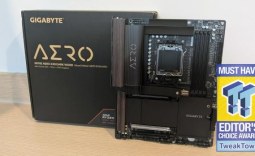 GIGABYTE X870E Aero X3D Dark Wood Review - A woody goody
 The Super Mario Galaxy Movie (2026) 4K Ultra HD Blu-ray Review
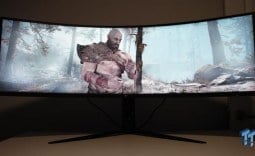 KTC H49S66 5K2K (5120x1440) 49-inch 180Hz Gaming Monitor Review
 HighPoint Rocket 1604L Gen5 x16 NVMe Software RAID AIC Review: half the price with full 59 GB/s speed
 Next Level Racing ERS3 Haptic Seat Review: immersive sim racing comfort with integrated haptics
 ASUS TUF Gaming X870-Pro WiFi7 W NEO Review - Tuffed up
 GIGABYTE GO27Q24G Gaming Monitor Review: Glossy OLED Gaming at 240Hz
 Lian Li B4-mATX Review: a compact mATX SFF case with excellent airflow and premium features
 MSI MPG 322UR QD-OLED X24 Review: A Brighter, Tougher 4K 240Hz QD-OLED for $1099
 How to Remap Keyboard Keys in Windows using Microsoft PowerToys
 7 tips to organize your Windows files for faster, easier access
 Intel Arc G3 Extreme first impressions with MSI's Claw 8 EX AI+ - Incredible power for an extreme price
 How to fix Wi-Fi Adapter Not Working on Windows laptops: troubleshooting tips
 Hisense U7SG 4K TV: Modern Entertainment for the New Age
 6 underrated Microsoft Word features worth using to boost your productivity
 Level Up Your PC Gaming with these Fantastic ASUS Prime Day Deals on GPUs, Motherboards, and More
 GIGABYTE Wants to Kickstart Your New Gaming PC or Upgrade with These Limited-Time Deals
 7 Windows settings to change right after installation for better privacy, security, and performance
 I stopped Windows 11 notifications from interrupting me with Do Not Disturb, Focus, and a priority list