AMD unveiled its in-house AI development platform, the "Halo Box," at AI Dev Day yesterday, rivaling NVIDIA's DGX Spark. AMD initially presented the platform at CES and plans to release it in June. The system features the powerful Ryzen AI MAX+ 395 chip and an extensive 128GB of soldered RAM.
While the Strix Halo family debuted at CES 2025 to much fanfare, the following year, third-party systems saw higher prices due to rising memory costs. Likewise, NVIDIA launched its first-party DGX Spark mini-PC to deploy local AI models. In response, AMD introduced the Halo Box reference system at CES this year.

The first-party nature of the Halo Box should offer seamless operation on both Windows and Linux, preloaded models, quality control, and possibly subsidized pricing. The Halo Box can be portable enough to be carried by hand, as evidenced by the executives holding it on stage with little effort. It features an LED strip that can be controlled via software (even on Linux, according to some early patches).
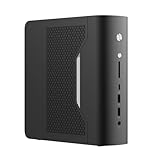
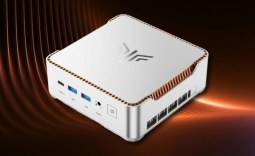
In terms of design, we're looking at a plain, enterprise-grade aesthetic that's typical of Industrial/SFF computers. The only factors breaking the office PC look are the milled AMD logo at the top and the front, and the LED strip. The surface features a repeating perforated diamond pattern that should serve as the primary intake.
Cooling is handled by a dual-blower system providing targeted airflow to the processor and onboard memory. The thermal assembly includes a direct-contact heatpipe and a specialized baseplate. The board design differs from standard AXB35 boards used by other manufacturers. Based on the available images, it appears to have 1x HDMI port, 2-3x USB Type-C ports, and 1x USB Type-A port.

AMD originally slated these devices for debut sometime in Q2, and with June at the tail end of this window, the Halo Box is technically arriving on time. The marketing claims the Halo Box can run 200B models, but that's with quantization, and you shouldn't expect blazing-fast speeds as you'd see with massive cloud-scale providers.
Pricing hasn't been mentioned, but given the current state of the DRAM industry, it's hard to paint a positive picture. As of writing, Strix Halo mini-PCs with the same specifications are listed at around $2,500-$3,000. For reference, NVIDIA's DGX Spark is 50% more expensive, sitting at almost $4,700. This positions AMD's system as a lower-cost alternative, but NVIDIA still leads in software and ecosystem support.