After nearly two decades of mouse-and-keyboard dominance, League of Legends has quietly taken a major step toward controller play, and it seems to be part of Riot Games' push to make the iconic multiplayer online battle arena more accessible to gamers.
As part of Riot's recent WASD movement update, it has announced native controller support for the first time in League of Legends history. The feature wasn't formally announced as a headline addition; it was buried within a broader developer update tied to WASD controls entering Ranked play.
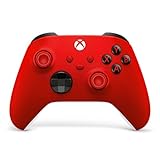
The implementation works by linking controller input directly to the new WASD system. Once enabled, players can use a controller without third-party software, with default mappings assigning abilities like Q, W, E, and R to triggers and bumpers, while movement and cursor control are handled through the joysticks. This marks a significant shift for League of Legends, which has relied on point-and-click controls since its launch in October, 2009.
- LT is mapped to Q
- LB is mapped to W
- RB is mapped to E
- RT is mapped to R
- X is mapped to D (Summoner Spell)
- Y is mapped to F (Summoner Spell)
- A is mapped to Auto Attack
- D-Pad Down is mapped to Trinket
- The left analog stick controls mouse cursor movement
However, Riot has been clear about the feature's intent. Controller support is being positioned as an accessibility-focused addition, rather than a fully supported input method for competitive play. The developer has explicitly stated that broader controller support is not currently planned, with the goal instead of helping players who rely on alternative input devices participate more easily.
Even so, the implications following its official addition to the game are hard to ignore. With WASD controls now in Ranked and native controller support functioning under the hood, it's clear that Riot is moving in a direction of controller support widening, or perhaps even League of Legends fully releasing on consoles sometime in the future.