












Samsung will debut its next-gen HBM4 memory at NVIDIA GTC 2026 in March, reportedly passing all of NVIDIA's strict verification stages, and will arrive on NVIDIA's next-gen Vera Rubin AI platform.

Samsung has spent the last couple of years struggling with its HBM memory division, leaving its South Korean rival -- SK hynix -- to enjoy providing NVIDIA with all of its HBM3 and HBM3E needs. Samsung completely overhauled its HBM and semiconductor division in the last few years, with the fruits of that labor now showing.
NVIDIA will reportedly use its first allotments of HBM4 memory for Vera Rubin from Samsung, as Samsung's new HBM4 memory is the best of the HBM4 offerings from its rivals in SK hynix and US-based Micron. Samsung's new HBM4 memory is rated for above 11Gbps, much higher than JEDEC standards for HBM4, and was pushed and requested at those higher pin speeds from NVIDIA direct.
Samsung and NVIDIA are working together on HBM4, with Samsung explaining on its press release that with incredibly high bandwidth and energy efficiency, Samsung's advanced HBM solutions are expected to help accelerate the development of future AI applications, and form a critical foundation for manufacturing infrastructure driven by these technologies.
- Read more: NVIDIA + Samsung working on new semiconductor AI factory, with 50,000+ GPUs
- Read more: Samsung readying mass production of next-gen HBM4 memory in 2026
- Read more: NVIDIA asked for 9Gbps HBM4, then 10-11Gbps: Samsung HBM4 ready at 10Gbps+
- Read more: Samsung's new 1c DRAM yields improve: new chairman admits prior mistakes, ready for HBM4
The company is using its 6th-generation 10nm-class DRAM and a 4nm logic base die, with Samsung's upcoming HBM4 processing speeds reaching up to 11Gbps, far exceeding the JEDEC standard for HBM4 at 8Gbps. Samsung will also continue to deliver next-generation memory solutions, including HBM, GDDR, and SOCAMM memory, as well as foundry services, driving innovation and scalability across the global AI value chain.



 Samsung lands deal with NVIDIA for next-gen HBM4 memory: collaboration on next-gen HBM
 Samsung officially ships HBM4 ready for NVIDIA's next-gen Rubin AI chips
 Samsung HBM4 memory sent to NVIDIA 'passes' required tests, mass production is now imminent
 NVIDIA is now using SK hynix GDDR7 memory chips on its GeForce RTX 50 series GPUs
 Samsung's next-gen HBM4 to enter mass production by the end of 2025, ready for next-gen AI GPUs
 Microsoft is using the TPM chip required for Windows 11 to crack down on KMS activation piracy
 PS5 Emulation makes big progress again as it reaches GTA 5 loading screen
 Modders turn the PS Vita into a modern gaming handheld through Xbox Cloud Gaming
 Got a cat? Here's a cat-themed PC case with a power button shaped like a paw
 Xbox testing smart client to boost game download speeds
 NVIDIA CEO Jensen Huang joins X with post backing open-weight AI
 Roku raised prices by up to 60%, citing a memory shortage, despite the CEO calling it great for business just two months ago
 Amazon Gaming boss says next-gen consoles crossing $1,000 is good news
 SignalRGB is giving away a Steam Machine clone covered in 36 RAM sticks
 EA prices FC27 edition at $150, more than twice the price of base game, shortly after CFB 27 microtransaction controversy
 Thrustmaster T.Flight HOTAS 5 MSFS Edition Review
 SteelSeries Arctis Nova Pro Omni Wireless Headset Review - One Headset to Rule Them All
 SteelSeries Arctis Nova 7 Wireless Gen 2 Headset Review - New and Improved, But Is It Enough?
 AMD Ryzen 7 7700X3D Review - Days of Future Past
 Samsung 990 2TB SSD Review - Ninth Gen QLC at PCIe Gen4 Speeds
 ASUS ExpertBook Ultra (Panther Lake) 14" Business Laptop Review
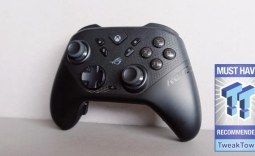 ASUS ROG Raikiri II Xbox Wireless Controller Review - Ready to Take Control
 MOZA FMP18 Panel Bundle Review: authentic F/A-18 Hornet cockpit controls for flight sims
 Micron 6600 ION 245.76TB Enterprise SSD Review - Best in Class Programming Speeds
 MOZA MA3F EFCM Flight Control Module Review: authentic Airbus A320 autopilot panel for simulators
 Printer Not Working in Windows? How to fix detection, print queues and drivers
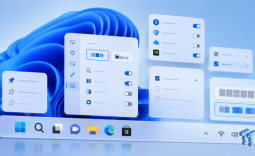 The Ultimate Guide to Personalizing Your Windows 11 Taskbar
 How to Turn Your Windows Laptop Into a Second Monitor with Miracast and Wireless Display in Minutes
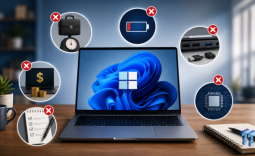 6 Mistakes to Avoid When Buying a Windows Laptop
 I capped Windows Update's bandwidth with Delivery Optimization, and my downloads stopped choking
 I use this decade-old free tool that finds files faster than Windows Search does
 I install and update most of my apps with this Windows command now, and I stopped downloading sketchy installers
 Hisense U6SF 65-inch MiniLED TV: High Performance Meets Leisurely Convenience
 I stopped digging through Windows menus after I set up this one folder
 Don't sell your Windows laptop until you do these things