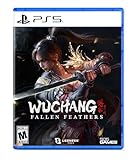


Wuchang: Fallen Feathers continues to court controversy over its performance levels, with the latest twist being accusations of a sneaky fix for poor frame rates.
If you missed the fuss around Wuchang: Fallen Feathers when it launched, the PC version didn't go down well at all in terms of FPS, and that was plainly clear from the Steam reviews. Complaints about sluggish performance were plentiful, as we highlighted at the time.
Popular Now: 4GB and 6GB GDDR7 chips could enable 192GB workstation GPUs by 2027-28Since then, a patch has improved matters, but a YouTuber, Daniel Owen, has been delving into the source of these faster frame rates and his contention is that the gains aren't what they seem at first (as noticed by Tom's Hardware).
Patching hasn't boosted performance through optimization, the YouTuber's theory runs, but rather by employing upscaling - and hiding that usage. In other words, when you're supposedly running at native resolution, you actually aren't - upscaling is being sneaked in (and so the native resolution is slightly notched down, which would, obviously enough, improve performance).
At least this is the case in the scenario that was tested by Owen, where an RTX 3060 GPU was used with the launch version of Wuchang: Fallen Feathers, compared to the game with patch 1.3 applied (at a resolution of 1440p, ultra details).
His results showed that there was a big jump at native resolution - 100% resolution scaling, as it's called - with the patched game versus the launch incarnation, but only a minor bump with any upscaling applied.
Essentially, this suggests that upscaling is being applied across the board with v1.3, and that 'native' or 100% scaling is actually somewhat upscaled. Especially because the large jump in frame rate at 100% is way beyond what you might expect with patch-to-patch fine tuning (the gains elsewhere, in the order of a couple of percent, are more in line with those expectations).
Lies, damned lies, and upscaling?
As the YouTuber puts it in the title of his video clip: 'Why optimize when you can just lie?' (meaning lying about the true scaling for native resolution).
In all honesty, the difference between the original native rendering and the new 100% version (supposedly carrying the stealthy upscaling) doesn't look that much to my eyes. Check it out for yourself in the above video.
However, there do appear to be nuances, and even if there isn't much difference to the visuals, that's not really the point.
Assuming the developer has indeed applied this tactic, it should be clearly labelled. Instead, as Owen points out, we get a kind of cryptic reference in the patch notes that says "supersampling resolution limits have been adjusted on select GPU models to prevent unintended performance degradation".
That could be a description of Owen's findings, or you could certainly read it that way, but really, it's far from clear what it means. Furthermore, it does suggest that maybe this has only been implemented for certain GPUs, and perhaps higher-end graphics cards may not have seen the 100% resolution scaling setting adjusted at all.
At any rate, the ill-feeling around the performance levels of Wuchang: Fallen Feathers continues, and it'll be interesting to see if the developer addresses the accusations that have been levelled here (and elsewhere for that matter).