Newsletter IconFacebook IconX IconThreads IconInstagram IconYouTube IconPinterest Icon
Giveaway: GAMDIAS ATLAS P1 Case, HELIOS 750W PSU, and BOREAS Digital CPU Cooler

AMD is reportedly prepping its own version of DLSS 5 for next-gen RDNA 5 and Radeon

According to known insider and leaker, AMD is developing its own version of DLSS 5 Neural Rendering for its next-gen gaming hardware.

AMD is reportedly prepping its own version of DLSS 5 for next-gen RDNA 5 and Radeon
Facebook IconX IconReddit Icon
Comments
Senior Editor
Published
1 minute & 30 seconds read time
TL;DR: Leaker Kepler_L2 reports AMD is creating a DLSS 5-like "Neural Lighting" for RDNA 5, and it could use AI-driven real-time global illumination that blends screen-space and engine geometry data. It may be RDNA 5-exclusive due to compute cost and could appear on next-gen Radeon RX 10000 Series graphics cards alongside consoles.
Voice: Kosta Andreadis
0:00 / 2:32
Use left and right arrow keys to seek audio.

According to known leaker and insider Kepler_L2, who has previously leaked information on GPU architectures and models from both AMD and NVIDIA, Team Red is developing its own version of DLSS 5 Neural Rendering for its next-generation RDNA 5 architecture and graphics cards.

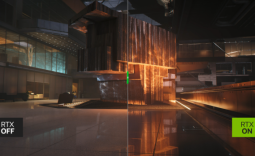
As seen in NBA 2K27, DLSS 5 can dramatically improve lighting to deliver photorealistic results, image credit: NVIDIA.

Posting on the AnandTech forums, Kepler_L2 says AMD's version will be similar to NVIDIA's DLSS 5, calling it "Neural Lighting." Since Neural Rendering covers anything shader-related that's replaced or enhanced with neural networks, AMD's solution could be more integrated into the game engine and rendering pipeline, unlike DLSS 5, which uses a general screenspace model that alters a rendered frame with input from developers and artists.

AMD may have already detailed how it could work in a recent GPUopen research article titled 'Lightweight attention-based indirect illumination.' Basically, it's AI-powered real-time global illumination (GI) that uses both screen-space information and game engine data, including geometry beyond the camera's view, to improve shadow and lighting detail.

Of course, DLSS 5 goes beyond enhancing shadow detail, as it's also designed to enhance character detail like skin and materials to achieve a more photorealistic look. Kepler_L2 notes that AMD's version might be limited to RDNA 5 because running complex neural rendering models is very expensive. This is evident in modders' attempts to run DLSS 5 on RDNA 4 GPUs like the Radeon RX 9070 XT, where frame rates plummet into the low-teens.

Frequently Asked Questions

Open a question for an answer from TweakTown's coverage of this news, or ask your own below.

Question #1

What is AMD’s “Neural Lighting” expected to do in RDNA 5 games?

Neural Lighting is expected to be AMD's AI-powered take on neural rendering for RDNA 5 games. It is described as real-time global illumination that uses screen-space information and game engine data, including geometry beyond the camera's view, to improve shadow and lighting detail.
Question #2

Will Neural Lighting require specific developer support in game engines?

It is not stated outright that Neural Lighting will require specific developer support, but the piece says it could be more integrated into the game engine and rendering pipeline. It also says AMD's approach would use game engine data, including geometry beyond the camera's view, to improve lighting and shadow detail.
Question #3

Is AMD’s DLSS 5-style feature likely to work on RDNA 4 GPUs like the Radeon RX 9070 XT?

It does not sound likely to be officially supported on RDNA 4. The story says AMD's version is most likely limited to RDNA 5 because running complex neural rendering models is very expensive. A separate story titled DLSS 5 now works on RDNA 4 GPUs through a mod, RX 9070 XT runs DLSS 5 in Cyberpunk 2077 at abysmal frame rates says it can run on an RX 9070 XT through a mod, but performance drops below 20 FPS.
Question #4

How does AMD’s approach differ from NVIDIA’s DLSS 5 in rendering pipeline integration?

AMD's reported approach is described as more integrated into the game engine and rendering pipeline, using neural rendering that can replace or enhance shader-related work. NVIDIA's DLSS 5 is described here as a more general screenspace model that modifies a rendered frame with input from developers and artists.

Have a question that isn't listed here? Ask below, and TweakBot will answer it.

As RDNA 5 will power the next-gen Radeon RX 10000 Series as well as the PlayStation 6 and Xbox's Project Helix hardware, AMD's version of DLSS 5 will most likely make its way over into the console space in addition to PC, especially when both Sony and Microsoft have been touting advanced Neural Rendering capabilities as a key feature of their next-gen hardware.

Photo of the GIGABYTE Radeon RX 9070 XT Gaming OC Graphics Card

Best Deals: GIGABYTE Radeon RX 9070 XT Gaming OC Graphics Card

Prices last scanned 3 hours and 54 minutes ago

* Prices may be inaccurate. As an Amazon Associate, we earn from qualifying purchases. We earn affiliate commissions from Newegg and PCCG sales.

Join Our Newsletter

Join the TweakTown Newsletter for daily tech updates delivered to your inbox.

See previous giveaways.

Comments

About the author

Senior Editor

Kosta is a veteran gaming journalist that cut his teeth on well-respected Aussie publications like PC PowerPlay and HYPER back when articles were printed on paper. A lifelong gamer since the 8-bit Nintendo era, it was the CD-ROM-powered 90s that cemented his love for all things games and technology. From point-and-click adventure games to RTS games with full-motion video cut-scenes and FPS titles referred to as Doom clones. Genres he still loves to this day. Kosta is also a musician, releasing dreamy electronic jams under the name Kbit.

Stay Updated

Follow TweakTown for breaking tech news, reviews, and daily updates.

Add TweakTown as a preferred source on GoogleFind TweakTown on Apple News
Newsletter Subscription