












The latest Linux kernel has made the Time Stamp Counter (TSC) a hard requirement for x86 processors, ending decades of compatibility code that allowed the operating system to run on hardware without reliable TSC support. The change, committed to Linux 7.2 under the title "x86/cpu: Make CONFIG_X86_TSC unconditional," removes the configuration logic that previously allowed the kernel to be built without TSC support.
Before you panic, this is not Linux's equivalent of Windows 11's TPM 2.0 requirement. The TSC has been present in x86 processors since the Intel Pentium launched in 1993. If your CPU was made within the last three decades, it almost certainly has one. The change is really about finally removing compatibility code for hardware that is unlikely to be running a modern Linux kernel anyway.
Popular Now: Redditor sends a gaming laptop with 64GB RAM for repair, comes back with 32GB RAM
The TSC itself is a 64-bit register that provides high-resolution timing and can be read far more quickly than platform alternatives such as HPET or the ACPI PM timer. Reading a TSC-based timer can take tens to hundreds of CPU cycles, while falling back to a motherboard-based timer can take roughly 0.8 to 1.0 microseconds.
Linux has historically maintained code to handle processors that lacked a reliable TSC, going all the way back to the i486 era. Linux 7.0 dropped support for Intel 486 processors, and subsequent development cycles removed additional legacy hardware that had prevented TSC from being treated as universal.


Frequently Asked Questions
TweakBot answers common questions about this news using TweakTown's own coverage from this page and related content from our archive. All answers are generated from TweakTown content and not outside sources. Tap a question to reveal the answer, or type your own below related to this content.
Which x86 CPUs are affected by Linux 7.2 making TSC support mandatory?
If my processor is from the 1990s or newer, can I expect Linux 7.2 to run without timing issues?
How does TSC-based timing compare to HPET or the ACPI PM timer in latency?
Why did the Linux kernel keep legacy timing code for processors without a reliable TSC until now?
Have a question about this content not listed here? Ask below and TweakBot will answer it.

Microsoft went down this road much earlier, using the TSC as the basis for its QueryPerformanceCounter API since Windows 8, although it still maintains fallback logic for edge cases and virtualization environments. Linux has now effectively caught up, cleaning out another piece of legacy timing code that has been hanging around for decades.


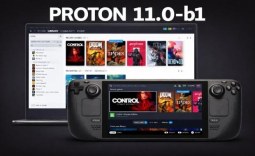 Valve's Proton 11 beta unlocks more playable games and boosts performance for Steam Deck and Linux fans
 Popular antivirus maker warns Windows 10 users to 'switch to Windows 11 immediately' (or Linux)
 Valve is working with NVIDIA to make GeForce GPUs compatible with SteamOS
 Microsoft throws Windows 11 haters a lifeline - but a year more of Windows 10 support costs $30
 Microsoft quietly extends Windows 10 security updates to 2027
 Gaming monitors are next in line for a price hike as manufacturers can no longer absorb costs
 ChatGPT can now build a timeline of everything you do on your Mac
 Redditor finds a working RTX 2080 Super in the dump, gets a huge free upgrade
 Redditor sends a gaming laptop with 64GB RAM for repair, comes back with 32GB RAM
 GPU Tweak III can now detect and shut down a PC when a 12V-2x6 graphics card goes over a certain current limit
 CPS PCCOOLER unveils all-in-one modular PC where you can replace the display and upgrade its hardware
 NVIDIA and LG are building a next-generation humanoid robot that will make its debut at CES 2027
 Intel will continue supplying Raptor Lake CPUs for 'years to come' thanks to the memory crisis
 NVIDIA's next-gen 'Feynman' GPUs to be built with TSMC's 1.6 nm A16 process
 OLED monitor shipments have doubled in a year, with ASUS as the global leader
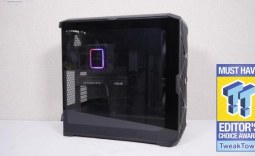 Cooler Master HAF II 500 Mid-Tower Chassis Review
 Corsair HS35 v3 Wireless Gaming Headset Review - An Affordable Winner
 D-Link F518 5G Wi‑Fi 6 AX1800 Mobile Hotspot Review: All-Day Mobile Hotspot
 Bose Lifestyle Ultra Speaker Review - Impressively Detailed Room-Filling Sound
 MSI Z890 Gaming Plus WIFI6E Review - Z890 for under $200
 Mortal Kombat (1995) 4K Ultra HD Blu-ray Review
 CPS PCCOOLER YS1200 ATX 3.1 80 PLUS Gold PSU Review
 ASRock X870E Taichi White Review: a premium AM5 motherboard with 10G LAN and WiFi 7
 Asetek Initium Pedal Modular Upgrades Review
 Thinkware U3000 Pro Review - Smart Dashcam with Wi-Fi quirks
 Using Multiple Monitors? Change these Windows settings for a Better Experience
 Windows Sandbox is The Windows Security Feature Most People Never Use
 I ditched the Windows 11 context menu for this open-source tool, and here's why
 Windows 11 may be encrypting your drive already, and I checked where my recovery key went
 GIGABYTE's 40 Days of INFINITY celebrates 40 Years of Innovation with stunning GeForce RTX graphics cards and rewards
 I swapped File Explorer for this free file manager and finally got the layout I wanted
 How to tell if someone has been using your Windows PC without your permission
 6 Task Manager tips for troubleshooting Windows performance problems
 ASUS ROG's 20th Anniversary Line-up of Premium PC Gaming Gear has Arrived - Here's Everything You Need to Know
 Six File Explorer tips every Windows user should know