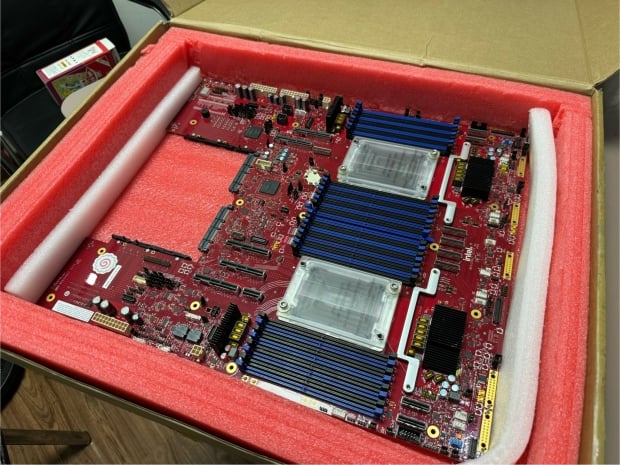




Intel's new Beechnut City validation platform is being used to test out next-gen Xeon 6 "Granite Rapids" and "Sierra Forest" processors. Check it out:
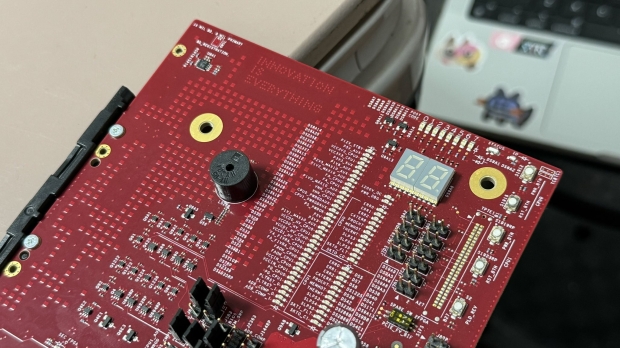
The new Beechnut City validation platform was leaked by "YuuKi_AnS", with a sleek red PCB that brings me back to the motherboards from the 90s. This isn't aimed at the market, so there will be no chance of buying it, as it's been designed for validation and further testing.
We don't have one CPU socket but two LGA-4710 socket CPUs that will support dual Granite Rapids or Sierra Forest Xeon 6 CPUs. The leaker also teased possible SKU names for Intel's next-gen Xeon 6 series: Xeon 6 6900E/P (Platinum), Xeon 6 6700E/P (Gold), and Xeon 6 6500P (Bronze).
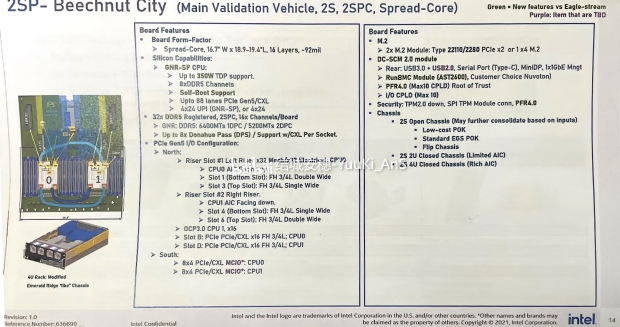
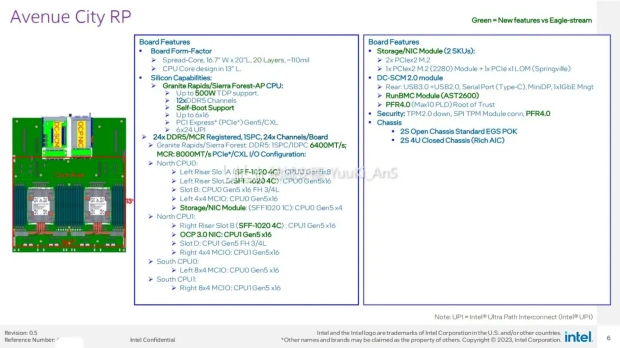
We can see that there are 16 x DDR5 DIMMs per CPU socket for a total 32 sticks of DDR5 memory, with Intel reportedly aiming at supporting DDR5-6400 modules through this platform for 1 DIMM per channel, or DDR5-5200 speeds for 2 DIMMs per channel. We've already seen an Intel validation platform with 12-channel memory support, with the Avenue City validation platform supporting 24 sticks of DDR5-6400 memory.
- Read more: Intel Xeon 'Clearwater Forest' CPUs rumor: 3D stacking + hybrid bonding
- Read more: Intel's new Xeon W9-3595X HEDT CPU: up to 60 cores with 4.6GHz benched early
- Read more: Intel confirms: Xeon 'Clearwater Forest' CPU features Darkmont-based E-Cores
- Read more: Intel's next-gen Clearwater Forest Xeon CPU has only E-Cores, but up to 288 cores
On the CPU side of things, Sierra Forest is first with 144 cores and will debut in the first half of 2024, while the 288-core Xeon CPU will launch in the year's second half. This will represent Intel's first foray into using only Efficient cores, which is similar to what competitor AMD is doing with their Zen Dense cores (including EPYC "Bergamo").