






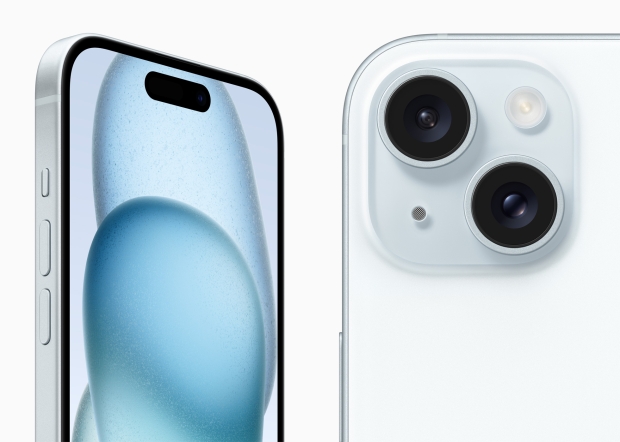



Then the European Union's deadline for Apple to allow apps to be sideloaded on iPhones comes around in early March, the company will have no choice but to comply. And comply it will according to reports, but there will still be some considerable caveats according to a new report.
Apple has until March 6 to enable sideloading but a new Wall Street Journal report claims that Apple intends to enforce the same limitations on sideloaded apps as it does on those that are available via the App Store. That will include plans to review every app and even collect money from developers, the report suggests.

It isn't immediately clear how Apple intends to make this work, however. It's possible Apple may try to collect commission on all sales made outside of the App Store just as it intends to do after allowing developers to point users to alternative payment methods - a change that is coming about after complaints that developers must pay 30% to Apple whenever they sell an app or in-app purchase. However, sales made outside of the App Store are going to be subject to a 27% commission anyway, making the whole process somewhat pointless. It seems Apple intends to go a similar route with sideloading.
The fact that Apple will still review all apps is perhaps the most interesting. Sideloading should theoretically allow third-party app stores, but it isn't obvious how Apple will vet those apps nor prevent them from being installed if it deems them unfit. Additionally, it isn't clear whether either of these plans will be allowed by the European Union and its Digital Markets Act. After all, these plans make the act of forcing Apple to allow sideloading somewhat pointless.
Apple is expected to enable sideloading in EU countries when iOS 17.4 arrives and a beta version of that is expected to arrive in beta form sooner rather than later. From there, the company will need to make sure that the software is ready for prime time before the March 6 deadline arrives.
Apple continues to be under pressure from various countries and lawmakers over the way it locks the iPhone down. Developers have long complained about the fact that their apps have to be approved by Apple before they can be made available. Couple that with the 30% cut Apple takes from all sales and it's easy to see why the EU got involved. But if this Journal report is accurate nothing will really change, which makes us wonder whether the EU could push back on Apple's plans once that March 6 deadline arrives.



 Google appeals historic antitrust lawsuit ruling that threatens its $12.4 billion mobile biz
 Apple's much-vaunted iOS 18 AI focus won't feature a cloud server component, report claims
 Fortnite won't return to iOS in UK in 2025, or even mid-2026
 Apple shelves Vision Pro overhaul for development on Meta glasses rival
 Apple's first foldable iPhone rumored as the iPhone Ultra, should unfold on the market in 2026
 Grand Theft Auto 6 release date rumor is giving fans more confidence
 Apple completes its transition to Apple Silicon by dropping support for Intel-based Macs
 The Framework Laptop 16 is getting OCuLink support later this year, enabling compatibility with eGPUs and PCIe cards
 The Last of Us star Troy Baker is sure that we haven't seen the last of Joel
 Bolt Graphics completes chip design for its Zeus GPU - claims 5x faster path tracing than RTX 5090 at 250W
 Google's Workspace Intelligence wants to be the ultimate AI coworker that actually knows your business
 AMD sparks controversy by denying Ryzen 9 9950X3D2 review samples to Gamers Nexus, TechPowerUp, and others
 007 First Light gameplay trailer reveals Hitman-style systems with Bond flair
 Xbox teases Discord partnership as Game Pass flexibility expands
 OpenClaw trojan uses AI agents to take control of 28,000 systems
 Nitro Concepts C-Racer Sim Racing Wheel Stand Review
 KOORUI 34E6UC Gaming Monitor Review - UltraWide Gaming at 180Hz on a Budget
 AOC U27G4 Gaming Monitor Review - Affordable Dual-Mode 4K and 320Hz Gaming in One Display
 ASUS ROG Kithara Gaming Headset Review - Audiophile Sound for PC Gamers
 MSI MPG 272QRF X36 Review - NVIDIA Pulsar Powers the Peak of 1440p Esports Gaming Monitors
 Sapphire Pure X870A WiFi 7 Motherboard Review - Premium looks at a bargain price
 MOZA CM2 HD Racing Dashboard Display Review
 ASUS ROG Swift PG32UCDM3 Gaming Monitor Review - Unbeatable OLED Just Got Even Better
 ASUS ROG Strix Pulsar XG27AQNGV Review - The Bleeding Edge of 1440p Gaming Monitors is Here
 ASUS ROG Rapture GT-BE19000AI Gaming Router Review: Shiny and fast (except when it isn't)
 Why Is My Keyboard Typing on Its Own? Here's How to Fix It
 Common Laptop Battery Mistakes That Reduce Battery Lifespan in 2026
 6 PowerToys Features I Wish Were Built Into Windows
 Task Manager only tells half the story - this built-in tool shows the rest
 Your PC is overheating, and Windows won't tell you - here's how to check
 Best Windows right-click menu tweaks that will actually save you time
 Windows not using your dedicated GPU? Here's what to do
 Five Windows 11 registry tweaks I apply on every new PC
 7 Windows registry tweaks that actually make a difference
 The Super Mario Galaxy Movie Cinema Review