













A study on the cancer treatment titled "Targeting LIPA independent of its lipase activity is a therapeutic strategy in solid tumors via induction of endoplasmic reticulum stress" has been published in the journal Nature Cancer.

Researchers from the University of Texas at Dallas (UT Dallas) have synthesized a new molecule capable of killing many cancers that are notoriously difficult to treat, including triple-negative breast cancer (TNBC). The new molecule is called ERX-41, which is effective against breast cancer cells with and without estrogen receptors (ERs).
Patients with TNBC have fewer treatment options as the cancer cells have no estrogen, progesterone, and human epidermal growth factor 2 receptors. However, ERX-41 could kill these cells and effectively treat hard-to-treat pancreatic, ovarian, and brain cancers, notably glioblastoma, the most deadly of brain cancers.
"The ERX-41 compound did not kill healthy cells, but it wiped out tumor cells regardless of whether the cancer cells had estrogen receptors. In fact, it killed the triple-negative breast cancer cells better than it killed the ER-positive cells," said Dr. Jung-Mo Ahn, a co-corresponding author of the study and a UT Dallas associate professor of chemistry and biochemistry in the School of Natural Sciences and Mathematics.
"For a tumor cell to grow quickly, it has to produce a lot of proteins, and this creates stress on the endoplasmic reticulum. Cancer cells significantly overproduce LIPA, much more so than healthy cells. By binding to LIPA, ERX-41 jams the protein processing in the endoplasmic reticulum, which becomes bloated, leading to cell death," said Ahn.
"Triple-negative breast cancer is particularly insidious - it targets women at younger ages; it's aggressive; and it's treatment resistant. I'm really glad we've discovered something that has the potential to make a significant difference for these patients," Ahn continued.
You can read more from the study here.



 NASA telescope discovers strongest signs of alien life to date
 Pete Hines left Bethesda because the studio is now part of something that isn't 'authentic or genuine'
 Elder Scrolls Online team affected by layoffs, devs uncertain about MMORPG's future with such a small team
 PlayStation didn't warn anyone before announcing the end of physical discs, not even its own offices
 Report: Game Pass day one releases were controversial behind the scenes at Xbox
 RTX 5080 Super appears in Seasonic PSU calculator with 24GB GDDR7 and 415W TDP
 IO Interactive acquires Project Fantasy IP, but closes Istanbul studio
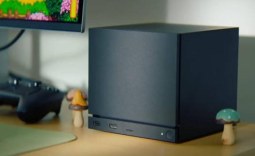 Valve's Steam Machine can now run Windows officially but requires wiping SteamOS first
 Report: Xbox lays off nearly half of id Software, Doom and Quake still priorities
 Console makes up 80% of Xbox's business as Microsoft plots next-gen Helix console
 Nintendo to end Switch 1 sales in Europe starting mid-February 2027
 Xbox Game Pass subscribers reportedly at 30 million, down from a high of 34-35 million
 Simagic Zeus Formula Steering Wheel Review: premium build and advanced inputs for F1 racing
 GIGABYTE X870E Aero X3D Dark Wood Review - A woody goody
 The Super Mario Galaxy Movie (2026) 4K Ultra HD Blu-ray Review
 KTC H49S66 5K2K (5120x1440) 49-inch 180Hz Gaming Monitor Review
 HighPoint Rocket 1604L Gen5 x16 NVMe Software RAID AIC Review: half the price with full 59 GB/s speed
 Next Level Racing ERS3 Haptic Seat Review: immersive sim racing comfort with integrated haptics
 ASUS TUF Gaming X870-Pro WiFi7 W NEO Review - Tuffed up
 GIGABYTE GO27Q24G Gaming Monitor Review: Glossy OLED Gaming at 240Hz
 Lian Li B4-mATX Review: a compact mATX SFF case with excellent airflow and premium features
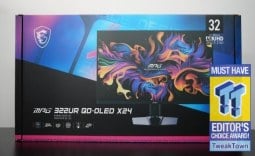 MSI MPG 322UR QD-OLED X24 Review: A Brighter, Tougher 4K 240Hz QD-OLED for $1099
 6 PC cleaning mistakes to avoid for safer hardware maintenance
 Phison and Intel Take Aim at Local AI's Memory Wall with aiDAPTIV
 How to Remap Keyboard Keys in Windows using Microsoft PowerToys
 7 tips to organize your Windows files for faster, easier access
 Intel Arc G3 Extreme first impressions with MSI's Claw 8 EX AI+ - Incredible power for an extreme price
 How to fix Wi-Fi Adapter Not Working on Windows laptops: troubleshooting tips
 Hisense U7SG 4K TV: Modern Entertainment for the New Age
 6 underrated Microsoft Word features worth using to boost your productivity
 Level Up Your PC Gaming with these Fantastic ASUS Prime Day Deals on GPUs, Motherboards, and More
 GIGABYTE Wants to Kickstart Your New Gaming PC or Upgrade with These Limited-Time Deals