

The AI boom has already pushed memory prices to historic highs and driven GPU costs well beyond what most consumers can absorb. The next casualty appears to be silicon wafers, the raw material that everything else is built on.
According to a report from Taiwan's Commercial Times, long-term agreement prices for 12-inch silicon wafers are expected to rise significantly in 2027. Epitaxial wafers, which feature a single-crystal silicon layer grown on the surface and are widely used in advanced AI chips by foundries including TSMC, are projected to increase by 15% to 25%.
Popular Now: The Witcher 3 remaster gets updated path tracing system requirements, requiring an RTX 5080 for 4K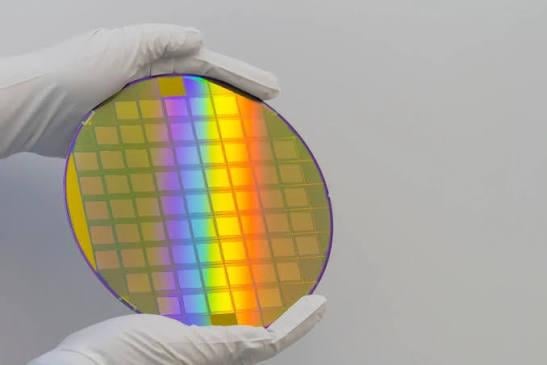
Polished wafers face steeper increases of more than 40%, with some second-tier customers potentially seeing hikes above 50%. Analysts also expect spot prices to surpass long-term contract levels as early as Q4 2026, giving suppliers a stronger negotiating position heading into 2027 renewals and leaving room for further increases in 2028.
Some long-term contracts signed during the pandemic are now expiring, and with raw material costs, electricity, and fab construction expenses all climbing over the past two to three years, the industry broadly expects renewed deals to carry at least double-digit price increases. GlobalWafers, one of the major suppliers alongside SUMCO, is expected to see its 12-inch wafer average selling price jump from $92 in 2026 to $122 in 2027, before climbing to $166 in 2028.
Overall CoWoS packaging capacity is projected to grow 70.9% year on year in 2027, while GPU and AI ASIC shipments are expected to rise 44.9%. Combined CPU shipments from Intel, AMD, and NVIDIA are forecast to climb 36%, all of which translates to higher 12-inch wafer consumption. DRAM bit supply is only expected to grow 22% in 2027, still insufficient to meet demand, meaning memory expansion adds further pressure to an already constrained supply chain.

Story Q&A
Powered by TweakBot
From TweakTown's coverage of this story.
How could 12-inch silicon wafer price increases affect AI GPU and CPU costs?
How could rising wafer costs affect TSMC's advanced AI chip production?
How do polished silicon wafers and epitaxial wafers differ in semiconductor manufacturing?
What factors are driving 12-inch wafer demand from CoWoS packaging and AI chip production?
Want something else? Ask TweakBot.

For consumers, this is another link in a chain that has been tightening for two years. Memory prices, GPU prices, chipset costs, and now the raw silicon underneath it all are heading in the same direction.