










NVIDIA made a big splash at Computex 2026 with RTX Spark, its new platform that combines an ARM-based Grace CPU with a Blackwell RTX GPU on a single chip. While the hardware looks seriously impressive on paper, a new Morgan Stanley report suggests it won't come cheap.
Analysts at Morgan Stanley suggest that laptops powered by the flagship N1x chip will not be priced below around $2,899, while entry-level systems running the standard N1 platform are expected to start at roughly $1,799. Those figures are for base configurations, likely meaning 16GB to 32GB of RAM and 512GB to 1TB of storage. Fully loaded models with 128GB of unified memory and multi-terabyte SSDs will cost considerably more.
At those price points, RTX Spark is not competing with mainstream Windows laptops. It is going directly after Apple's MacBook Pro, which starts at around $2,100 for the M5 Pro configuration. NVIDIA's advantage lies in graphics performance and AI compute.
- Read more: Lenovo accidentally confirms it is working on laptops powered by NVIDIA's yet-to-be-announced N1X chip
- Read more: ASUS ProArt P16 and P14 are the first ASUS laptops built around NVIDIA's RTX Spark superchip
- Read more: Lenovo Yoga Pro 7 laptop listings point to NVIDIA N1X 650 and N1X 675 chips
During Computex, the company showcased Forza Horizon 6 running at over 100 FPS at 1440p on an RTX Spark system, and partners consistently emphasized the platform's ability to deliver gaming-grade performance in a thin chassis. For heavy AI workloads and local model inference, the discrete Blackwell GPU gives it a clear edge over anything Apple currently offers.

Where Apple still holds the advantage is in software compatibility, battery life, and the maturity of its ecosystem. Windows on ARM has improved significantly, but still carries compatibility caveats that macOS does not. Those are real considerations for buyers weighing a $2,900 laptop purchase.
Several manufacturers already have RTX Spark devices in the pipeline. The initial wave includes Microsoft's Surface Laptop Ultra, Dell's XPS 16 Creator Edition with a tandem OLED display, ASUS ProArt P16 and P14, HP's OmniBook X 14 and OmniBook Ultra 16, Lenovo's Yoga Pro 9n, and MSI's Prestige N16 Flip AI+. NVIDIA says the ecosystem could grow to about 30 laptop models and 10 desktop systems by fall, with Acer and GIGABYTE also expected to follow.







 Lenovo accidentally confirms it is working on laptops powered by NVIDIA's yet-to-be-announced N1X chip
 Lenovo Yoga Pro 7 laptop listings point to NVIDIA N1X 650 and N1X 675 chips
 NVIDIA's new GB10 Superchip for AI PCs is a total tease of its debut in gaming laptops, Mini-PC
 NVIDIA's new N1X AI PC chip performance leaked: ready to battle AMD's new Strix Halo APUs
 NVIDIA and Microsoft tease 'a new era of PC' ahead of Computex, and it's hard not to link this to the fabled N1X chip
 AVerMedia's MultiStudio Core GC750 can capture two cameras and stream to four platforms
 AVerMedia unveils the best new streaming camera for FPS gamers and Pokemon card unboxings
 AMD says it had to 're-engineer' the Ryzen 7 5800X3D from scratch to make the revival possible
 God of War Laufey will explore Odin's age-old question: What happens to gods when they die?
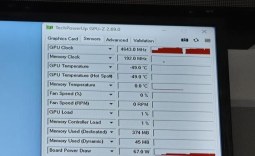 AMD overclocker pushes the Radeon RX 9060 XT to 4,643MHz with internal tools
 Intel's Nova Lake-S LGA1954 socket will reportedly support CPUs beyond 'Razor Lake', per new leak
 GIGABYTE unveils a pair of B850 motherboards with backside connectors, bringing cable-stealth to a lower price point
 Remedy's Control Resonant launches into a packed September lineup, PS5 gets exclusive 2-day early access
 Intel introduces Xeon 7 'Diamond Rapids' CPU lineup, built on the 18A-P process node
 New Onimusha Way of the Sword gets late-September release date, playable demo now live on PS5
 Razer Pro Type Ergo Wireless Split Ergonomic Keyboard Review - Built for Comfort and Support
 ASUS ROG Strix Morph 96 Wireless Gaming Keyboard Review - Great Performance, More Affordable
 SAPPHIRE Radeon RX 9070 GRE PULSE OC Review - A New 1440p Challenger Has Arrived
 NZXT H6 RGB+ Compact Dual-Chamber Chassis Review
 ASRock Radeon RX 9070 GRE Steel Legend Review - The RDNA 4 Mid-Range Reshuffle
 ASRock Z890 Taichi Aqua Motherboard Review - Flagship features without the flagship price
 GIGABYTE Z890I AORUS Ultra Motherboard Review - Mini-ITX with surprisingly good thermals
 Seagate FireCuda X1070 4TB SSD Review - A New Mainstream Contender
 Lian Li HYDROSHIFT II 360P OLED Curved Liquid CPU Cooler Review
 ID-Cooling FROZN A620 SLK CPU Cooler Review
 Phison E37T SSD Controller Exclusive Preview - The Fastest DRAMless SSD Platform Yet
 USB Ports Not Working in Windows 11? Try These Fixes
 ASUS WiFi Routers and Networking Solutions Deliver Long-term Security and Reliability with No Additional Cost
 Second Monitor Not Detected in Windows 11? Try These Fixes
 Turn Your Old Smartphone Into a Dedicated Webcam for Your Windows PC
 The Send To menu is the right-click feature on Windows 11 that nobody bothers to customize
 Windows 11 will not let you pin a folder to the taskbar, but a 30-second workaround does
 ASUS ProArt Displays Unlock Creativity with Professional Monitors for Everyone
 What Happens If You Don't Activate Windows 11? 5 Downsides Explained
 Fast Internet on Your Phone but Slow on Your PC? Try These Fixes