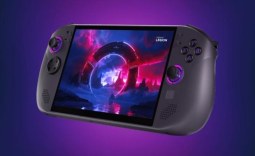
Last week, we reported that Lenovo increased the prices of its new flagship Legion Go 2 gaming handheld, powered by the AMD Ryzen Z2 Extreme chip. In addition, it features 32GB of LPDDR5X memory and up to 2TB of internal storage. With the current AI-driven DRAM and flash memory crisis causing havoc in the consumer space, it's putting a big question mark over the immediate future of the PC gaming handheld market.

As noted in our original story, the price of the Lenovo Legion Go 2 with 32GB of memory and 1TB of internal storage rose by a massive $650. This means that its late 2025 launch price of $1,349 is now $1,999 USD - a 48% or so increase. Well, with memory and storage prices seemingly increasing exponentially with capacity, the official price for the Lenovo Legion Go 2 with 32GB of memory and 2TB of internal storage has now reached an eye-watering level.
As noted on Lenovo's official site, the price for this model is now $2,849.99 USD, which is $1,369 above its launch MSRP of $1,480. The new price changes the value proposition so significantly that it's hard to justify the existence of a 2TB model. And when you factor in the recent news that AYANEO has paused and stopped taking orders for its new flagship PC gaming handheld, it's hard not to be concerned about the near future of the growing portable market.
With several reports that the memory and storage crisis is set to continue through 2030, and no indication that things will ever return to "normal," a powerful, cutting-edge PC gaming handheld is now an overly expensive and unattainable proposition for most gamers.
With rumors of Microsoft's next-gen Xbox and Sony's next-gen PlayStation plans, including gaming handhelds, and Valve reportedly working on a Steam Deck 2, one has to wonder if memory and storage prices will delay these launches or force these companies to scale back specs. Based on what we're seeing here, the alternative appears to be gaming handhelds priced at premium laptop levels.