Keyboard enthusiasts have long moved beyond just typing, spending hours swapping switches for the perfect sound, tuning dampeners, and adding custom keycaps to match their setup. And when it comes to such customization, Keychron is one of the most recognizable names in the space, consistently impressing with offerings like the Q1 HE 8K and K4 HE.
Now the company is opening up that customization even more. In an unusual move, Keychron has published editable source files for the cases, plates, and keycaps across its popular mechanical keyboard lineup, free for anyone to access. The company's CEO noted in a Discord announcement that "We think that making production hardware files available is a meaningful contribution to the broader hardware and keyboard community."
Popular Now: DLSS 5 has been modded into Skyrim, and it definitely transforms character faces
It's worth noting that this is not fully open source. Keychron describes the release as 'source available.' This means the files are shared for people to view and use, but the license only permits personal and educational projects, not commercial use. In other words, users can't sell keyboards built from these files, but can use them to customize and produce accessories for personal use.
In total, there are over 640 individual design files, with more on the way as Keychron continues to update the repository. The files are genuine STEP and DXF formats, compatible with programs such as FreeCAD, Fusion 360, SolidWorks, and others. They aren't directly editable, but they're a fair sight better than STL files or mesh files, since those are effectively uneditable.
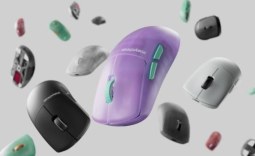
For each product, you get case files, plate files, stabilizer designs, encoder mounts, keycap profiles in OSA and KSA, and fully assembled models. Mouse files include shell geometry and models for M1-M7, G1, and G2.

Keychron has also published proper documentation alongside the files, including a 3D-printing guide for anyone who wants to tweak their keyboard or mouse. However, printed circuit board (PCB) designs are missing from the release, meaning building a fully functional keyboard from scratch still isn't possible. You will still need to rely on an existing Keychron PCB for that.
Still, the mechanical and structural resources Keychron is offering go well beyond what most commercial peripheral manufacturers provide. Interestingly, this isn't the company's first dance with "open-source" as their devices have long supported the open-source QMK and VIA firmware platforms, allowing users to customize firmware behavior.
You can find the full repository on GitHub, which includes models for keycaps, keyboard cases, knobs, plates, mouse shells, and stabilizer housings. The repository also contains detailed instructions for contributing, participating in discussions, and engaging with the community through Keychron's Discord channel.