












Google has introduced a new Notebooks feature for Gemini that helps you organize research materials. Google describes notebooks as "personal knowledge bases shared across Google products," designed to pull together scattered research, conversations, and documents into a single reusable space.
The feature arrives alongside Google's full integration of NotebookLM, its AI-powered research tool, into the Gemini app. Google launched a standalone NotebookLM app last year and added it as a source within Gemini shortly after, but now you can create and manage notebooks directly inside the chatbot.
Popular Now: Assassin's Creed Odyssey becomes the highest-rated entry in the franchise, thanks to Nolan's 'The Odyssey'Notebooks work similarly to regular Gemini chats but are designed to help you focus on a single topic. They keep all relevant information and resources together, allowing Gemini to reference them throughout your conversation. To get started, select "New notebook" from the side panel of the Gemini app, give it a name, and begin adding sources.

Those sources can come from anywhere, including Google Drive, your computer, websites, or text copied to your clipboard. You can also pull previous chats into a notebook if they are relevant to the topic. Once everything is in place, you can start prompting Gemini, and it will draw from all the resources in that notebook to give you detailed, relevant responses.
Thanks to the NotebookLM integration, notebooks created in Gemini are automatically imported into NotebookLM, giving you access to its unique tools, like Video Overviews and Infographics, on the same material. The reverse works too. A student could upload class notes to a notebook, generate a video summary in NotebookLM, and ask Gemini to draft an essay outline from those same notes, all without copying files back and forth.

The feature is similar to ChatGPT's Projects, which lets users group files and conversations around a single topic. The key difference is the NotebookLM link, which gives Google users access to additional research and media tools that Projects does not offer. Google is rolling out Gemini notebooks this week for AI Ultra, Pro, and Plus subscribers on the web. Mobile support, broader regional availability, and free-tier access are all expected to roll out over the next few weeks.


 Google expands its AI image generation lineup with Nano Banana 2 Lite and Gemini Omni Flash for video
 Google's Workspace Intelligence wants to be the ultimate AI coworker that actually knows your business
 Google unveils the new generation of ads coming to AI-powered Search
 Google is readying Gemini for a 24/7 personal AI agent
 OpenAI's second AI agent has been officially released
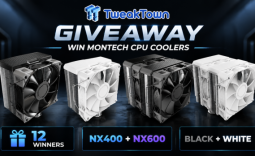 Giveaway: 12 Winners Will Score MONTECH NX400 and NX600 CPU Coolers
 GIGABYTE's next-gen 4K 32-inch AORUS ELITE gaming monitor with Tandem WOLED panel delivers 1,500 nits of HDR peak brightness
 Sony reminds players they don't actually own digital PlayStation games amid disc-production backlash
 GTA 6 'build' that's 113GB in size is currently circulating online, and it's fake
 Windows 11 update has broken some PC games, and RGB lighting could be the issue
 Assassin's Creed Odyssey becomes the highest-rated entry in the franchise, thanks to Nolan's 'The Odyssey'
 PlayStation gamers' planned week-long 'PS Blackout' begins today
 Nintendo Switch 2 will rise to £419.99 in the UK, starting September 1
 One retailer says 91% of attempts to buy DDR5 memory are coming from bots
 Jensen Huang signed NVIDIA RTX Pro 6000 graphics card sells for $57,450 at auction
 GTA 6 leaks have reportedly led to a morale drop at Rockstar, with Netflix frustrated as well
 Cooler Master MasterFan A120 Fan Review
 GIGABYTE MO27Q2A Gaming Monitor Review: 1440p, 280Hz, and QD-OLED is a winning combination
 Cooler Master V8 ACE 3DHP BLACK CPU Cooler Review
 ASUS ROG Strix XG129C Review: A $199 Gaming Monitor You Don't Play Games On
 Cooler Master HAF II 500 Mid-Tower Chassis Review
 Corsair HS35 v3 Wireless Gaming Headset Review - An Affordable Winner
 D-Link F518 5G Wi‑Fi 6 AX1800 Mobile Hotspot Review: All-Day Mobile Hotspot
 Bose Lifestyle Ultra Speaker Review - Impressively Detailed Room-Filling Sound
 MSI Z890 Gaming Plus WIFI6E Review - Z890 for under $200
 Mortal Kombat (1995) 4K Ultra HD Blu-ray Review
 Using Multiple Monitors? Change these Windows settings for a Better Experience
 Windows Sandbox is The Windows Security Feature Most People Never Use
 I ditched the Windows 11 context menu for this open-source tool, and here's why
 Windows 11 may be encrypting your drive already, and I checked where my recovery key went
 GIGABYTE's 40 Days of INFINITY celebrates 40 Years of Innovation with stunning GeForce RTX graphics cards and rewards
 I swapped File Explorer for this free file manager and finally got the layout I wanted
 How to tell if someone has been using your Windows PC without your permission
 6 Task Manager tips for troubleshooting Windows performance problems
 ASUS ROG's 20th Anniversary Line-up of Premium PC Gaming Gear has Arrived - Here's Everything You Need to Know
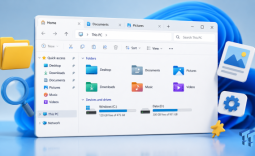 Six File Explorer tips every Windows user should know