
Microsoft's Jason Ronald reveals new details about the next-gen Project Helix console at GDC 2026, as per a recent live stream.
Microsoft confirming key details about its next-generation Project Helix console PC to game developers at this year's GDC event. During the keynote stream, Xbox hardware VP Jason Ronald highlighted some of the new features of Project Helix, revealing a high-end device that seems to empower developers with new hardware-based efficiencies and tools to craft their worlds.
Ronald confirmed that Project Helix would have next-gen raytracing performance, powered by a new AMD SoC that was co-designed from the ground up specifically with new, forward-thinking versions of DirectX in mind. Project Helix's main goals seem to be alignment on a hardware, API, and software level, complete with attractive features like Windows 11's powerful DirectStorage alongside Project Helix's new Deep Texture Compression technology--a combination that could be the key for true next-level texture streaming and loading times.
Below we have a quick transcription of what Ronald said during the portion of the stream that we saw:
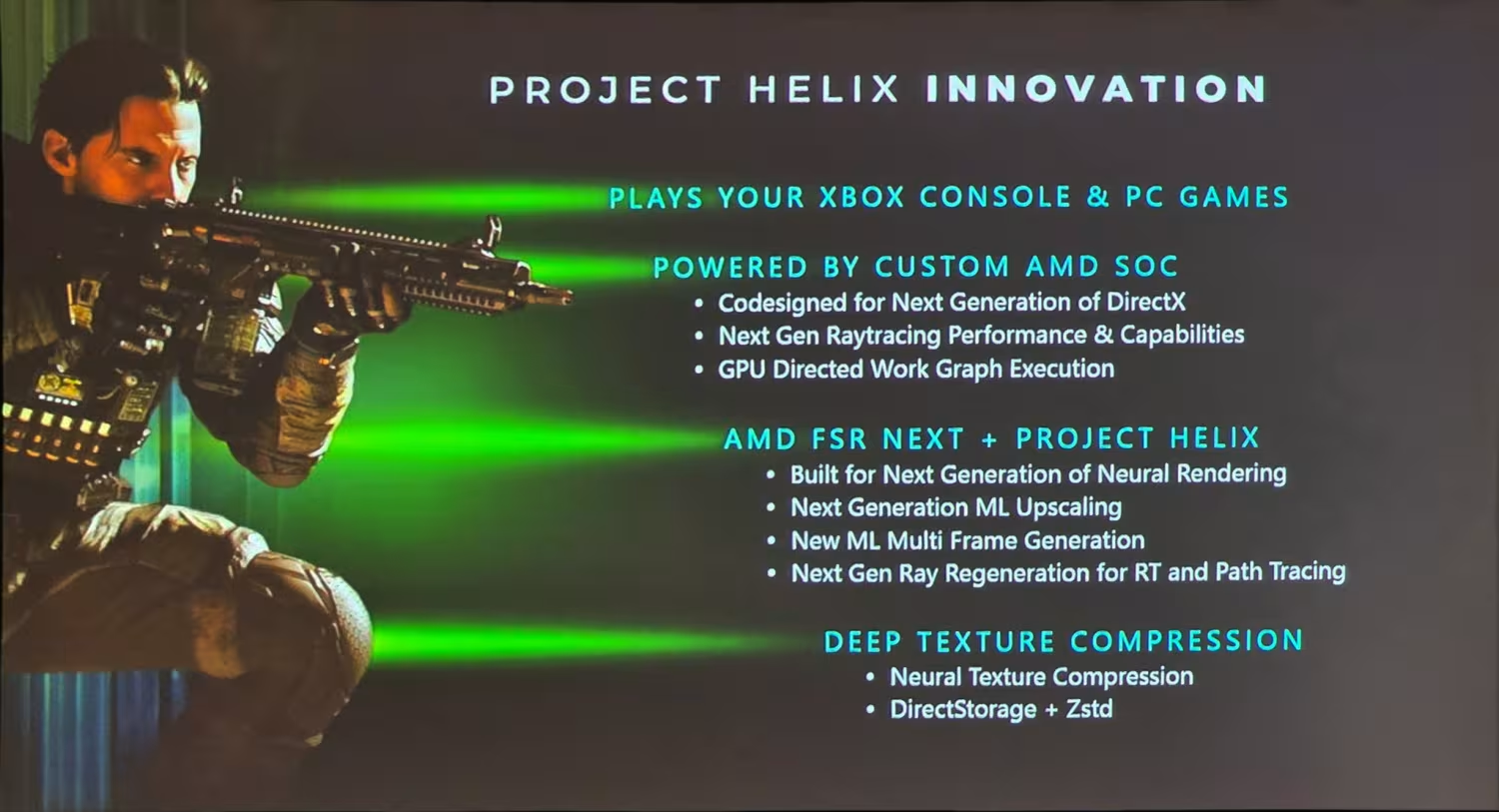
PROJECT HELIX - Plays Your Xbox Console & PC Games
Powered by Custom AMD SOC
- Codesigned by Next Generation of DirectX
- Next Gen Raytracing Performance & Capabilities
- GPU Directed Work Graph Execution
AMD FSR Next + Project Helix
- Built for Next Generation of Neural Rendering
- Next Generation ML Upscaling
- New ML Multi Frame Generation
- Next Gen Ray Regeneration for RT and Path Tracing
Deep Texture Compression
- Neural Texture Compression
- DirectStorage + Zstd (z standard)
Jason Ronald, VP of Xbox Gaming Devices & Ecosystem
When we talk about Project Helix...Project Helix is designed to play your Xbox console and PC games, delivering high performance and delivering the ultimate player-first experience.
We're partnering with AMD to define the next generation of rendering and simulation.
Project Helix is powered by a custom AMD-based SoC, and is co-designed for the next-generation of DirectX.
Project Helix brings intelligence directly into the graphics pipeline, delivering step-change functions in games in efficiency, scale, and visual ambition, and we have great talks throughout this entire week where we're really going into depth on the future of DirectX.
Beyond the SoC, it also includes an order of magnitude increase in raytracing performance capability beyond what's currently possible with the Xbox Series X and S.
It also unlocks GPU-directed work graph execution, eliminating CPU bottlenecks, meaning the GPU can actually generate its own workloads in real time, delivering a massive uplift in performance and enabling real-time maps and real-time simulations in large, complex worlds using runtime engine and rendering geometry in large-scale, interactive worlds that players actually want to engage with.
The other thing when we really think about this is, Project Helix was designed for the next generation of neural-assisted rendering. We've reached some of the limitations of what's possible with traditional rendering techniques. If we want to continue advancing the state of the art, we have to invent brand new technology.
A key part of that is how we're integrating the next version of AMD FSR into Project Helix and into the Xbox Game Development Kit.
This is really designed for that next generation of neural rendering techniques, whether that's neural materials, whether that's generating images, or even if you think about things like the latest ML-based upscaling techniques or super resolution techniques--you think about brand new ML-based frame generation, and there's even new capabilities such as the new ray regeneration technique that is really designed to deliver high-performance raytracing for both real-time raytracing and path tracing.
Another area that we're really focused on with Project Helix is what we call Deep Texture Compression.
I think if you look across the industry right now, and you look at the massive increases in storage prices and memory prices, if we want to continue to push the boundaries, we also have to invent brand new techniques that allow us to learn from our much more efficient ways, while also making our games more accessible.
I think that this is really a call to action across the entire industry--there's a ton of work that we can do on the hardware side, a ton of work we can do on the software side.