












Samsung Electronics has just boosted the development of its next-gen HBM4E memory, aiming for up to 3.25TB/sec of memory bandwidth, over 2.5x the bandwidth of its current HBM3E chips.
NVIDIA recently requested that HBM4 manufacturers -- SK hynix, Samsung, and Micron -- increase the bandwidth on their next-gen HBM4 memory, where recently at the OCP Global Summit 2025 event, Samsung revealed its development target for HBM4E, with per-pin speeds of at least 13Gbps, and mass production set for 2027.
Samsung's next-gen HBM4E memory would have 2048 data I/O pins, which when converted over to bytes (1 byte = 8 bits) then it works out to 3.25TB/sec of memory bandwidth. On top of that, Samsung said that HBM4E's power efficiency is over 2x better than current HBM3E memory.
If we rewind just to earlier this year in January, when Samsung raised its then HBM4E memory bandwidth targets from 8Gbps to 10Gbps, but then NVIDIA has stepped in and asked for even higher bandwidth, ready for its next-gen Vera Rubin AI chips, and now we're at 13Gbps for Samsung HBM4E memory.
JEDEC specifications for HBM4 sit at 8Gbps per-pin, but NVIDIA demanded speeds above 10Gbps from its HBM manufacturers, with SK hynix and Samsung both hitting 11Gbps. HBM4E will cross that threshold with 13Gbps, and Samsung seems quite confident in it, another great sign for its semiconductor business, Samsung Foundry.
Before HBM4 is fabbed onto Rubin AI GPUs, early demonstrations of higher-than-expected bandwidth had industry observers predicting HBM4E performance targets would be raised. Samsung is now the first to do so, teasing 13Gbps per-pin HBM4E memory is coming.


 Samsung should be first with HBM4 powering NVIDIA's new Vera Rubin AI chips, passed all tests
 Samsung officially ships HBM4 ready for NVIDIA's next-gen Rubin AI chips
 Intel's next-gen 'Jaguar Shores' Gaudi AI accelerator rumored to use new HBM4E memory
 Samsung 1c DRAM for HBM4 yields rumored to hit around 50% to battle SK hynix and Micron
 SK hynix, Samsung, and Micron fighting for NVIDIA supply contracts for new 16-Hi HBM4 orders
 Xbox outage turns ugly as players use Xbox App glitch to download and play titles for free
 Xbox servers go down just days after PlayStation outage, giving us a glimpse into our digital-only future
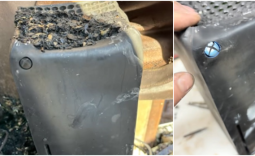 Xbox Series X survives a devastating house fire and still works!
 'PS5 is currently the Call of Duty box,' analyst says after Black Ops II re-release takes over PlayStation
 Colorful and MSI RTX 50 graphics card prices spike in China as GDDR6 and GDDR7 memory costs rise
 SEGA won't abandon its physical culture, but stresses importance of digital for sales growth
 PC classic Myst returns with mysterious new Project Mudfish
 Minecraft now recommends 16GB of RAM and a much newer CPU
 007 First Light ditches Denuvo DRM just as first patch arrives packing a ton of bug fixes and some new content
 Microsoft's still working on Windows 11 File Explorer improvements, and it's now making deleting large files speedier
 Logitech G512 X 98 Analog Mechanical Gaming Keyboard Review - An Innovative Two-in-One
 Thrustmaster T.Flight HOTAS 5 MSFS Edition Review
 SteelSeries Arctis Nova Pro Omni Wireless Headset Review - One Headset to Rule Them All
 SteelSeries Arctis Nova 7 Wireless Gen 2 Headset Review - New and Improved, But Is It Enough?
 AMD Ryzen 7 7700X3D Review - Days of Future Past
 Samsung 990 2TB SSD Review - Ninth Gen QLC at PCIe Gen4 Speeds
 ASUS ExpertBook Ultra (Panther Lake) 14" Business Laptop Review
 ASUS ROG Raikiri II Xbox Wireless Controller Review - Ready to Take Control
 MOZA FMP18 Panel Bundle Review: authentic F/A-18 Hornet cockpit controls for flight sims
 Micron 6600 ION 245.76TB Enterprise SSD Review - Best in Class Programming Speeds
 Printer Not Working in Windows? How to fix detection, print queues and drivers
 The Ultimate Guide to Personalizing Your Windows 11 Taskbar
 How to Turn Your Windows Laptop Into a Second Monitor with Miracast and Wireless Display in Minutes
 6 Mistakes to Avoid When Buying a Windows Laptop
 I capped Windows Update's bandwidth with Delivery Optimization, and my downloads stopped choking
 I use this decade-old free tool that finds files faster than Windows Search does
 I install and update most of my apps with this Windows command now, and I stopped downloading sketchy installers
 Hisense U6SF 65-inch MiniLED TV: High Performance Meets Leisurely Convenience
 I stopped digging through Windows menus after I set up this one folder
 Don't sell your Windows laptop until you do these things