












NASA has accelerated its plans to build a nuclear reactor on the Moon's surface, as part of its broader strategy to establish a sustainable lunar presence through a base.

NASA's Artemis program is part of the space agency's effort to establish a lunar base on Earth's closest neighbor by 2030. One of the most critical components of such a base is sustainable power. The nuclear option seems the most viable, as solar won't work due to the Moon's rotation being so slow. There are two-week periods where the Moon is in darkness. Nuclear reactors will enable a round-the-clock energy supply needed to keep bases maintained at healthy operational levels, ensuring human survival.
According to a report from Politico, NASA's interim chief Sean Duffy is set to announce a new ambitious plan in the next week that will involve NASA soliciting industry proposals for a 100-kilowatt nuclear reactor to launch by 2030, and that within the directive it states the first nation with a Moon reactor could "declare a keep-out zone, which would significantly inhibit the United States." The race for the first lunar-based nuclear reactor is between the US, China, and Russia, who announced a partnership to create their own lunar base.
"The reactor directive orders the agency to solicit industry proposals for a 100-kilowatt nuclear reactor to launch by 2030, a key consideration for astronauts' return to the lunar surface," wrote Politico
The idea behind the new NASA directive is to fast-track the construction of a lunar reactor so China and Russia don't get there first and keep the US out.
"It is about winning the second space race," said a NASA senior official


 NASA proves it can stream 4K video from the Moon ahead of the next lunar landing
 We are now beaming back incredible Full HD footage of the Moon before landings
 NASA selects SpaceX to send a $3.35 billion nuclear-powered helicopter to Saturn
 NASA unveils date for when humans will explore the Moon
 Taiwan is 'very open' to using new nuclear technology as AI demand devours electricity supply
 Giveaway: 12 Winners Will Score MONTECH NX400 and NX600 CPU Coolers
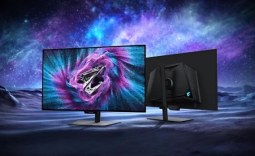 GIGABYTE's next-gen 4K 32-inch AORUS ELITE gaming monitor with Tandem WOLED panel delivers 1,500 nits of HDR peak brightness
 Sony reminds players they don't actually own digital PlayStation games amid disc-production backlash
 GTA 6 'build' that's 113GB in size is currently circulating online, and it's fake
 Windows 11 update has broken some PC games, and RGB lighting could be the issue
 Assassin's Creed Odyssey becomes the highest-rated entry in the franchise, thanks to Nolan's 'The Odyssey'
 PlayStation gamers' planned week-long 'PS Blackout' begins today
 Nintendo Switch 2 will rise to £419.99 in the UK, starting September 1
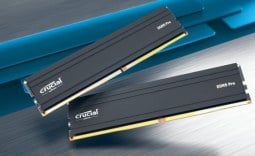 One retailer says 91% of attempts to buy DDR5 memory are coming from bots
 Jensen Huang signed NVIDIA RTX Pro 6000 graphics card sells for $57,450 at auction
 GTA 6 leaks have reportedly led to a morale drop at Rockstar, with Netflix frustrated as well
 ASUS ROG Strix OLED XG34WCDMS Review: Tandem OLED Takes Ultrawide Gaming Further
 Cooler Master MasterFan A120 Fan Review
 GIGABYTE MO27Q2A Gaming Monitor Review: 1440p, 280Hz, and QD-OLED is a winning combination
 Cooler Master V8 ACE 3DHP BLACK CPU Cooler Review
 ASUS ROG Strix XG129C Review: A $199 Gaming Monitor You Don't Play Games On
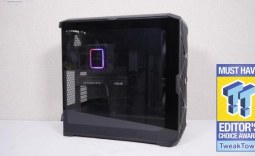 Cooler Master HAF II 500 Mid-Tower Chassis Review
 Corsair HS35 v3 Wireless Gaming Headset Review - An Affordable Winner
 D-Link F518 5G Wi‑Fi 6 AX1800 Mobile Hotspot Review: All-Day Mobile Hotspot
 Bose Lifestyle Ultra Speaker Review - Impressively Detailed Room-Filling Sound
 MSI Z890 Gaming Plus WIFI6E Review - Z890 for under $200
 Using Multiple Monitors? Change these Windows settings for a Better Experience
 Windows Sandbox is The Windows Security Feature Most People Never Use
 I ditched the Windows 11 context menu for this open-source tool, and here's why
 Windows 11 may be encrypting your drive already, and I checked where my recovery key went
 GIGABYTE's 40 Days of INFINITY celebrates 40 Years of Innovation with stunning GeForce RTX graphics cards and rewards
 I swapped File Explorer for this free file manager and finally got the layout I wanted
 How to tell if someone has been using your Windows PC without your permission
 6 Task Manager tips for troubleshooting Windows performance problems
 ASUS ROG's 20th Anniversary Line-up of Premium PC Gaming Gear has Arrived - Here's Everything You Need to Know
 Six File Explorer tips every Windows user should know