

Newsletter IconGoogle IconFacebook IconX IconInstagram IconYouTube Icon
Giveaway: MONTECH HyperFlow ARGB 240 or 360 AIO Liquid Cooler - Four Winners!

Scientists discover humble planet orbiting one of Earth's closest known stars

A team of astronomers has used the Very Large Telescope to discover a humble planet orbiting Barnard's star, one of the closest known stars to Earth.

Scientists discover humble planet orbiting one of Earth's closest known stars
Facebook IconX IconReddit Icon
Comments
Tech and Science Editor
Published
1 minute & 15 seconds read time

The closest known star to Earth is called Barnard's star, and it's located just six light years away, which is a very small distance in astronomical terms.
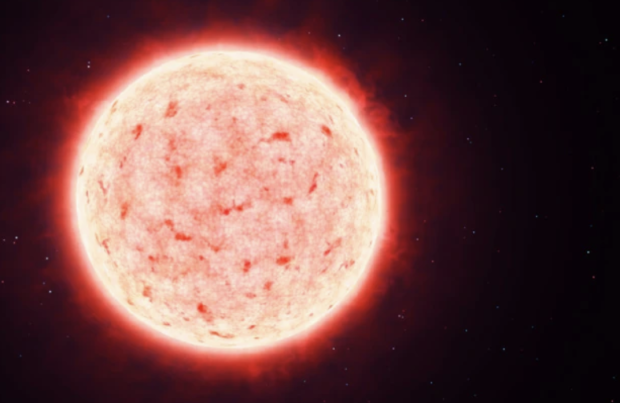
Artist impression of Barnard's star

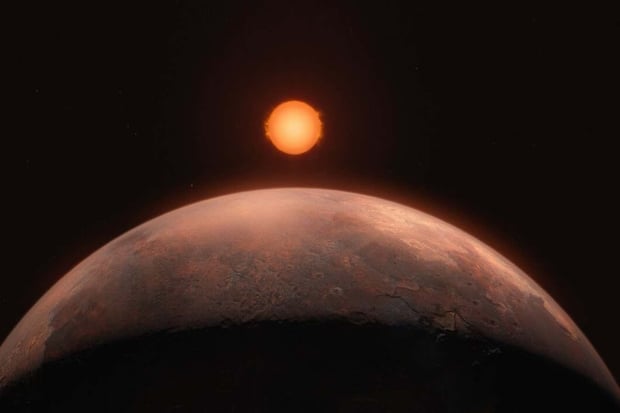
In the world of astronomy, six light years is the equivalent of Earth's neighbor, and now a team of researchers has discovered a planet orbiting our closest known star. That planet has been named Barnard b. According to a new study published in the journal Astronomy & Astrophysics, the planet is considered a sub-Earth as its substantially less massive than Earth and Venus. Planets such as Mars and Mercury are considered to be sub-Earth planets.

As for Barnard b, the paper states the newly discovered planet orbits its star at an extremely close distance, with one year on the planet, or one full orbit, taking just three Earth days. Notably, Bernard b has a mass less than half of Venus, and with its distance of six light years away from Earth, Bernard's star is the second closest stellar system following Alpha Centauri's three-star group and the closest known star to Earth Proxima Centauri at 4.25 light years away.

Unfortunately, if you were thinking there was a chance of Barnard b hosting some form of life, that doesn't seem to be possible, as its close proximity to its star makes it impossible for liquid water to be present on its surface. Its proximity to its local star is twenty times closer than Mercury is to our Sun, which makes Barnard's surface temperature to be around 250 degrees Fahrenheit.

Best Deals: Microsoft Hololens 2

* Prices may be inaccurate. As an Amazon Associate, we earn from qualifying purchases. We earn affiliate commissions from Newegg and PCCG sales.

Join Our Newsletter

Join the TweakTown Newsletter for daily tech updates delivered to your inbox.

See previous giveaways.

News Sources:futurism.com, aanda.org, and phys.org

Comments

About the author

Tech and Science Editor

Jak joined TweakTown in 2017 and has since reviewed 100s of new tech products and kept us informed daily on the latest science, space, and artificial intelligence news. Jak's love for science, space, and technology, and, more specifically, PC gaming, began at 10 years old. It was the day his dad showed him how to play Age of Empires on an old Compaq PC. Ever since that day, Jak fell in love with games and the progression of the technology industry in all its forms.

Stay Updated

Follow TweakTown for breaking tech news, reviews, and daily updates.

Follow TweakTown on GoogleAdd TweakTown as a preferred source on Google
Newsletter Subscription