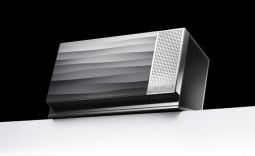


Noctua is figuring out a different way to cool hot hardware without a liquid loop. On September 24, the company announced a research partnership with Forced Physics DCT to investigate whether its patented JouleForce micro-channel array technology can advance to desktop PCs and workstations. Noctua presents it as a long-term R&D effort rather than a specific product.
JouleForce forces air through arrays of tiny channels. According to the announcement, the geometry prevents the boundary layer that normally restricts air cooling from fully forming, so heat is pulled out along the entire length of each channel. This lets air alone move large amounts of heat without pumps, tubing, or liquid loops. Forced Physics says the tech can remove between 500W and more than 2,000W, depending on the design.

Noctua says the arrays create a pressure drop of at least an order of magnitude above the range standard axial PC fans are built for, so current setups depend on industrial blowers, high-speed centrifugal fans, or vacuum pumps. Increasing fan speed or utilizing multi-stage impellers could help achieve the goal.
Still, both ideas are rejected by desktop noise requirements, and sealing against air leaking around the array at these pressures is hard to square with the size and modularity of PC cases. CEO Roland Mossig said the pressure is currently supplied by equipment "nobody would want on or under their desk." Noctua's quiet, high-pressure airflow expertise is the reason for this partnership, intending to lower the required pressure or generate it within desktop limits.

Forced Physics pitches JouleForce as "liquid-class" air cooling for AI and data center chips, stating that conventional direct-to-chip air will not be able to keep up with the 1,000W to 2,000W range AI accelerators are transitioning to. The company also cites independent testing at Villanova University, saying Dr. Alfonso Ortega reproduced its thermal-resistance and pressure-drop results on an AMD EPYC SP5 setup within 3-5% and achieved 50% lower thermal resistance at one-third the airflow compared with a Dell reference heat sink. These figures come from server hardware and include no desktop performance or noise data.


Story Q&A
Powered by TweakBot
From TweakTown's coverage of this story.
What engineering hurdles must Noctua solve to make JouleForce quiet and compact enough for desktop PCs?
How could JouleForce's high-pressure airflow and sealing needs affect compatibility with modular PC cases?
How could Noctua's fan expertise help reduce JouleForce's pressure requirements within desktop noise limits?
What does Villanova University's AMD EPYC SP5 evaluation establish about JouleForce's performance at reduced airflow?
Want something else? Ask TweakBot.

Noctua, which has recently expanded beyond air coolers with its NL-LC1 AIO liquid coolers, says both companies will report on the collaboration as they reach important milestones. For now, JouleForce on a desktop remains a prominent theory, not a product.