














NATO is preparing most of its undersea internet cables in case of an attack. If communication systems are attacked through hostile actions like a terrorist attack, they'll automatically reroute subsea internet and data traffic to satellites.

Most regular people think internet communications are mostly done through satellite, but it's mostly transmitted through undersea cables, which has forced researchers from the US, Iceland, Sweden, and Switzerland are working with NATO to build a system that would automatically reroute internet data and traffic from subsea cables, to satellite communications if they were attacked.
The North Atlantic Treaty Organization's Science for Peace and Security Programme has approved a grant of up to $433,600 for the $2.5 million project, with research institutions providing in-kind contributions, reporting Bloomberg. Eyup Kuntay Turmus is an advisor and program manager at the NATO program, confirmed the project was recently approved, and told Bloomberg by email that the project will start "very soon".
The initiative itself hasn't been publicly announced, but there have been recent fears that Russia and China could mine, sever, or tamper the undersea cables in an attempt to disrupt communications during a military crisis. According to the treaty organization, the data transmitted through undersea cables accounts for roughly $10 trillion worth of financial transactions per day, and virtually all of NATO's internet traffic travels through them.
This won't be an overnight project, where before researchers create a working operational system, there will be two years spent test prototyping and navigating regulations, according to project leaders and documents seen by Bloomberg. The project is "expected to eventually involve commercial and government partners".


 Meta plans 50,000km undersea cable: connects US, Brazil, Africa, India, and Australia
 SpaceX launches Starlink's new direct-to-cell (DTC) technology, seamless global coverage
 Eurocom's new Blitz Ultra enterprise laptops: TPM 2.0 module, up to 96GB RAM, up to 16TB SSD
 NVIDIA's new GB10 Superchip for AI PCs is a total tease of its debut in gaming laptops, Mini-PC
 Intel is 'all-in' with 14A node, custom Xeon x86 CPU for NVIDIA, RTX GPU tile for laptops
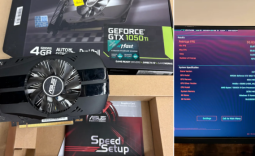 Redditor scores a working GTX 1050 Ti for just $2 at Goodwill
 Sony has secured enough memory to meet PS5 sales targets through March 2027 and says no further price hikes are planned
 Reddit is building a video and audio listening experience for the viral post format it accidentally created for TikTok
 Seagate says Mozaic 5 50TB hard drives are on track for 2027, with 100TB already on the roadmap
 MSI adds a BIOS toggle to tighten standard DDR5 timings closer to EXPO ULL kits
 Keychron is building an open-source gaming mouse firmware called ZGM
 Assassin's Creed Odyssey gains 90% more players due to Christopher Nolan's 'The Odyssey'
 AMD Radeon GPU prices set to increase by 10% in August
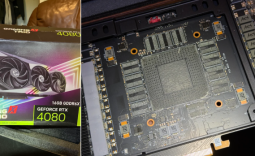 Redditor buys an RTX 4080, opens it up to find no GPU die or VRAM inside
 NVIDIA GPU rumors swirl claiming major price hikes of 20 to 30% - or more - are coming, as VRAM costs climb
 Montech TG3 Mid-Tower Chassis Review
 ASUS ROG Strix X870E-A Gaming WiFI7 Neo Review - A New Enticing Option
 Noctua NL-LC1-36 Liquid CPU Cooler Review
 Logitech G316 X 98 Wired Gaming Keyboard Review - Retro-Inspired Board that Falls a Little Short
 Biwin M560 2TB SSD Review - Best Overall Retail-Ready DRAMless SSD
 Logitech G512 X 98 Analog Mechanical Gaming Keyboard Review - An Innovative Two-in-One
 Thrustmaster T.Flight HOTAS 5 MSFS Edition Review
 SteelSeries Arctis Nova Pro Omni Wireless Headset Review - One Headset to Rule Them All
 SteelSeries Arctis Nova 7 Wireless Gen 2 Headset Review - New and Improved, But Is It Enough?
 AMD Ryzen 7 7700X3D Review - Days of Future Past
 ASUS ROG's 20th Anniversary Line-up of Premium PC Gaming Gear has Arrived - Here's Everything You Need to Know
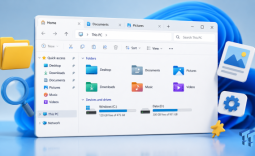 Six File Explorer tips every Windows user should know
 I switched my PC to encrypted DNS in Windows 11, and browsing felt more private
 Printer Not Working in Windows? How to fix detection, print queues and drivers
 The Ultimate Guide to Personalizing Your Windows 11 Taskbar
 How to Turn Your Windows Laptop Into a Second Monitor with Miracast and Wireless Display in Minutes
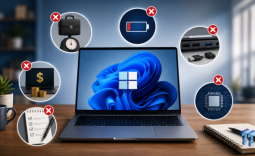 6 Mistakes to Avoid When Buying a Windows Laptop
 I capped Windows Update's bandwidth with Delivery Optimization, and my downloads stopped choking
 I use this decade-old free tool that finds files faster than Windows Search does
 I install and update most of my apps with this Windows command now, and I stopped downloading sketchy installers