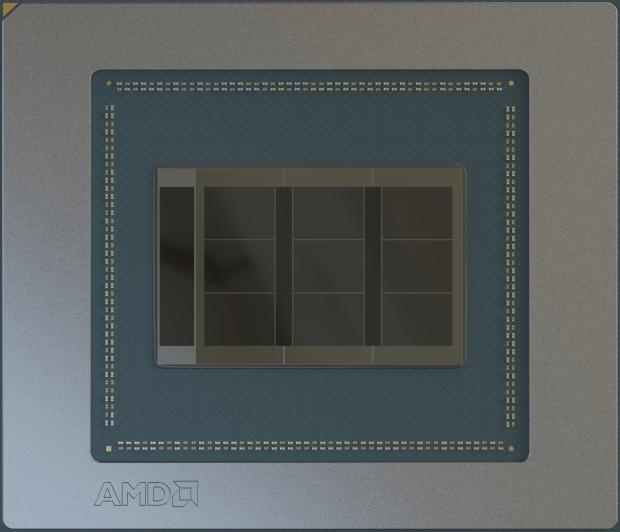




AMD has teased a future-gen GPU architecture that would use a "multi-chipset" GPU design in a new patent filing... this is NOT RDNA 4... rather, this would be RDNA 5 or further out in AMD's Radeon GPU roadmap.
The company is very experienced in multi-chiplet designs, with AMD's Instict MI200 AI accelerators being the first to feature an MCM (multi-chip module) design, using multiple chiplets stacked onto a single package. This includes the GPCs (Graphics Processing Cores), HBM memory stacks, and the I/O die.
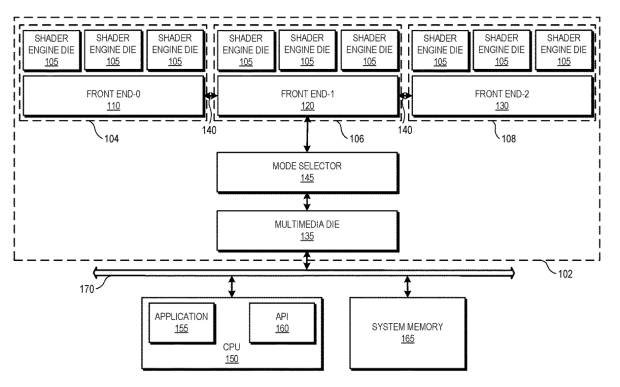
The newly-spotted patent describes the use of three different "modes" of chiplet utilization, with the differences being in how the resources are allocated and then managed ahead. The patent shows three different modes: the first is the "single GPU" mode, similar to how graphics cards with GPUs function now, all of the on-board chiplets would act as a single, unified processing unit, with resources shared in a collaborate environment.
The second mode is called "independency mode" that has individual chiplets acting independently, responsible for their functions through the dedicated front-end die that's responsible for scheduling tasks to its associated shader engine dies. The last mode is called "hybrid mode" where the chiplets would act independently, and co-exist as well. This would benefit unified and independent processing, offering scalability and efficient resource utilization.
The patent describes the multi-chiplet approach: "By dividing the GPU into multiple GPU chiplets, the processing system flexibly and cost-effectively configures an amount of active GPU physical resources based on an operating mode. In addition, a configurable number of GPU chiplets are assembled into a single GPU, such that multiple different GPUs having different numbers of GPU chiplets can be assembled using a small number of tape-outs and a multiple-die GPU can be constructed out of GPU chiplets that implement varying generations of technology".