














The Fallout TV show has sparked a debate among viewers: Is it better to binge the entire season on day one or take your time with weekly episodes?

The new Fallout TV show on Amazon Prime is an example of incredible execution. The entire transmedia campaign was clearly planned out from the get-go by people who A) know their audience, B) care about the franchise, and C) have a bunch of products at the ready. The Fallout show is a huge success, but it only works because of the engagement firestorm that is binge culture.
I've seen a few articles criticizing the Fallout show's binge format. This thinking is a bit myopic and loses sight of why the Fallout show actually exists in the first place: To shine a lighthouse beacon on the Fallout games. The Amazon show brought Fallout front and center, exposing the post-apocalyptic franchise to Prime's 200 million subscribers.
The binge format accelerates Fallout and feeds into the habits of these kinds of viewers; if you binge watch the entire Fallout TV show, odds are you might also binge a play session in a Fallout game.
The Fallout show is meant to be a gateway to the series. You watch the show, and after you're done, odds are you'll probably want to keep engaging with the franchise. What better way to do that than forge your own path in the wasteland via an interactive game?
It just so happens that Bethesda and Microsoft have seven Fallout games at the ready for you to spend time and money on:
- Fallout
- Fallout 2
- Fallout 3
- Fallout New Vegas
- Fallout Shelter
- Fallout 4
- Fallout 76
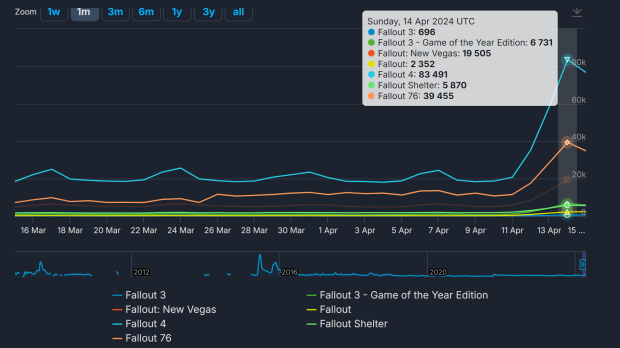
And spend time and money consumers have. According to Steam DB, a tracker that posts up numbers from Valve's PC platform, every Fallout game on Steam saw an uptick in players after the show went live.
The Fallout show wasn't meant to be a suspenseful serialized experience--it's not Game of Thrones, or a funnel that guides you into any one kind of outlet. The show was specifically designed to take advantage of binge culture with the hopes of stratospheric levels of engagement, hype, and buzz. This transmedia campaign was intended to have a snowball effect where viewers can gain more and more momentum as they discover more games, content, and lore, expanding outward as they gain speed in the ecosystem.


 Todd Howard teases future of Fallout games, including Fallout 5: 'We are working on even more'
 Fallout TV show season 2 sparks surge in Fallout game popularity on Steam
 Fallout 3 remastered mentioned in McFarlane Toys product list
 Fallout 5 takes place in the same world and timeline as Fallout TV show, Bethesda confirms
 Mass Effect TV producer says he was never told to rewrite show for non-gamers
 RAM crisis is getting worse, Valve engineer warns
 Xbox's return to exclusives was decided 'very early on' by CEO Asha Sharma
 Xbox console exclusives can include multiplayer games too
 Assassin's Creed Black Flag Resynced sells over 3 million copies, New Game+ is coming
 Modder plays GTA Vice City and GTA III on a TV inside GTA San Andreas
 Enthusiast puts 11 fans and an AiO on an RTX 3080, gains only 4 FPS
 Spotify removed 75 million AI-generated tracks in 2025 as it cracks down on royalty abuse
 YouTuber claims Sony is using social media bots to push back against backlash over its physical disc announcement
 Apple's first OLED iPad mini could launch as early as October
 Ryzen 7 7700X3D outperforms Ryzen 7 5800X3D with just one stick of DDR5, making AM4 a terrible option for your next build
 SteelSeries Arctis Nova 7 Wireless Gen 2 Headset Review - New and Improved, But Is It Enough?
 AMD Ryzen 7 7700X3D Review - Days of Future Past
 Samsung 990 2TB SSD Review - Ninth Gen QLC at PCIe Gen4 Speeds
 ASUS ExpertBook Ultra (Panther Lake) 14" Business Laptop Review
 ASUS ROG Raikiri II Xbox Wireless Controller Review - Ready to Take Control
 MOZA FMP18 Panel Bundle Review: authentic F/A-18 Hornet cockpit controls for flight sims
 Micron 6600 ION 245.76TB Enterprise SSD Review - Best in Class Programming Speeds
 MOZA MA3F EFCM Flight Control Module Review: authentic Airbus A320 autopilot panel for simulators
 Turtle Beach Stealth Pro II Wireless Gaming Headset Review - Premium Sound, Fantastic Features
 MOZA MGX1000 Instrument Panel Review: a realistic Garmin G1000 replica for immersive flight sims
 I use this decade-old free tool that finds files faster than Windows Search does
 I install and update most of my apps with this Windows command now, and I stopped downloading sketchy installers
 Hisense U6SF 65-inch MiniLED TV: High Performance Meets Leisurely Convenience
 I stopped digging through Windows menus after I set up this one folder
 Don't sell your Windows laptop until you do these things
 6 PC cleaning mistakes to avoid for safer hardware maintenance
 Phison and Intel Take Aim at Local AI's Memory Wall with aiDAPTIV
 How to Remap Keyboard Keys in Windows using Microsoft PowerToys
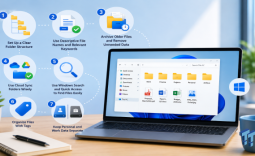 7 tips to organize your Windows files for faster, easier access
 Intel Arc G3 Extreme first impressions with MSI's Claw 8 EX AI+ - Incredible power for an extreme price