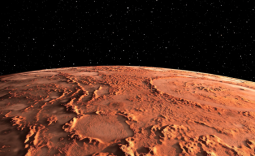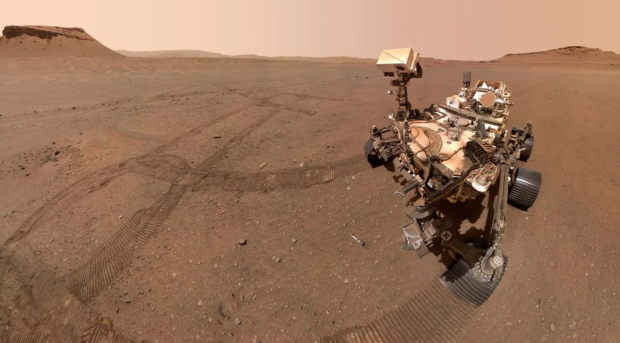




NASA's Perseverance rover landed in the Jezero Crater in February 2021, and since then, it has been collecting sediment samples, some of which may contain proof of past microbial life.
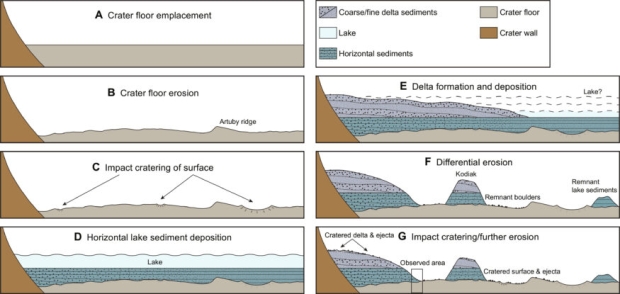
A new study published in Science Advances details a geological survey of the Jezero Crater in which researchers used radar instruments attached to Perseverance to penetrate the ground to collect data on what is beneath the rover's wheels. The new study found the 4 billion-year-old crater that was created through an asteroid impact was later filled with younger sediment and rocks.
Notably, these younger sediments and rock could have been carried down into the crater through multiple river systems, which coincides with researchers' previous strong suggestion that the Jezero Crater once contained deltas fed by an ancient river system. These suggestions were why Perseverance was sent to investigate the Jezero Crater. Now, scientists have found horizontal layers of underground sediment that resemble a lake on Earth.
As water levels increased and decreased over the billions of years, they created a delta-like web of watery trails. If the Jezero Crater was once a lake similar to lakes on Earth, it would be the perfect location to search for past microbial life, which is why scientists are saying there is a chance that Perseverance's samples could already contain proof of its existence. However, we won't know for sure until the samples undergo testing back on Earth, which means we will have to wait until the samples are retrieved.
Unfortunately, it doesn't seem like that will happen until at least 2030.
![Photo of the PlayStation Store Gift Card [Digital Code]](https://m.media-amazon.com/images/I/41cEZpeUA1L._SL160_.jpg)