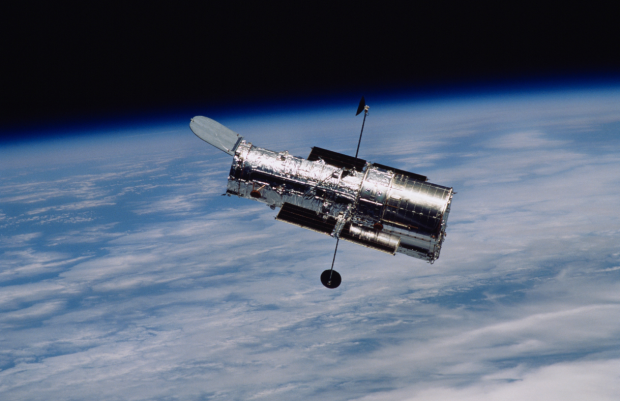




The European Space Agency (ESA) has released an image snapped by the famous Hubble Space Telescope, showcasing the galaxy officially called NGC 3156.
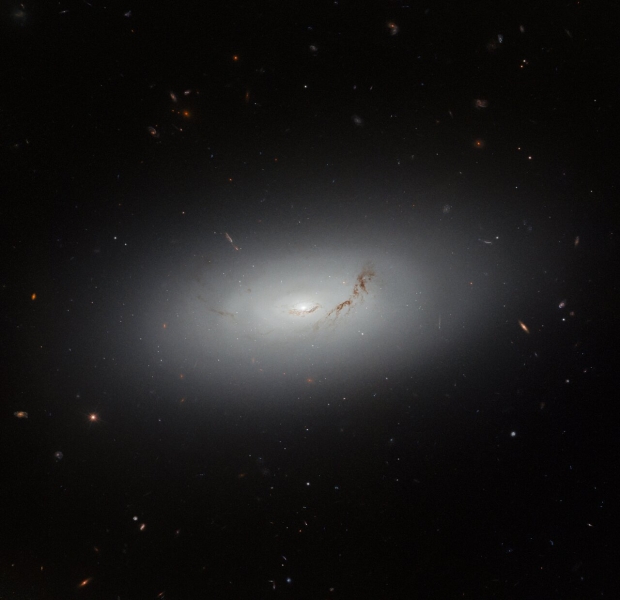
The space agency explains that NGC 3156 is a lenticular galaxy, which is a galaxy that falls between an elliptical and spiral galaxy. Notably, this great galactic disk is located 73 million light-years away from Earth within the constellation Sextans, which belongs to the Hercules family of constellations. So, what makes this galaxy so special? Lenticular galaxies are believed to have used up or have lost most of their interstellar matter, leading researchers to believe they are home to much older stellar populations.
The ESA also explains that the equatorial constellation known as Sextans was named after the astronomical instrument, and not the instrument that was commonly used for nautical navigation. "Sextants are often thought of as navigational instruments that were invented in the 18th century. However, the sextant as an astronomical tool has been around for much longer than that: Islamic scholars developed astronomical sextants many hundreds of years earlier in order to measure angles in the sky," writes the ESA.
As you can probably imagine, astronomical sextants have long been replaced by new and more powerful instruments such as the Hubble Space Telescope. The idea behind these upgraded instruments is to measure an object much more accurately and precisely.
The ESA gave a description for the above image of NGC 3156:
It appears to be formed of faint, grey, concentric ovals that grow progressively brighter towards the core, where there is a very bright point, and fade away at the edge. Two threads of dark red dust cross the galaxy's disc, near the centre. The background is black and mostly empty, with only a few point stars and small galaxies