Newsletter IconFacebook IconX IconThreads IconInstagram IconYouTube IconPinterest Icon
Giveaway: Win an NZXT H6 RGB+ Case, Kraken Elite AIO, RGB Fans and 1200W PSU

NASA landed on an asteroid and found something they didn't expect

NASA landed on an asteroid with a spacecraft to collect a sample, and now the space agency has revealed what the surface is like.

Comments
Tech and Science Editor
Published
Updated
45-second read time
Voice: Jak Connor
0:00 / --:--
Use left and right arrow keys to seek audio.

NASA has explained that one of the asteroids left over from the formation of the solar system isn't what it appears to be.

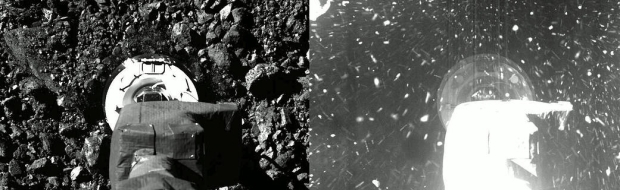
Asteroid Bennu is a relic from the formation of the solar system, and is expected to hold many clues about the history of the solar system, ancient life, and more. With the aforementioned goals in mind, NASA launched its OSIRIS-REx spacecraft to collect a sample from the asteroid, and it was successfully acquired in October 2020 when it briefly landed on the asteroid's surface.

NASA explains that it didn't expect Bennu's surface to be so loosely packed, and according to a recent blog post on NASA's website, the OSIRIS-REx spacecraft would have sunk into Bennu if the spacecraft didn't fire its thrusters immediately after it collected the sample. According to Dante Lauretta, principal investigator of OSIRIS-REx, "our expectations about the asteroid's surface were completely wrong". The space agency says a good way to think about what it would be like to walk on the surface of Bennu is to imagine walking in a plastic ball pit.
NASA landed on an asteroid and found something they didn't expect 02

"If Bennu was completely packed, that would imply nearly solid rock, but we found a lot of void space in the surface," said Kevin Walsh, a member of the OSIRIS-REx science team.

Photo of the Fifth Sun NASA Logo, Athletic Heather

Best Deals: Fifth Sun NASA Logo, Athletic Heather

Prices last scanned 5 hours and 48 minutes ago

* Prices may be inaccurate. As an Amazon Associate, we earn from qualifying purchases. We earn affiliate commission from any Newegg or PCCG sales.

News Sources:engadget.com and nasa.gov

Comments

Tech and Science Editor

Email IconX IconLinkedIn Icon

Jak joined TweakTown in 2017 and has since reviewed 100s of new tech products and kept us informed daily on the latest science, space, and artificial intelligence news. Jak's love for science, space, and technology, and, more specifically, PC gaming, began at 10 years old. It was the day his dad showed him how to play Age of Empires on an old Compaq PC. Ever since that day, Jak fell in love with games and the progression of the technology industry in all its forms.

Stay Updated

Follow TweakTown for breaking tech news, reviews, and daily updates.

Add TweakTown as a preferred source on GoogleFind TweakTown on Apple News
Newsletter Subscription