












A new study published in the journal Developmental Cell has revealed how a cell nucleus can repair itself when ruptured to prevent DNA spilling out into the rest of the cell.

A cell's nucleus has a nuclear envelope encompassing the DNA within to separate it from the rest of the cell. The nuclear envelope is a phospholipid membrane, which interacts with the cell's cytoskeleton, a network of fibers that help stabilize the structure of the cell. However, the cytoskeleton can sometimes exert excess pressure on a cell's nucleus, leading to a rupture.
"Uncovering the mechanisms that underpin rupture repair is a fundamental question in cell biology, and a better understanding of this process has broad implications for human diseases such as cancer, cardiovascular disease, or autoimmunity," said Dr. Monica Agromayor of the School of Immunology & Microbial Sciences at King's College London, who led the study.
A group of proteins collectively known as the ESCRT machinery is shown to be responsible for resealing the nuclear envelope. One such protein is the BROX protein, which the ESCRT machinery attaches to the ruptured portion of the envelope, allowing BROX to connect with the LINC complex. The LINC complex is a group of proteins connecting the cytoskeleton and the nuclear envelope, which allows the cytoskeleton to exert excess pressure onto the envelope,
BROX binding leads to the LINC complex detaching from the rupture site, allowing the nuclear envelope to repair itself without the pressure imposed by the cytoskeleton. The research suggests that a cell nucleus is more than a simple protective shell to house DNA and functions more as an independent organelle similar to other structures within the cell.
You can read more from the study here.


 Scientists discover gene that if tweaked can extend life by up to 30%
 Scientists birth organisms in 'third state' that's beyond life and death
 Splinter Cell's focus on going back to its roots could be a huge win for Ubisoft
 Splinter Cell: Conviction storyboards emerge, calling back to game's original 2007 vision
 SK hynix unveils DRAM memory chip roadmap for the next 30 years: 4F2VG tech, 3D DRAM, and more
 Razer announces its first Artisan Keycap with the Triple-Headed Snake Edition
 ZOTAC's 20th Anniversary Edition GeForce RTX 5080 features a titanium colorway and mirror-like backplate
 GeForce NOW app for Linux leaves beta, while DLSS Frame Generation cloud latency also improves
 Twitch opts streamers into gen AI training by default, faces harsh backlash
 Sean Murray still plays the 2016 launch version of No Man's Sky
 China's YMTC has climbed to third place in global NAND flash shipments
 $100 GTA 6 version makes up 89% of pre-orders, analysts estimate
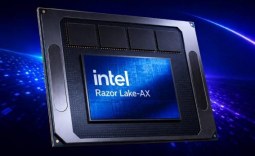 HWiNFO's latest update quietly confirms Intel is working on Razor Lake-AX
 Nintendo puts Switch 2 price increase warnings on store demo kiosks ahead of September 1 hike
 GIGABYTE launches two new B450 motherboards as demand for AM4 stays high in 2026
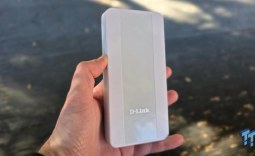 D-Link F518 5G Wi‑Fi 6 AX1800 Mobile Hotspot Review: All-Day Mobile Hotspot
 Bose Lifestyle Ultra Speaker Review - Impressively Detailed Room-Filling Sound
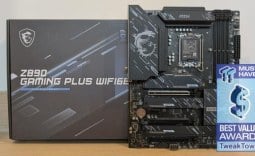 MSI Z890 Gaming Plus WIFI6E Review - Z890 for under $200
 Mortal Kombat (1995) 4K Ultra HD Blu-ray Review
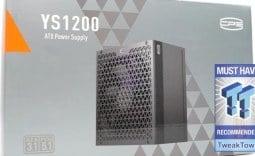 CPS PCCOOLER YS1200 ATX 3.1 80 PLUS Gold PSU Review
 ASRock X870E Taichi White Review: a premium AM5 motherboard with 10G LAN and WiFi 7
 Asetek Initium Pedal Modular Upgrades Review
 Thinkware U3000 Pro Review - Smart Dashcam with Wi-Fi quirks
 Montech TG3 Mid-Tower Chassis Review
 ASUS ROG Strix X870E-A Gaming WiFI7 Neo Review - A New Enticing Option
 I ditched the Windows 11 context menu for this open-source tool, and here's why
 Windows 11 may be encrypting your drive already, and I checked where my recovery key went
 GIGABYTE's 40 Days of INFINITY celebrates 40 Years of Innovation with stunning GeForce RTX graphics cards and rewards
 I swapped File Explorer for this free file manager and finally got the layout I wanted
 How to tell if someone has been using your Windows PC without your permission
 6 Task Manager tips for troubleshooting Windows performance problems
 ASUS ROG's 20th Anniversary Line-up of Premium PC Gaming Gear has Arrived - Here's Everything You Need to Know
 Six File Explorer tips every Windows user should know
 I switched my PC to encrypted DNS in Windows 11, and browsing felt more private
 Printer Not Working in Windows? How to fix detection, print queues and drivers