













Big German software company SAP has averted a potential EU antitrust fine by agreeing to open up its maintenance and support market for on-premise software. The European Commission has accepted the company's commitments to let customers switch or terminate support contracts more easily.

The change comes after an investigation by EU regulators into how SAP controlled access to its enterprise software for maintenance and support, a process that regulators argued stifled competition. Companies using SAP, which provides the critical infrastructure of any given company as its software processes finances, HR documentation, sales, etc, said they want to keep using SAP, but want third parties to be able to provide support. SAP has now allowed third-party providers to offer support services, which aligns with EU competition rules.
Popular Now: Modders upgrade the original PlayStation's RAM from 2MB to 16MBThese concessions have closed the probe without a fine, which reports say could save the company billions. The move is one of many dodges tech companies have done under the pressure of the EU regulatory hammer, as the watchdog continues to exert its power in the name of the consumer. The EU has been pushing for fairer access to critical enterprise services, and SAP's agreement sets a precedent for how large software vendors may need to adapt in the future.

Frequently Asked Questions
TweakBot answers common questions about this news using TweakTown's own coverage from this page and related content from our archive. Tap a question to reveal the answer, or type your own below.
How might third-party support pricing and service levels compare to SAP's legacy support offerings according to related TweakTown coverage?
How have other large enterprise software vendors responded to similar EU pressure, and could that influence SAP's long-term obligations?
Have a question not listed here? Ask below and TweakBot will answer it.

With this resolution, SAP avoids a costly and likely very drawn-out legal battle that will come with financial and reputational damages. For enterprise customers, the change could mean more choice and better pricing, which is great for businesses. However, what remains to be seen is whether competitors and regulators will push for similar reforms elsewhere.


 US Senator Elizabeth Warren pushes for US DOJ to look into NVIDIA and anti-competitive AI GPUs
 Google Chrome silently downloads a 4GB AI model on your PC without asking
 Eurocom's new Blitz Ultra enterprise laptops: TPM 2.0 module, up to 96GB RAM, up to 16TB SSD
 NVIDIA's new GB10 Superchip for AI PCs is a total tease of its debut in gaming laptops, Mini-PC
 AMD denies rumors of not bringing FSR 4.1 to RDNA 3.5 integrated GPUs, decision still up in the air
 Cursor builds AI agent 'Sand' to rival Anthropic's Claude Cowork
 PocketMage is a distraction-free pocket computer with a wizard-themed operating system
 Samsung is holding your health data hostage to train its AI
 ASUS unveils the new ROG Gjallar Gaming Soundbar with wireless subwoofer
 AMD is prepping FSR Multi Frame Generation with an 8X mode
 Patriot's Viper Steel 5 Infinite DDR5 memory features never-before-seen 3D Lighting, also hits speeds of 8000 MT/s
 LIAN LI launches new fans with integrated 1.8-inch LCD screens
 ASUS's ROG Raikiri II Pro PC controller supports 8K polling and instant actuation buttons
 Ryse: Son of Rome was supposed to be Xbox's Assassin's Creed but nobody bought it
 Lenovo lists its first Wildcat Lake ThinkPad laptops with Core 7 and Core 5 SKUs
 MOZA FMP18 Panel Bundle Review: authentic F/A-18 Hornet cockpit controls for flight sims
 Micron 6600 ION 245.76TB Enterprise SSD Review - Best in Class Programming Speeds
 MOZA MA3F EFCM Flight Control Module Review: authentic Airbus A320 autopilot panel for simulators
 Turtle Beach Stealth Pro II Wireless Gaming Headset Review - Premium Sound, Fantastic Features
 MOZA MGX1000 Instrument Panel Review: a realistic Garmin G1000 replica for immersive flight sims
 Simagic Zeus Formula Steering Wheel Review: premium build and advanced inputs for F1 racing
 GIGABYTE X870E Aero X3D Dark Wood Review - A woody goody
 The Super Mario Galaxy Movie (2026) 4K Ultra HD Blu-ray Review
 KTC H49S66 5K2K (5120x1440) 49-inch 180Hz Gaming Monitor Review
 HighPoint Rocket 1604L Gen5 x16 NVMe Software RAID AIC Review: half the price with full 59 GB/s speed
 I stopped digging through Windows menus after I set up this one folder
 Don't sell your Windows laptop until you do these things
 6 PC cleaning mistakes to avoid for safer hardware maintenance
 Phison and Intel Take Aim at Local AI's Memory Wall with aiDAPTIV
 How to Remap Keyboard Keys in Windows using Microsoft PowerToys
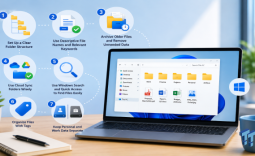 7 tips to organize your Windows files for faster, easier access
 Intel Arc G3 Extreme first impressions with MSI's Claw 8 EX AI+ - Incredible power for an extreme price
 How to fix Wi-Fi Adapter Not Working on Windows laptops: troubleshooting tips
 Hisense U7SG 4K TV: Modern Entertainment for the New Age
 6 underrated Microsoft Word features worth using to boost your productivity