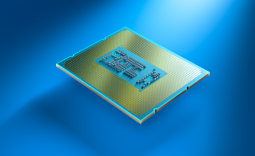
Lenovo has quietly confirmed its first ThinkPad laptops built around Intel's Wildcat Lake chips, adding new configurations to the ThinkPad E14 Gen 8 and ThinkPad E16 Gen 4 in its official product specifications database. This is the first time Intel's budget Core Series 3 platform has shown up in Lenovo's business laptop lineup.
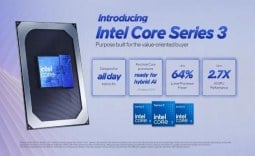
Wildcat Lake officially launched earlier this year as Intel's Core Series 3 family, sitting a notch below the Core Ultra 300 "Panther Lake" chips that already power higher-end ThinkPad models. Both the E14 and E16 will offer buyers a choice between the two platforms, giving Lenovo a cheaper entry point without dropping the newer silicon entirely.

The listed SKUs include the Core 5 315, Core 5 320, Core 5 330, and a Core 7 360 model, each carrying two "Cougar Cove" P-cores paired with four "Darkmont" low-power E-cores, for six cores and six threads total. P-core boost clocks reportedly range from 4.4 GHz to 4.8 GHz, depending on the SKU.

That Core 5 320 chip has already shown up in independent benchmarks, where it reportedly beat Apple's A18 Pro by 21 percent in multi-threaded workloads, so the performance ceiling here looks reasonable for everyday office tasks. The Core 7 360 SKU will be even faster by all accounts.

Graphics and AI performance are more modest by design. Integrated graphics reportedly top out around 18 to 21 TOPS, with the NPU adding 15 to 17 TOPS, well short of the 40 TOPS threshold Microsoft requires for Copilot+ branding. Even the entry-level Core 3 chips in this family have punched above their weight in early testing, with one sample matching the MacBook Neo despite a lower core count, so Wildcat Lake's efficiency focus seems to be paying off even at the bottom of the stack.
Memory and storage take the biggest hit compared to Panther Lake variants. These ThinkPads reportedly get a single DDR5-5600 SO-DIMM slot capped at 32GB, plus one M.2 slot for drives up to 1TB, versus dual memory and storage slots on the pricier configurations. Display options include 14-inch WUXGA or 2.8K panels on the E14, and WUXGA or WQXGA on the E16, with some panels reportedly supporting 120Hz refresh rates.


Frequently Asked Questions
Open a question for an answer from TweakTown's coverage of this news, or ask your own below.
Are the Wildcat Lake E14 and E16 SKUs configurable with higher-capacity SSDs than 1TB at purchase or via aftermarket upgrades?
How will the single DDR5-5600 SO-DIMM limitation affect real-world multitasking compared with the Panther Lake dual-channel memory variants?
Based on available benchmarks for the Core 5 320 and Core 7 360, what performance tradeoffs should buyers expect between choosing a Wildcat Lake SKU versus a Panther Lake SKU for office productivity and light creative work?
Have a question about this content not listed here? Ask below and TweakBot will answer it.

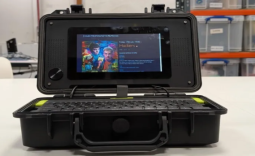
Lenovo hasn't confirmed pricing or a release window, though Intel showed off a Wildcat Lake engineering board at Computex back in June, suggesting retail hardware has been in the pipeline for a while. Budget-focused business buyers and students who don't need Panther Lake's extra graphics or memory headroom are the most likely audience once these ThinkPads actually go on sale.