Samsung Electronics has just disclosed its Q1 2026 earnings, breaking all kinds of records and shattering estimates set by industry analysts. Amid the global semiconductor shortage and the relentless AI boom, Samsung reported an 8x year-over-year profit increase in the first quarter of 2026.
Per the earnings call, Samsung Electronics reported quarterly sales of 133.9 trillion Korean won ($89.96 billion), a 50.2% year-over-year increase from the 79.14 trillion Korean won it brought in last year. It is also higher than the 132.69 trillion won estimate from LSEG SmartEstimate, which is weighted toward more accurate analysts.
The quarterly profit saw a massive boom, going from 6.69 trillion won in Q1 2025 to 57.23 trillion won (or $38.54 billion) in Q1 2026. That is a staggering 755% year-over-year profit jump, and it is also (again) higher than analysts' estimate of 38.23 trillion won. Semiconductor (DS segment) sales rose 225% year-over-year, and semiconductor operating profit grew 48x, from 1.1 trillion won in Q1 2025 to 53.7 trillion won ($36.18 billion) in Q1 2026.
Mobile sales of 37.5 trillion Korean won were also up 4% year-over-year, but that increase just seems inconsequential next to some of these other numbers. Owing to the global DRAM shortage and demand surge, sales of memory products were up 101% sequentially and 292% year-over-year, as expected given the current industry climate.

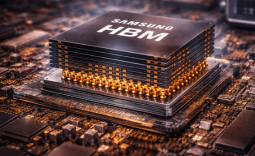
In fact, Samsung's record numbers reflect the current shortages plaguing the hardware industry. Samsung announced during its latest earnings call that conventional DRAM products are delivering higher profits than HBM products. The reason for this switch-up is that conventional DRAM prices are negotiated over much shorter time frames, while HBM memory is locked to its yearly cycle.
Samsung's profits are also in line with its own estimates of 57.2 trillion Korean won, which are higher than the total profit Samsung made in 2025 (43.6 trillion won). Moreover, as we noted in Intel's earnings call, there are currently no signs that they are slowing down, thanks to the global DRAM crisis and the meteoric rise of Agentic AI.