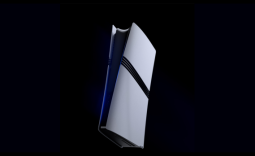
Sony's Mark Cerny, the Lead Architect for the PS5, PS5 Pro, and the upcoming PS6, has confirmed that the upgraded version of its PSSR (PlayStation Spectral Super Resolution) will be rolling out to players in the coming weeks. PSSR is the company's take on DLSS and FSR 4, as it's an AI approach to upscaling that improves performance and image quality.

"We've been hard at work on a new version of PSSR, which takes a very different approach to not only the neural network but also the overall algorithm," Mark Cerny writes in the announcement. "We are happy to share that Resident Evil Requiem is the first title to use this more advanced PSSR, which is helping to keep both frame rate and image quality high."
Mark Cerny also confirms that this new version of PSSR is a major upgrade over the version that launched alongside the PlayStation 5 Pro console, as it's based on the same technology that powers AMD's impressive FSR 4 for the Radeon RX 9000 Series of desktop PC graphics cards - modified and optimized for the PS5 Pro.
"The algorithm and neural network used in the new PSSR stem from our Project Amethyst partnership with AMD," Mark Cerny adds. "Through AMD's FSR 4 upscaling technology, PC gamers have already seen the benefits of our collaboration. With the updated PSSR, we're delivering the very latest of this co-developed technology with a further six months of refinement for PS5 Pro players."
And like FSR and DLSS, Sony will offer PS5 Pro owners a system-level override to enable "Enhance PSSR Image Quality" in any game that currently supports PSSR. Interestingly, this update is set to bring a notable improvement to PS5 Pro visuals, as Digital Foundry's deep dive into the new and improved PSSR in Resident Evil Requiem shows a significant improvement in image clarity compared to the baseline PS5's use of spatial upscaling to render at 4K.
What also makes this update interesting is that, as the PS5 Pro's custom NPU is not as capable or powerful as the AI hardware in AMD's RDNA 4 line-up, Sony had to do a lot of work to get FSR 4 running on the console - hence its delayed arrival. And with that, as the technology can be ported to less-capable GPU hardware, here's hoping AMD can also bring it to RDNA 2 and RDNA 3 gamers on PC.