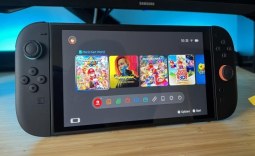
The Nintendo Switch 2 has made its way into the hands of millions of gamers and a portion of those gamers are taking to social media to complain about the screen in handheld mode, specifically how blurry it is.
Following these complaints, tech experts such as Digital Foundry and now Monitors Unboxed put the Switch 2 under the spotlight and ran a series of tests to determine what was causing this reportedly blurry display, and the results were shocking.
The Nintendo Switch 2 blurry screen complaints are justified and measurable, with the Switch 2 display having an extremely slow response time for an LCD IPS display, measuring at a very slow 33.3ms (GtG) in Monitors Unboxed testing. For comparison, a typical LCD IPS panel has an average of 6.3ms response times.

For those who don't know, response time is the time it takes for a pixel to change color, or in the instance of these tests, go from gray to gray. The slower the response time, the longer it takes for a pixel to change color. Now, at 60Hz, the screen refreshes every 16.7ms, but due to the response time being 33.3ms, it takes twice as long for the pixels to finish transitioning from one color to the next.
The result is a blur effect on the screen as the pixels are still finishing changing color as the new frame is being generated, causing remnants of the old pixels from the previous frame to still be on screen and a smearing effect to be seen. This is particularly a problem in scenes with a lot of motion or when the camera is spinning.

Moreover, Monitors Unboxed said the Switch 2's display is the slowest of the 165 gaming monitors it reviewed. So, why is the Switch 2's display so slow? Typically, LCD IPS gaming monitors have slower response times, which isn't unusual.
But monitor companies normally bundle these displays with a technology called Overdrive, which essentially delivers more power to the LCD layer to force the pixels to transition faster, significantly reducing response times. It appears Nintendo has left out Overdrive when designing the Switch 2 panel.
Why? Monitors Unboxed speculates the main reason would be the cost of battery life, as Overdrive does increase the power consumption of the panel, and due to the Switch 2 display already being bigger, brighter, and having an increased refresh rate compared to the Switch 1, it appears to be an area Nintendo has decided to leave out to conserve as much power as possible.