









Error 404 - Not Found
Yikes, sorry! It looks like the page or resource you're after is MIA. It might've been moved, deleted, or never existed.

You can try searching using the box above or below, or jump to our homepage for the latest content. If this looks like a bug in the system, give us a heads-up and we'll fix it.
Meanwhile, here are some fresh bytes for you to check out:
- SteelSeries Arctis Nova Pro Omni Wireless Headset Review - One Headset to Rule Them All
- I use this decade-old free tool that finds files faster than Windows Search does
- I install and update most of my apps with this Windows command now, and I stopped downloading sketchy installers
- Hisense U6SF 65-inch MiniLED TV: High Performance Meets Leisurely Convenience
- SteelSeries Arctis Nova 7 Wireless Gen 2 Headset Review - New and Improved, But Is It Enough?
- AMD Ryzen 7 7700X3D Review - Days of Future Past
- Samsung 990 2TB SSD Review - Ninth Gen QLC at PCIe Gen4 Speeds
- ASUS ExpertBook Ultra (Panther Lake) 14" Business Laptop Review
- ASUS ROG Raikiri II Xbox Wireless Controller Review - Ready to Take Control
- MOZA FMP18 Panel Bundle Review: authentic F/A-18 Hornet cockpit controls for flight sims
- I stopped digging through Windows menus after I set up this one folder
- Micron 6600 ION 245.76TB Enterprise SSD Review - Best in Class Programming Speeds
- MOZA MA3F EFCM Flight Control Module Review: authentic Airbus A320 autopilot panel for simulators
- Turtle Beach Stealth Pro II Wireless Gaming Headset Review - Premium Sound, Fantastic Features
- Don't sell your Windows laptop until you do these things
 Samsung's new OLED panels for laptops push peak brightness to 1,600 nits, enough for a bright outdoors setting
 MSI introduces minimalist and compact GeForce RTX 5080 INSPIRE in all-black
 Razer's new Hammerhead V3 X gaming earbuds come in Xbox and PlayStation flavors
 PS Plus pre-order charts show gamers lean towards higher-priced editions, suggests new price tolerance threshold
 New RPG The Blood of Dawnwalker is complete on disc, doesn't require download to play
 Gamers jump back on Assassin's Creed Odyssey after watching Christopher Nolan's 'The Odyssey'
 Ayaneo has officially brought high-end gaming PC pricing to handhelds
 Valve confirms if Half-Life 3 will be a Steam Machine exclusive
 Der8auer strips the AIO out of a $7,000 RTX 5090 Lightning and replaces it with a custom loop, achieving 55C at 800W
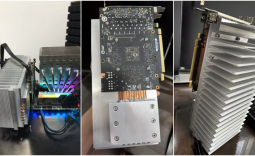 Modder straps a 2.5kg heatsink to an RTX 4060 for completely fanless cooling
 SteelSeries Arctis Nova Pro Omni Wireless Headset Review - One Headset to Rule Them All
 SteelSeries Arctis Nova 7 Wireless Gen 2 Headset Review - New and Improved, But Is It Enough?
 AMD Ryzen 7 7700X3D Review - Days of Future Past
 Samsung 990 2TB SSD Review - Ninth Gen QLC at PCIe Gen4 Speeds
 ASUS ExpertBook Ultra (Panther Lake) 14" Business Laptop Review
 ASUS ROG Raikiri II Xbox Wireless Controller Review - Ready to Take Control
 MOZA FMP18 Panel Bundle Review: authentic F/A-18 Hornet cockpit controls for flight sims
 Micron 6600 ION 245.76TB Enterprise SSD Review - Best in Class Programming Speeds
 MOZA MA3F EFCM Flight Control Module Review: authentic Airbus A320 autopilot panel for simulators
 Turtle Beach Stealth Pro II Wireless Gaming Headset Review - Premium Sound, Fantastic Features
 I use this decade-old free tool that finds files faster than Windows Search does
 I install and update most of my apps with this Windows command now, and I stopped downloading sketchy installers
 Hisense U6SF 65-inch MiniLED TV: High Performance Meets Leisurely Convenience
 I stopped digging through Windows menus after I set up this one folder
 Don't sell your Windows laptop until you do these things
 6 PC cleaning mistakes to avoid for safer hardware maintenance
 Phison and Intel Take Aim at Local AI's Memory Wall with aiDAPTIV
 How to Remap Keyboard Keys in Windows using Microsoft PowerToys
 7 tips to organize your Windows files for faster, easier access
 Intel Arc G3 Extreme first impressions with MSI's Claw 8 EX AI+ - Incredible power for an extreme price