Sony Interactive Entertainment could release a native PS4 handheld so that the 8th console generation lives on alongside the PS5 and even the PS6.

Note: The following is opinion based on informed speculation and is not meant to be taken as factual news.
Sony's latest business strategy meeting got me thinking: What if Sony made PS Vita 2, only instead of being its own separate platform, it was a handheld PS4?
The idea was sparked by the way Sony corporate executives talked about the last-gen console, and what it means for the present and future of PlayStation. Sony made it clear that the nearly 12-year-old PlayStation 4 is still a big part of its video games business, both directly and indirectly. As such, there's no plans to kill the PS4 any time soon (hell, the PS3 storefront is still active).
The PS4 contributes directly through purchases and spending; millions of consumers are still using the PS4 as the main way to play PlayStation games, and that spending can be on a number of different things including full game sales on the PlayStation Store, microtransactions, or via services like PlayStation Plus.
The PS4's indirect contribution is where things get really interesting.

During the presentation, Sony exec Lynn Azar said that the PS4 helped the company avoid any drops in spending across generations. This is because the PS5 uses the foundation of the PS4's ecosystem of games, content, and services via backward compatibility support, which I said was the most important thing for gen 9 consoles at the time.
Essentially, the PS4 passed off the baton to the PS5, but instead of stopping, the PS4 just kept running in the race too.
There's lots of overlap between Gen 8's PS4 and Gen 9's PS5, and it's this multi-generational melding that has helped Sony generate record-breaking revenues and profits. The PS5 generation has made $13 billion profit on $136 billion in revenue (~9.5% margin) because, in part, it was built on the already-strong foundation of the PS4.

In the presentation, Sony's Lynn Azar highlighted how the company is still benefiting from the PS4, and says that Sony will drive a "multi-generational ecosystem" into the future:
"We're still exploring what the future of our platform will look like.
"I'd like to re-emphasize that our financial profile as a business has evolved in line with our strategy. So we've reduced traditional cyclicality by establishing a large ecosystem of players across both the PS5 and PS4 generations, which provides recurring revenues.
"This has driven an overall high and stable level of spend on content and services, which by the way now constitutes 2/3rds of our revenue, providing a consistent, predictable, and profitable base of our revenue.
"PS5 represents the most engaged players with the highest spend per player versus prior generations.
"But our PS4 players are still active and spending as well.
"So by providing players with increasing options of how to access the platform, we're able to better target different play patterns and monetization profiles of different customer segments.
"As we continue to drive multi-generational ecosystem into the future, we'll provide new ways for players to access the platform and experience our content and services."
PS4 users are still active and spending, and Sony is teasing that gamers will have new access points to PlayStation content.

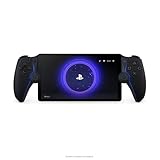
Sony has also warmed up to handhelds in recent years with the release of the PlayStation Portal, which is a $199 remote play/cloud streaming device that doesn't play games natively. The PS Portal is quite successful and is a high-margin device, meaning it's more profitable for Sony to sell and make.
The presentation underlined how important it is for Sony to have long-lasting hardware in which it can release its games and services onto at launch and generate money over a decade-plus period. The PS4 is a catalog device through and through, but that doesn't make it any less important for Sony, and the device is actually helping the company avoid risk because it's another secondary platform that makes consistent earnings. It's critical to have enduring hardware, content, and services that can be monetized over longer periods of time, especially now that gaming has permanently changed.
What if Sony had another form factor to access this platform to ensure the PS4 lives on well past its console years?

A portable PS4 would be unusual; Sony would be making a new device for an old platform. We have seen this before with devices like the PS Vita TV.
But the carry-over effects might be worth it, depending on the costs to make such a device. The PS Portal is a clear example of Sony trying to maximize profits with its accessories while also testing the waters of the handheld market while providing extra value to consumers in the process (and, of course, Sony is also flexing and testing its cloud streaming service). Also, in many ways, the PS Portal is a subscription-selling machine because users need PS Plus in order to stream games from the cloud.
This kind of portable PS4 would provide hardware and accessory sales. A portable PS4 would be lower cost than a portable PS5 for that matter due to the system's lower-end specs, but the PS4's SoC wasn't designed for a handheld, so chip compatibility may be a huge roadblock here. Then again, Sony is making big strides with its AI technology, as we've seen with the PS5 Pro's PSSR tech, so some sort of technical wizardry may help even these odds.
It would also be 100% digital, which is great for Sony and video games publishers.
All time spent in-game would be in the digital sphere, and Sony has confirmed that the PS Portal has increased playtime by 30%. This is a big win for Sony because playtime is a form of investment, and more playtime can lead to more spending--a cycle known as "engagement."
"Currently, the PlayStation Portal owners spend 30% more time playing games, and that they're playing later into the evening. This is showing the impact the Portal has on play patterns. The PlayStation Portal has unlocked additional engagement across our player base. We remain committed to exploring new ways for our players to access our content and services," Sony Interactive Entertainment CEO Hideaki Nishino said during the 2025 strategy briefing.
The last part is very interesting, and is something that Sony's Lynn Azar had said--the part about exploring new avenues for access. Again, the PS Portal was one such avenue.

Sony says the PlayStation console is a "gateway to a lifetime of player engagement and value," and the console is still front and center of Sony's platform plans. But the PS4 has already served its place as this gateway, at least principally, and any access other points would be secondary.
However, in another slide of the presentation, Sony does say that a core focus is to "build a strong, multi-device ecosystem" while also "driving consistent revenue from content, services, and peripherals."
Such a handheld PS4 might tick off multiple boxes at once.
We can also tie this back to what PlayStation CEO Hideaki Nishino said in December 2024. At the time, Nishino explained why the PlayStation Portal handheld doesn't play games natively--Sony didn't want to create extra work for developers. A theoretical PS4 handheld may be more streamlined than a secondary PS Vita 2 successor that uses its own platform environment.
"I think the focus will be on whether the developer can provide something that meets the customer's needs and style without remaking the game. As with PS Portal, remote play does not require creators to tweak the code. Our cloud gaming also does not require creators to spend time on it.
"If we start saying things like, 'please make it compatible because the screen is small,' or 'please do something about the small memory,'[ we will have to do a lot of things. ...If we try to create something with restrictions, I think we will have to tweak the code somewhere.
"At that time, I thought it was important to put in place a system that allows creators to respond without any trouble. Anyway, we are thinking about how to make it a platform that is easy for people to create games.
",,,I think there was a time when operating multiple platforms at the same time was a burden for both SIE and creators. Since then, with the evolution of technology, I feel that we have come closer to being able to provide various play styles without putting a burden on creators.
"We try to avoid putting a burden on creators with cloud gaming and PS Portal remote play, but even if it becomes a different form, we will support creators so that they can provide content to the platform more smoothly without causing them any inconvenience. Rather than calling it a product form, I would like to cherish this as a philosophy and a discipline."

The biggest thing that a handheld PS4 would do is carry the 8th console generation into the future in such a way that it fits neatly alongside the PS5, and potentially even the PS6, assuming the gen 10 console is backwards compatible. If Sony could pull off tri-generational compatibility, it could create an ecosystem of games that work across three devices, and barring that, the cross-over effect between the PS4 and PS5 generations should be a potent combination for at least a few more years.
A handheld PS4 would be a kind of in-between device that would ensure the PS4 keeps on giving over time through a lower-cost, digital-only, and subscription-ready device that's tailor-made for high-quality on-the-go gaming. It would serve up all the billion-dollar live games that players already know, give access to services like PS Plus, and access to the 12,000+ games on the PS Store.
The PS4-to-PS5 transition was less of a shift and more of a homogenization of the PlayStation brand as a whole, and both the PS4 and PS5 platforms are quite stuck together as a result. The virtuous cycle of carrying over success from one generation to another has worked out very well for Sony, and it looks to be working well for Nintendo with its Switch 1 to Switch 2 transition.
It will be interesting to see what's on the horizon for Sony, but rest assured, the company is doubling-down on profit maximization