












Last week, we reported on the Ivy Bridge high temperatures, and whether it was because Intel used TIM instead of solder on the IHS, but now things seem to have changed. A PC EVA forum member has used a Core i7 3770K processor, slapped a Noctua NH-D14 CPU cooler and Prolimatech PK-1 thermal grease, and has tested the chip with and without the IHS on to see if there was a difference with thermal performance.
They used AIDA64 Extreme Edition for idle and load average temperature monitoring, with Prime95 smashing the CPU to generate load. Testing was done at 4.5Ghz with 1.2V on the core. The results?
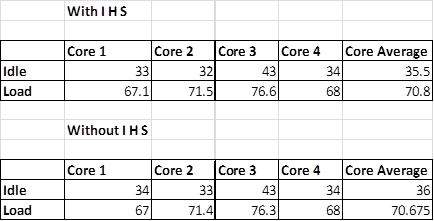
As we can see, even with the cheaper thermal paste and the IHS layer removed, the cooling performance is relatively unchanged. This also allows a 5-percent margin of error. This is another piece of evidence to show that the heating performance is nothing to do with the IHS, by most likely something to do with Ivy Bridge's revised manufacturing process. This means that an Ivy Bridge should reach lower stable 24/7 clock speeds than a Sandy Bridge chip, but offer it with lower power consumption numbers.
Does this make you happy? Or is it something you think Intel should've come out and talked about?
 User receives Intel Core i9-10900K in sealed AMD Ryzen 7 9800X3D box from Amazon in CPU swap scam
 You can debloat Windows 11 in just 2 clicks with this new intuitive tool
 Pete Hines left Bethesda because the studio is now part of something that isn't 'authentic or genuine'
 God of War Laufey gets a release date and Kratos is making a return
 GTA 6 trailer 3 expected to arrive within two weeks, according to insider
 Thieves stole 16 RAM sticks from Chinese eSports hotels, arrested
 Lisuan LX7G100 GPU achieves playable FPS in system with no Intel AMD or NVIDIA hardware inside
 Elder Scrolls 6 roadmap not affected by layoffs, Bethesda says
 Intel and AMD are locking Chinese customers into long-term CPU deals as server chip prices climb more than 40%
 Ubisoft CEO says Sony's PlayStation disc shutdown will not disturb the industry too much
 Vibe coding is flooding the App Store with new apps - on track for record submissions in 2026
 Geekbench 7 is out with CUDA support, smarter multi-core scoring, and new AI workloads across all major platforms
 GTA 6 physical copies in Japan have a 170-day expiration date
 Thrustmaster T.Flight HOTAS 5 MSFS Edition Review
 SteelSeries Arctis Nova Pro Omni Wireless Headset Review - One Headset to Rule Them All
 SteelSeries Arctis Nova 7 Wireless Gen 2 Headset Review - New and Improved, But Is It Enough?
 AMD Ryzen 7 7700X3D Review - Days of Future Past
 Samsung 990 2TB SSD Review - Ninth Gen QLC at PCIe Gen4 Speeds
 ASUS ExpertBook Ultra (Panther Lake) 14" Business Laptop Review
 ASUS ROG Raikiri II Xbox Wireless Controller Review - Ready to Take Control
 MOZA FMP18 Panel Bundle Review: authentic F/A-18 Hornet cockpit controls for flight sims
 Micron 6600 ION 245.76TB Enterprise SSD Review - Best in Class Programming Speeds
 MOZA MA3F EFCM Flight Control Module Review: authentic Airbus A320 autopilot panel for simulators
 The Ultimate Guide to Personalizing Your Windows 11 Taskbar
 How to Turn Your Windows Laptop Into a Second Monitor with Miracast and Wireless Display in Minutes
 6 Mistakes to Avoid When Buying a Windows Laptop
 I capped Windows Update's bandwidth with Delivery Optimization, and my downloads stopped choking
 I use this decade-old free tool that finds files faster than Windows Search does
 I install and update most of my apps with this Windows command now, and I stopped downloading sketchy installers
 Hisense U6SF 65-inch MiniLED TV: High Performance Meets Leisurely Convenience
 I stopped digging through Windows menus after I set up this one folder
 Don't sell your Windows laptop until you do these things
 6 PC cleaning mistakes to avoid for safer hardware maintenance