












With Google's recent acquisition of Titan Aerospace, many have wondered what it would do in our skies - well, now we have somewhat of an idea what the Mountain View-based giant will do. Google has asked the Federal Communications Commission for permission to take to the skies with experimental drones that would provide Internet access to remote areas.

Google wrote to the FCC on Friday, asking it to keep most of the testing details under wraps, but it did write: "Google recently acquired Titan Aerospace, a firm that specializes in developing solar and electric unmanned aerial systems ('UAS') for high altitude, long endurance flights. These systems may eventually be used to provide Internet connections in remote areas or help monitor environmental damage, such as oil spills or deforestation. The STA [Special Temporary Authority] is needed for demonstration and testing of [REDACTED] in a carefully controlled environment".
Starting on October 6, 2014, Google wants to start testing out its drones for 180 days. We should see the site of these tests "in a square east of Albuquerque and south of Santa Fe, New Mexico, centered roughly on the unincorporated community of Stanley", according to consulting engineer Steven Crowley. Google will transmit at frequencies between 910MHz and 927MHz, and from 2.4GHz to 2.414GHz. What will Google be transmitting at those frequencies? No one knows, as this information was redacted from the document, with the company refusing to comment on its application.
Google told the FCC that it will be able to avoid interfering with other users within the spectrum, with Crowley writing that the 2.4GHz spectrum "overlap[s] the lower channels of Wi-Fi".


 Sony explains why the PS Portal only streams PlayStation games and doesn't natively play them
 Google responds to claims Pixel smartphones send private user data to Google every 15 minutes
 Google responds to global Chromecast outage with 'don't do this' warning
 Google appeals historic antitrust lawsuit ruling that threatens its $12.4 billion mobile biz
 Opinion: Sony could make a native PS4 handheld to carry multi-gen legacy into the future
 PlayStation 6 will reportedly ditch the PS5's liquid metal cooling in favor of something else
 GeForce RTX 50 Series hotspot temperature readings won't be added to MSI Afterburner
 Samsung is using titanium to finally tackle the foldable crease problem with the Galaxy Z Fold 8
 PALIT introduces GeForce RTX 3060 Infinity 2 OC GPU, a 'brand new' design
 A hacked Xbox player beat Microsoft in court after it suspended his account and told him to buy his games again
 Dead Space creator Glen Schofield announces retirement after 35 years in the video game industry
 Steve Buscemi to star in new Far Cry anthology TV show
 Assassin's Creed Hexe DLC leaked before the game is even revealed
 100% of Japanese online game developers are using generative AI, reveals new poll
 Windows 11 tested on Steam Machine, provides nearly identical gaming performance to SteamOS
 Samsung 990 2TB SSD Review - Ninth Gen QLC at PCIe Gen4 Speeds
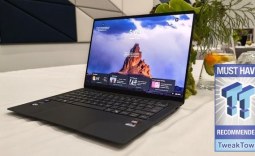 ASUS ExpertBook Ultra (Panther Lake) 14" Business Laptop Review
 ASUS ROG Raikiri II Xbox Wireless Controller Review - Ready to Take Control
 MOZA FMP18 Panel Bundle Review: authentic F/A-18 Hornet cockpit controls for flight sims
 Micron 6600 ION 245.76TB Enterprise SSD Review - Best in Class Programming Speeds
 MOZA MA3F EFCM Flight Control Module Review: authentic Airbus A320 autopilot panel for simulators
 Turtle Beach Stealth Pro II Wireless Gaming Headset Review - Premium Sound, Fantastic Features
 MOZA MGX1000 Instrument Panel Review: a realistic Garmin G1000 replica for immersive flight sims
 Simagic Zeus Formula Steering Wheel Review: premium build and advanced inputs for F1 racing
 GIGABYTE X870E Aero X3D Dark Wood Review - A woody goody
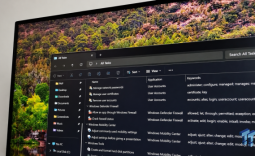 I stopped digging through Windows menus after I set up this one folder
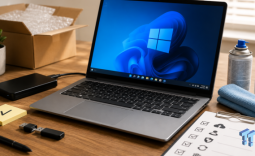 Don't sell your Windows laptop until you do these things
 6 PC cleaning mistakes to avoid for safer hardware maintenance
 Phison and Intel Take Aim at Local AI's Memory Wall with aiDAPTIV
 How to Remap Keyboard Keys in Windows using Microsoft PowerToys
 7 tips to organize your Windows files for faster, easier access
 Intel Arc G3 Extreme first impressions with MSI's Claw 8 EX AI+ - Incredible power for an extreme price
 How to fix Wi-Fi Adapter Not Working on Windows laptops: troubleshooting tips
 Hisense U7SG 4K TV: Modern Entertainment for the New Age
 6 underrated Microsoft Word features worth using to boost your productivity