


 Quick Assist is the only remote-support tool I open when a relative calls about their PC
 MOAIPLAY ORA PRO G1 850W ATX 3.1 PSU Review: high efficiency and 10-year warranty for $119.99
 Navman MiVue Smart True 4K Surround Dashcam Review - Seeing In All Directions At Once
 IQUNIX Magi96 Pro Aluminum Low Profile Mechanical Keyboard Review - Premium Build, Satisfying Sound
 The PowerToys utilities I keep enabled on every Windows 11 PC, and the ones I turned off within a week
 TweakTown's Best of Computex 2026 Awards - The Best Hardware, Gaming Gear, and AI
Learn about how TweakTown tests and reviews hardware. As an Amazon Associate, we earn from qualifying purchases. TweakTown may also earn commissions from other affiliate partners at no extra cost to you.
Stay Updated
Follow TweakTown for breaking tech news, reviews, and daily updates.


Xbox prioritizes Elder Scrolls VI, Fallout, and Halo in new strategy shift
Xbox's new CEO Asha Sharma wants to speed up The Elder Scrolls VI's development and plans to invest in other big franchises as part of a company reset.

Following a string of sales duds, Xbox needs more hit software at the ready. The group's new CEO Asha Sharma plans to make that a reality by advancing the production of games in key franchises, including The Elder Scrolls, Fallout, and Halo, sources tell The Information.
Focusing on these key properties is said to be part of Sharma's plan to revive Xbox. Right now, the Xbox brand has ownership of 20 video game franchises that have each made at least $1 billion in gross revenue--oftentimes much more.
Xbox exec wants to use ads to open up new access points, not just to collect money
Microsoft's gaming execs offer clarifications on the future of Xbox and how ads could be involved.

Xbox's new strategy exec Matthew Ball discussed how ads could open a new frontier for games, sending mixed messages on what's actually coming to the platform. These freeform discussions can treacherous for business executives because everyone is watching Xbox right now, and there are thousands of influencers that are sharing info with fans, often with their own interpretations of the stories that don't always adequately reflect the facts.
Ball has now issued clarifying statements to put players at ease--there's no plans to start interrupting gameplay with interstitial ads. What Ball is describing is more like NVIDIA's GeForce Now streaming offers, free access in exchange for ad viewing.
Redditor buys RTX 2080 Ti Super engineering sample on eBay, has the same number of cores as an RTX Titan but half the VRAM
An engineering sample of a reported GeForce RTX 2080 "Ti Super" has emerged, confirming that NVIDIA was toying with the idea of refreshing its entire RTX 20 series lineup with a Super model (not just the RTX 2080, 2070 and 2060). Discovered by Videocardz, a Redditor bought a working engineering sample of an RTX 2080 Ti Super on eBay and shared images of the card to prove its legitimacy.

The card features the same Founders Edition design as all other RTX 20 series (Founders Edition) models, but the color scheme on the Ti Super variant is noticeably different from all other RTX 20 series Super variants, featuring a black color scheme, with a mirror-like finish in between the card's twin fans.
One oddity with the card's exterior is the badging, which only says "RTX 2080 Super" and is missing the Ti nomenclature. If you want to dive into the weeds, this could mean NVIDIA was thinking about giving the RTX 2080 Super RTX Titan-like specs, but likely NVIDIA opted to use an RTX 2080 Super's middle piece for its engineering samples to save time.
Report: Xbox may be spun off into subsidiary or joint venture with another company
Microsoft could reset Xbox by spinning off the games unit into a separate company, sources tell The Information.

Xbox is stealing headlines lately. Profit margins are down to a dismal 3%, Game Pass has lost millions of subscribers, and revenue has been down $500 million across the last five years despite $20 billion invested into the ecosystem. Games are underperforming, and more layoffs are expected as Xbox right-sizes its spending and plans for a leaner future.
New reports from The Information indicate that Microsoft may spin out Xbox as its own group. Xbox belongs to More Personal Computing, the same segment as Windows, and this is by design--the Xbox gaming platform has included both Windows PCs and consoles for over a decade now.
Microsoft is reportedly cutting hundreds of Azure jobs in China for the third time in two years
Microsoft is reportedly cutting hundreds of jobs within its Azure cloud business in China, marking at least the third round of downsizing the company has carried out in the country over the past two years. According to the South China Morning Post, between 200 and 400 employees are expected to be affected. Those impacted are set to leave Azure on July 6 and receive severance packages based on tenure plus up to seven months of salary.

Five affected employees cited by the report said Azure staff in Beijing and Shanghai received emails last week informing them their roles would be terminated. Some employees have also been offered the option to relocate to Canada. A Microsoft representative told the South China Morning Post that the company had shared an optional internal transfer opportunity with eligible employees, adding that Microsoft remains focused on serving customers and growing globally.
The layoffs come as both Washington and Beijing tighten oversight of cross-border data flows. The US Department of Justice implemented its Data Security Program last year, restricting American organizations from transferring certain datasets to employees, vendors, and investors in countries of concern, including China. Meanwhile, Beijing has continued to strengthen its data governance framework following the introduction of the Data Security Law and the Personal Information Protection Law in 2021.
The Trump Mobile T1 teardown reveals it's basically an HTC phone wearing gold paint
After its website reportedly leaked customer data, the Trump Mobile T1 is now facing another controversy after the gold-painted device was torn down. According to a detailed teardown by iFixit, working with NBC's media sample unit, the T1 is almost component-for-component identical to HTC's U24 Pro, a Taiwanese-branded phone from 2024.

The internal layout, chip placement, and even screw patterns matched between the two phones. To prove the point, the folks at iFixit swapped the motherboards between the T1 and the U24 Pro, and both phones booted up and ran fine in each other's bodies. Both run on a Qualcomm Snapdragon 7 Gen 3 chipset with 12GB of RAM and 512GB of storage, paired with matching 6.8-inch curved displays.
The biggest change is that Trump Mobile's version comes with a different battery. The T1 uses a 19.35Wh cell manufactured in the Philippines, compared to the U24 Pro's 17.23Wh China-made battery. Despite the larger capacity, the T1's battery charges more slowly, capping at 30W compared to the U24 Pro's 60W.
Game Pass is subsidizing parts of Xbox's business, subscriber loss caused major damage
Microsoft is apparently subsidizing multiple parts of its Xbox games division right now, including hardware and other initiatives.

New reports from Windows Central illustrate how badly Microsoft was affected by the recent Game Pass subscriber drop. The unpopular 50% price hike led to a mass exodus and Game Pass lost millions of paid users. This caused a cascade of negative effects that rippled throughout the entire organization.
Xbox's business model is layered, with divisions subsidizing various initiatives and programs. Hardware is subsidized, meaning Microsoft sells Xbox consoles cheaper than it costs to produce them. Xbox then makes its money back (and hopefully more) from games and content. Game Pass is one of the key money makers for Microsoft (nearly $5 billion in FY25), and new reports say that Game Pass in particular has also been subsidizing parts of Xbox that aren't profitable, putting extra stress and weight on the service.
Framework delays first Laptop 13 Pro shipments by a month over touchpad and display issues
Framework has confirmed that shipments of its first Laptop 13 Pro units, originally planned for late June, are now delayed by about a month. Deliveries are now expected to begin in late July, with some potentially not arriving until early August. The company notified pre-order customers directly via email, and importantly, this delay has nothing to do with the ongoing DRAM and memory shortage.

Framework says it found two issues before the mass-production ramp. One with the new haptic touchpad and another with the custom display. Framework's email says that the haptic trackpad has undergone a dozen internal firmware releases, but an electrical grounding issue was found in its circuit board design, causing the trackpad to reset after repeated clicks.
The company worked with suppliers Lite-On and Boréas to diagnose the problem and determined that a new board design is needed. Framework is now running validation testing, including a 200,000-click endurance test, and the new modules are expected to reach the final assembly factory by mid-July.
GeForce NOW annual plans drop to $64.99 and $129.99 in NVIDIA summer sale
NVIDIA has kicked off a summer sale for GeForce NOW, knocking 35% off 12-month Performance and Ultimate memberships until July 8, 2026. The Performance plan drops from $99.99 to $64.99, saving $35, while the Ultimate plan drops from $199.99 to $129.99, saving $70.

Worth noting that the discount only applies to 12-month plans, with 1-month and Day Pass options remaining at full price. The offer is for new members, free members, existing 1-month Performance or Ultimate users upgrading to annual, and 12-month Performance users upgrading to Ultimate. If you already have a 12-month Ultimate plan, this particular deal will not apply to you.
Alongside the sale, NVIDIA confirmed that Guild Wars 3 will be available on GeForce NOW at launch. ArenaNet and NCSoft announced the game during Summer Game Fest 2026, confirming PC, Steam, and PlayStation 5 releases, with the first beta planned for fall 2027.
Valve hit with a multi-hundred-million-dollar lawsuit over artificially inflating PC game prices
Valve has been accused by a Dutch consumer group of using Steam's market power to maintain high PC game prices, higher than the consumer watchdog believes they should be.

The claim is being run by the Stichting Consumenten Competition Claims under the GameClaim banner, alleging that Dutch PC gamers have unfairly paid too much for PC games, downloadable content, and microtransactions due to Valve's restrictions on competition through Steam. The claim states that the group isn't opposed to Steam as a platform, but is seeking fair PC game prices and compensation for Dutch gamers.
The lawsuit claims that Steam is so dominant in the market that developers simply cannot avoid it, and since Valve knows this, it uses its position to maintain high prices and prevent cheaper pricing elsewhere. Additionally, the claim alleges that Valve forces developers to sell their titles at a minimum price and prevents them from offering lower prices or better terms through other online PC game stores. Essentially, the lawsuit claims Valve blocks developers from selling their games outside of Steam for less than they sell them on Steam.
Xbox confirms ongoing RAM crisis will impact the next Xbox
Looming over the next generation of consoles is the ongoing memory and storage crisis, driven by manufacturers diverting supply to high-paying AI companies amid a massive influx of capital into the space. Xbox won't be immune to its impacts, as executives are already discussing the real-world concerns of component prices and how they will affect the next Xbox console.

Xbox recently confirmed that hardware component costs are exploding, with Xbox CEO Asha Sharma detailing in a recent letter that, since this February, the price of storage components was 2x what Xbox had paid the previous fall. Adding, as of June this year, those prices have doubled again. The letter added that Xbox expects prices to continue rising to 5x what the company was paying just two years ago.
In a recent interview with The Game Business, Xbox Chief Strategy Officer, Matthew Ball, has touched on how the shortage will impact the next Xbox codenamed Project Helix.
Continue reading: Xbox confirms ongoing RAM crisis will impact the next Xbox (full post)
Xbox executive reveals if the time of new Xbox consoles is over
Xbox has been on a media rampage recently, with new Xbox CEO Asha Sharma expressing in several interviews that Xbox is about to go through big changes, which the executives have described as a "reset".

Xbox has been enduring quite a bit of headwind, as Sharma and Xbox Game Studios CEO Matt Booty described in a recent co-authored letter; the current Xbox business model isn't sustainable, and other factors are at play, such as the ongoing memory and storage crisis caused by the boom in AI. The concerns around the hardware shortage driving up prices have fallen on the next-generation Xbox and PlayStation 6, as Sony isn't immune either.
In a recent interview with The Game Business, Christopher Dring spoke with Xbox CSO Matthew Ball about the condition of the console market amid Xbox's declining revenue despite multi-billion investment.
Continue reading: Xbox executive reveals if the time of new Xbox consoles is over (full post)
Amazon's Graviton5 processor will go head-to-head with Intel and AMD in the cloud
Amazon Web Services (AWS) is one of the largest cloud companies in the world, and for several years it has been developing and deploying AWS Graviton processors for web applications, analytics, databases, machine learning (ML) inference, gaming, video encoding, and more. The latest in-house AWS processor, designed and built in collaboration with Annapurna Labs on TSMC's 3nm process, the AWS Graviton5, is here.

The chiplet design features an impressive 192 Arm V3 cores, a 5X increase in L3 Cache, a 33% lower inter-core latency, 420 GB/s die-to-die bandwidth, PCIe Gen6 and DDR5-8800 memory support with a bandwidth of 800+ GB/sec. AWS notes that compared to Graviton4-based instances, the new Graviton5 offers up to 35% faster performance for AI inference, making it an ideal chip for the current agentic era. And when it comes to memory, it delivers the "fastest memory of any processor instances in the cloud."
Naturally, this means that Amazon's new M9g instances powered by AWS Graviton5 are outperforming previous-gen AWS instances powered by Intel Xeon "Cascade Lake" and AMD EPYC "Genoa" processors. And with that, AWS confirms that Meta is one of its largest customers, and is deploying Graviton5 "at scale" with tens of millions of CPU cores supporting the company's agentic AI push.
Halo Campaign Evolved hits 120 FPS max at 1440p Ultra on a GeForce RTX 5090
Halo: Combat Evolved is a built-from-the-ground-up remake of the first game's iconic and memorable campaign, and it's out next month for PC, Xbox consoles, and PS5. As the first game in the Halo series to be built on Unreal Engine 5, the latest story-based trailer that focused on the remake's brand-new prequel missions was generally well-received from the community, with many highlighting its impressive visuals.

Earlier this week, we reported on the game's PC requirements and specifications from Halo Studios, which outlined some pretty powerful GPU hardware and even 32 GB of system memory to run the game at High and Ultra settings. Today we've got a new hands-on video from FPS-focused YouTube channel jackfrags, which offers hands-on impressions and even early performance information for the game's PC build.
As the release is still several weeks away and we can expect day-one drivers from NVIDIA, AMD, and Intel, what we see here could improve. For the most part, it's great news, in that Halo: Combat Evolved seems to run smoothly and without stuttering across indoor and outdoor missions, and on and off vehicles. The only downside is that the GeForce RTX 5090 seems to top out at around 120 FPS when playing the game at 1440p with Ultra settings and DLAA.
Desktop GPU shipments hold steady in Q1 2026 with NVIDIA maintaining 90% market share
A new report from Jon Peddie Research, covering the first quarter of 2026's GPU shipments from AIBs (add-in board partners for NVIDIA, AMD, and Intel), paints a relatively strong picture of the current GPU market. With 11.8 million units shipped in the first three months of the year, it's a 0.6% decrease from the previous quarter; however, this figure is much lower than the historical Q1 average drop of 12%.

Q1 is a quieter month for hardware shipments, so the minimal 0.6% decrease is notable. This covers GPUs in the GeForce RTX, Radeon RX, and Intel Arc lineups, and what makes this figure even more interesting is that it arrives when desktop PC shipments dropped 25% year-over-year and 24% quarter-to-quarter for Q1 2026. According to the data, the AIB attach rate, that is, GPU per desktop PC shipped, increased to 76%, which is up an impressive 33.2% from the previous quarter.
And with that, the new report highlights desktop GPU market share by vendor, with NVIDIA holding strong at 90%. This is a 1% drop from the previous quarter; however, most of that went to Intel rather than AMD.
SK hynix says it will triple its memory chip production and output by 2034
The current memory crisis means that one of the only real ways to ease the burden on the consumer market and meet the insatiable demand from the AI and data center sectors is for key players to ramp up production of existing and next-gen memory chips. As one of the biggest players in the space, SK hynix is looking to do just that and, in the process, triple its wafer production.

Although the construction of four new facilities to, well, facilitate this won't be completed and online until 2034, this is actually a shorter timeline than the previous target set by SK hynix of 2045. In a recent interview with Nikkei Asia (via German outlet ComputerBase), SK Group Chairman Chey Tae-won said, "Since we're proceeding with the plan to expand as much as possible, our calculations show that our wafer capacity will double within five years. But honestly, once all these facilities are built, it won't just double, it will triple by around 2034."
According to the chairman, the current 2034 target is the best-case scenario and that there's no way to "move faster than this." Due to the ongoing demand for DRAM and NAND Flash, prices have quadrupled over the past year as supply struggles to meet demand. And with that in mind, this news is welcome for the long-term supply of memory, but it doesn't address the current crisis.
This new mouse aims to 'reinvent' scrolling with a built-in rotary wheel
The Rotary Mouse is a new mouse that is attempting to "reinvent" scrolling by replacing the traditional scroll wheel with a built-in rotary wheel. With the rotary wheel in place of the traditional scroll wheel, scrolling up and down is replaced by clockwise and counterclockwise turns.

The Rotary Mouse is an independent creation by a single engineer and entrepreneur, and the product is set to debut via a Kickstarter crowdfunding campaign launching on June 17. According to its creator, replacing the traditional scroll wheel with a rotary wheel improves scroll speed when zipping through documents by a factor of 2.5X, with the added benefit of reduced strain from repetitive flicking movements.
The design here also includes tactile feedback and clicks for added precision, enabling much faster, more accurate scrolling stops than a mouse with an infinite scroll wheel. And the design also includes support for standard vertical scrolling for a seamless transition/experience.
Xbox doesn't want to 'cram ads into everything,' still sees advertising as new opportunity
Xbox management continues hinting at ads coming to its games and services in some form, and new comments from management emphasize the importance of making things non-invasive.

Ads are coming to gaming, and apparently soon. But how this will actually happen remains unclear; will companies show ads during loading screens? Will real-life restaurants like Pizza Hut and products like Monster energy drinks show up more often in games? And what about interstitial ads--do those have a place?
Xbox is currently testing a free ad-supported tier of Xbox Cloud Gaming, and it could lead to new monetization avenues. Users watch a few ads and in exchange they get hours of playtime game streaming in return. Now Xbox's new chief strategy officer comments further on how ads could help stabilize the group and fund new games--including Xbox console exclusives.
YouTuber tests SteamOS on an Intel-based MSI Claw 8 AI+ handheld, SteamOS now supports Intel handheld gaming PCs in new beta
Valve is finally adding SteamOS support for Intel-based handhelds, enabling Linux gamers to run Valve's official Linux OS on various Intel-based handhelds without resorting to third-party counterparts such as Bazzite. YouTuber ETA Prime tested SteamOS beta 3.8.7 on a Lunar Lake-based MSI Claw 8 AI+, showing SteamOS functioning well on Intel hardware.

SteamOS beta 3.7 introduced a variety of updates for non-Deck-specific hardware, including improved compatibility with "recent Intel and AMD platforms", initial firmware for upcoming Intel handhelds, and controller support for a variety of handheld devices including the MSI Claw 8 AI+. This is a big deal, as Valve has traditionally focused on AMD support for SteamOS on handhelds, thanks to the Steam Deck running on custom AMD silicon.
Despite one quirk where the menu on the handheld failed to come up using controller inputs, ETA Prime notes that the OS ran well on the Intel-based Claw 8 AI+ and achieved playable performance in several games all the way down to 15 watts. The YouTuber tested Cyberpunk 2077, Spider-Man 2, Forza Horizon 6, Left 4 Dead 2, and The Witcher 3 and found that the Lunar Lake handheld was able to achieve performance better than the Steam Deck. That said, the only performance issue the YouTuber noted was in Cyberpunk 2077, where the game ran worse compared to the same game running on Windows.
Microsoft promises to deliver at least one Xbox console exclusive game per year
Microsoft plans to deliver at least one Xbox console exclusive game a year, and the first two have already been revealed--Gears of War E-Day and Clockwork Revolution.

Microsoft is resurrecting exclusivity to help spark interest in Xbox consoles. It's all part of Xbox CEO Asha Sharma's plan to reset the brand, and two exclusive games have showcased. More will follow and Microsoft now says fans can expect at least one new Xbox-only title per year, a rhythm that will be affected by upcoming layoffs.
"Players can continue to expect signature exclusives from us every year," games CEO Asha Sharma told employees in a recent memo.
 Xbox prioritizes Elder Scrolls VI, Fallout, and Halo in new strategy shift
 Xbox exec wants to use ads to open up new access points, not just to collect money
 Redditor buys RTX 2080 Ti Super engineering sample on eBay, has the same number of cores as an RTX Titan but half the VRAM
 Report: Xbox may be spun off into subsidiary or joint venture with another company
 Microsoft is reportedly cutting hundreds of Azure jobs in China for the third time in two years
 The Trump Mobile T1 teardown reveals it's basically an HTC phone wearing gold paint
 Game Pass is subsidizing parts of Xbox's business, subscriber loss caused major damage
 Framework delays first Laptop 13 Pro shipments by a month over touchpad and display issues
 GeForce NOW annual plans drop to $64.99 and $129.99 in NVIDIA summer sale
 Valve hit with a multi-hundred-million-dollar lawsuit over artificially inflating PC game prices
 Asetek Forte S-Series Racing Simulator Bundle Review
 Razer Pro Type Ergo Wireless Split Ergonomic Keyboard Review - Built for Comfort and Support
 ASUS ROG Strix Morph 96 Wireless Gaming Keyboard Review - Great Performance, More Affordable
 SAPPHIRE Radeon RX 9070 GRE PULSE OC Review - A New 1440p Challenger Has Arrived
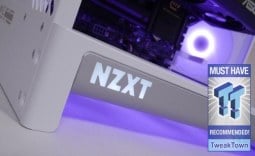 NZXT H6 RGB+ Compact Dual-Chamber Chassis Review
 ASRock Radeon RX 9070 GRE Steel Legend Review - The RDNA 4 Mid-Range Reshuffle
 ASRock Z890 Taichi Aqua Motherboard Review - Flagship features without the flagship price
 Windows 11 already has a voice typing tool, and it is the one most people are not using
 Phison E37T SSD Controller Exclusive Preview - The Fastest DRAMless SSD Platform Yet
 USB Ports Not Working in Windows 11? Try These Fixes
 ASUS WiFi Routers and Networking Solutions Deliver Long-term Security and Reliability with No Additional Cost
 Second Monitor Not Detected in Windows 11? Try These Fixes
 Turn Your Old Smartphone Into a Dedicated Webcam for Your Windows PC
 The Send To menu is the right-click feature on Windows 11 that nobody bothers to customize