













Our Verdict
Pros
- Consumer Workloads
- Transfer Rates
- Pricing
Cons
- None
Introduction & Drive Details
ADATA and InnoGrit have been pairing up as of late to deliver some of the best performing SSDs we've ever seen. A prime example of this is the InnoGrit powered XPG S70 Blade we reviewed back in September of this year. Just about as fast as a flash-based Gen4 x4 SSD can go, and to top it off, one of the best bargains we've ever seen. Amazing, one of the best performing SSDs ever made priced like a value SSD - you don't see that every day.
So, what happens when this powerful collaboration of SSD industry leaders turns its attention to the DRAMless value segment? Absolute magic is what happens. ADATA's XPG ATOM 50 is a DRAMless SSD like none other. Powered by a controller we've not seen before, InnoGrit's DRAMless IG5220 4-channel Gen4 x4 controller, and arrayed with blazing fast 1600 MT Micron 176 Layer flash, this thing is fast.
In fact, and for a bit of perspective, it scores higher on our exclusive TT User Experience Rank chart than a whole host of 7,000 MB/s capable 8-channel SSDs. Additionally, it displaces Samsung's SSD 980 as the DRAMless performance leader, doing so slightly in overall user experience and massively in terms of throughput and transfer rates.
This drive is right at home, whether powering enthusiast-grade PCs, PS5 consoles, or even mobile platforms. This blazing fast Gen4 SSD consumes a measly 2.5 watts max. Wow, compare that with 8-channel Gen4 SSDs consuming as much as 9 to 10 Watts at full tilt. And the kicker? This power-efficient 4-channel DRAMless offering performs better than half of the 7,000 MB/s capable SSDs out there.
Drive Details
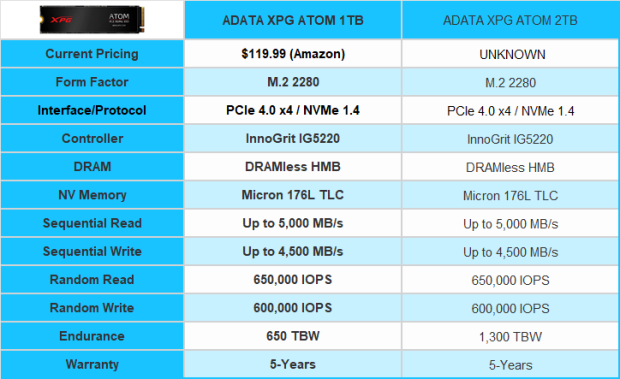
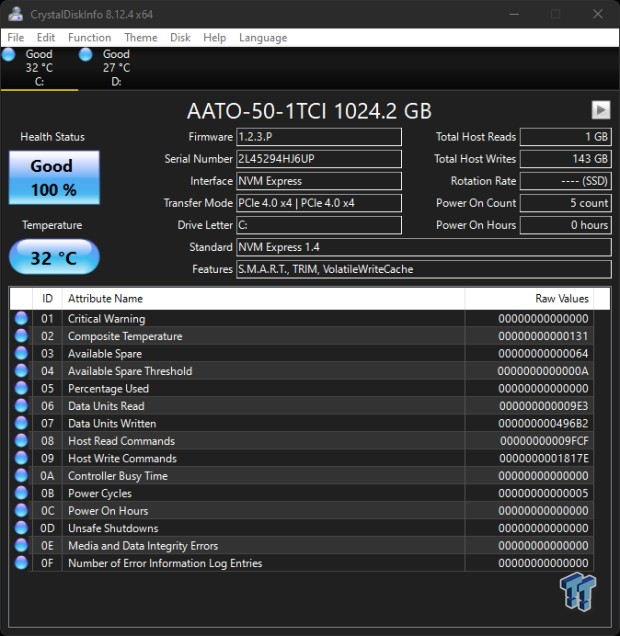
Best Deals: ADATA XPG ATOM 50 1TB NVMe PCIe Gen4 x4 M.2 SSD


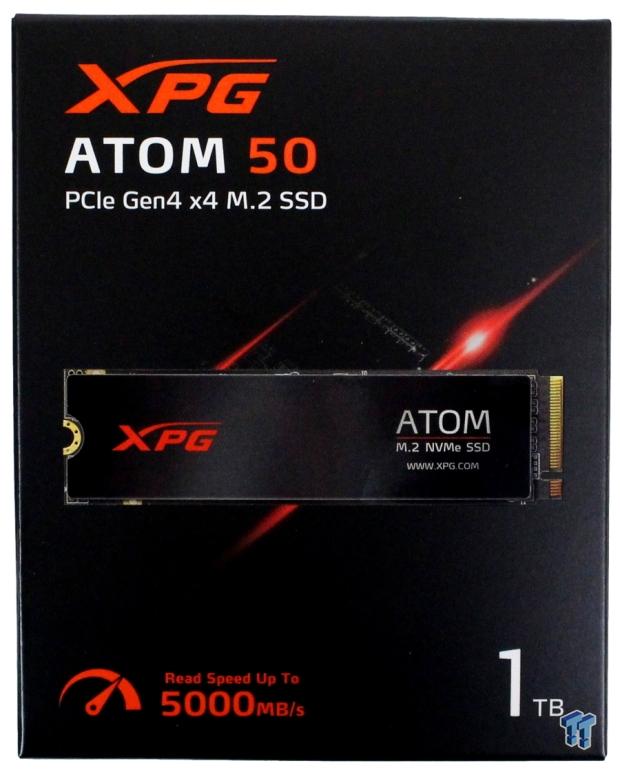
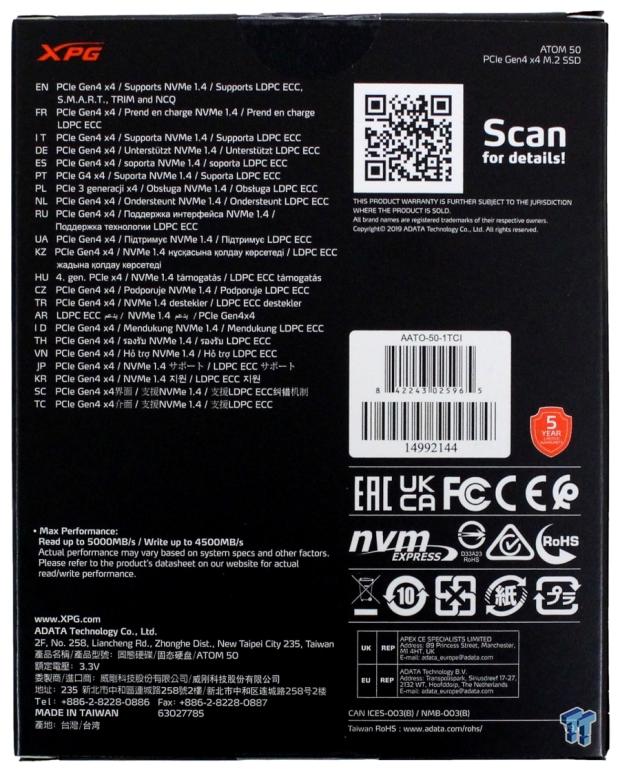
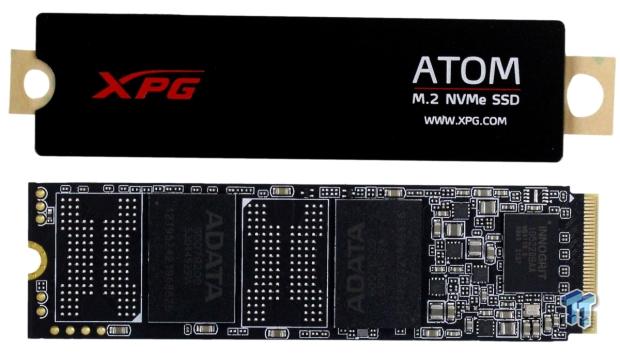
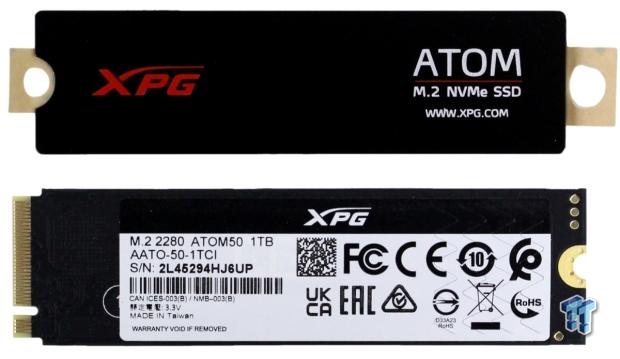
The drive comes with an optional stick-on heat shield. Additionally, the ATOM 50 is a preferred single-sided design. Endurance is stout at 650 TBW. Warranty is excellent at 5-years limited by TBW.
Jon's Test System Specifications
- Motherboard: ASUS ROG Z690 HERO - Buy from Amazon
- CPU: Intel Core i9-12900K - Buy from Amazon
- Cooler: Alphacool Eissturm Hurricane Copper 45 - Buy from Amazon
- RAM: XPG Lancer DDR5 5200MHz 32GB - Buy from Amazon
- Video Card: Zotac 2080Ti AMP Edition - Buy from Amazon
- Case: PrimoChill's Praxis Wetbench - Buy from Amazon
- Power Supply: Thermaltake Toughpower GF1 1000W 80+ Gold - Buy from Amazon
- OS: Microsoft Windows 11 Pro - Buy from Amazon
Synthetic Benchmarks: CDM, Anvil, ATTO
CrystalDiskMark
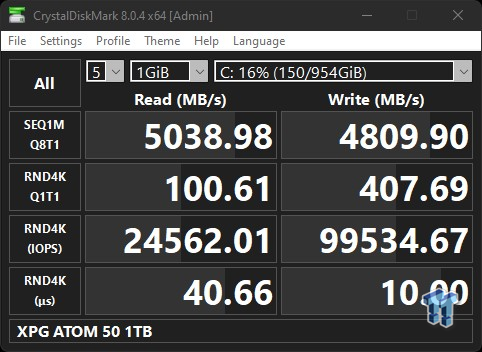
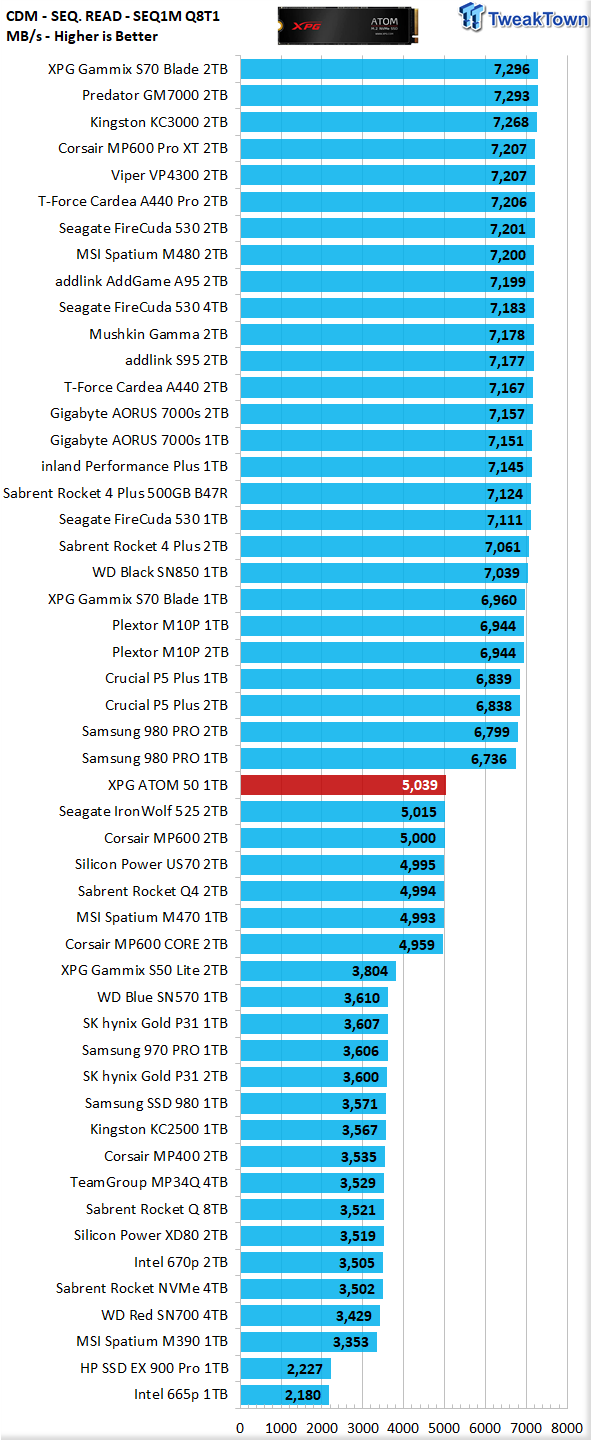
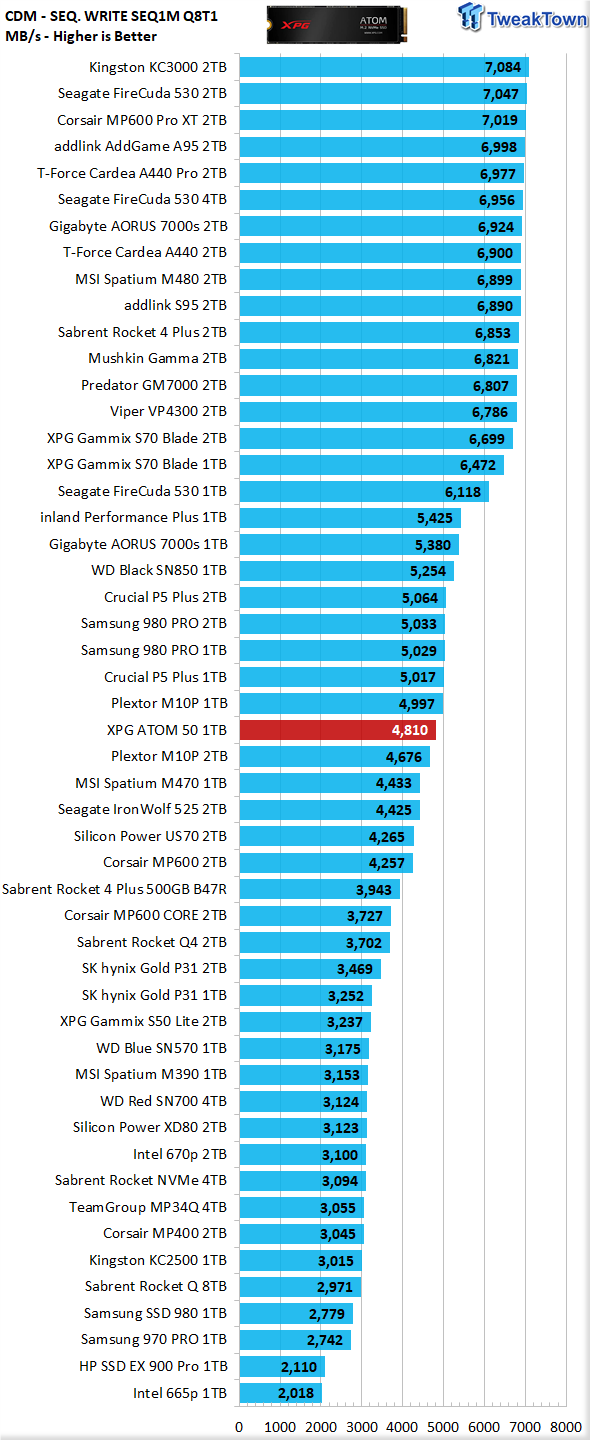
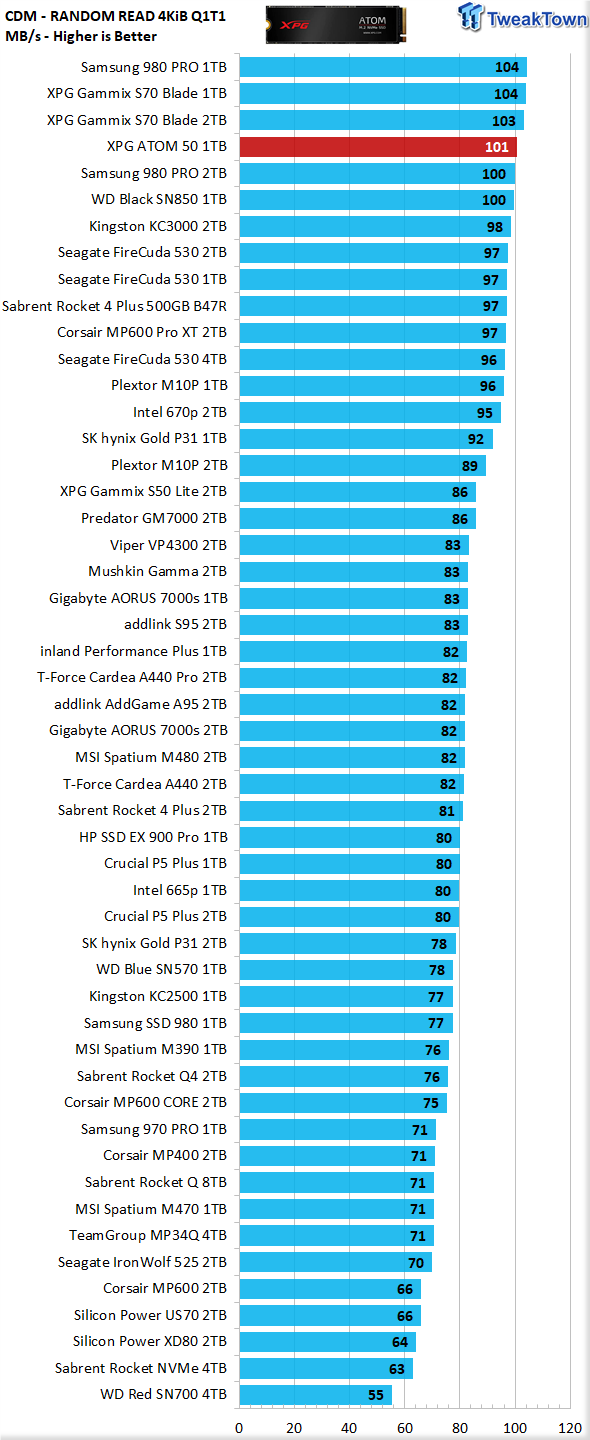
CDM verifies better than advertised sequential throughput. Excellent. However, that's not what has our attention. We are blown away by the ATOM 50 delivering more than 100MB/s Q1T1 4K random read. A power-sipping 4-channel DRAMless SSD? Are you kidding? Incredible and the 4th highest Q1T1 random read throughput by a flash-based SSD we've measured to date.
Anvil's Storage Utilities
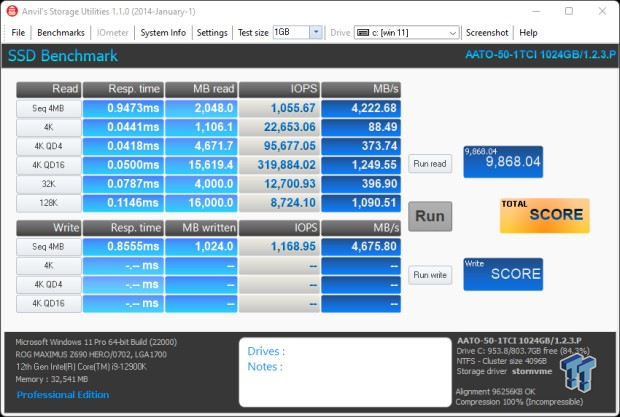
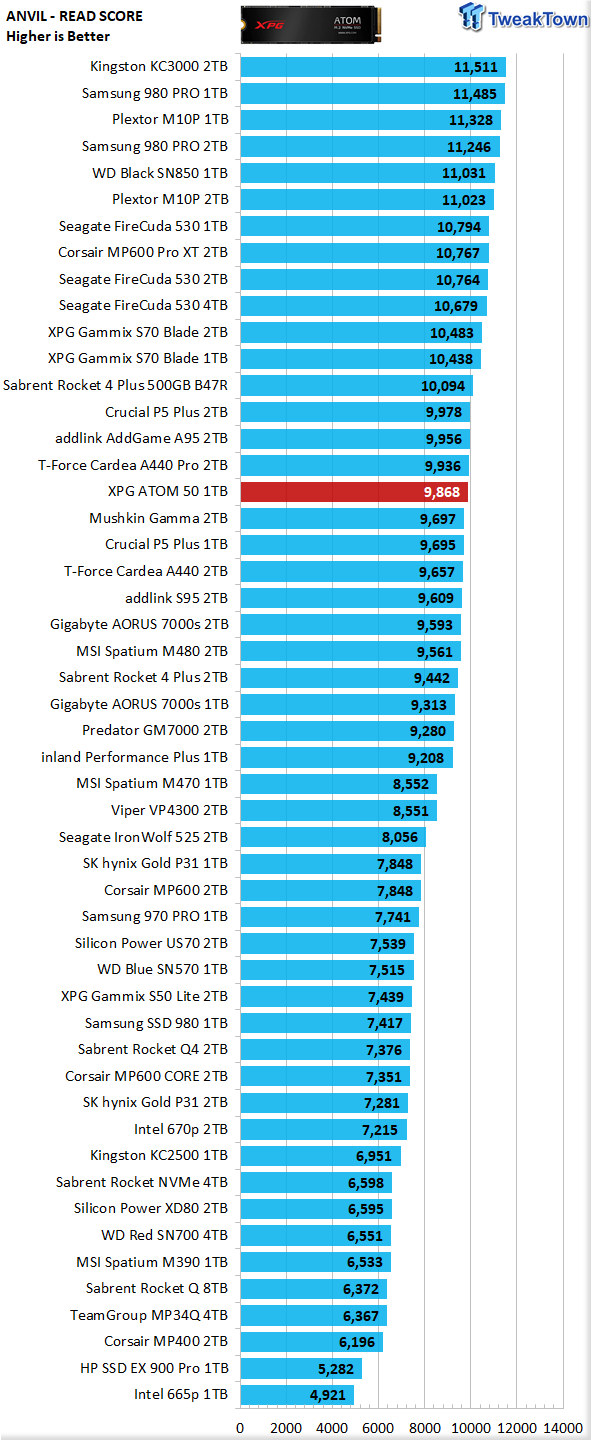
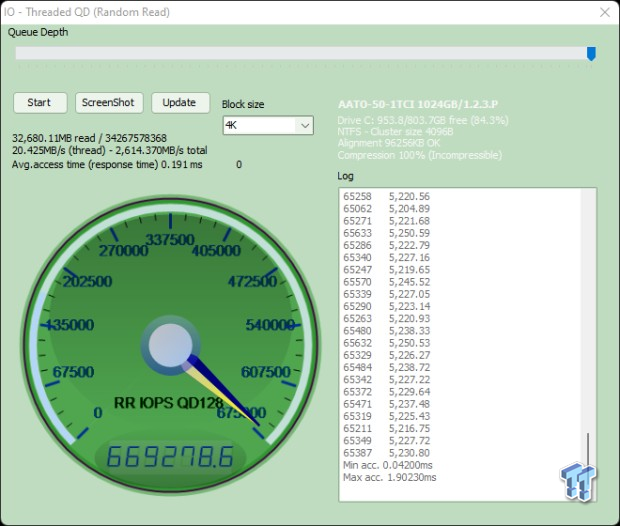
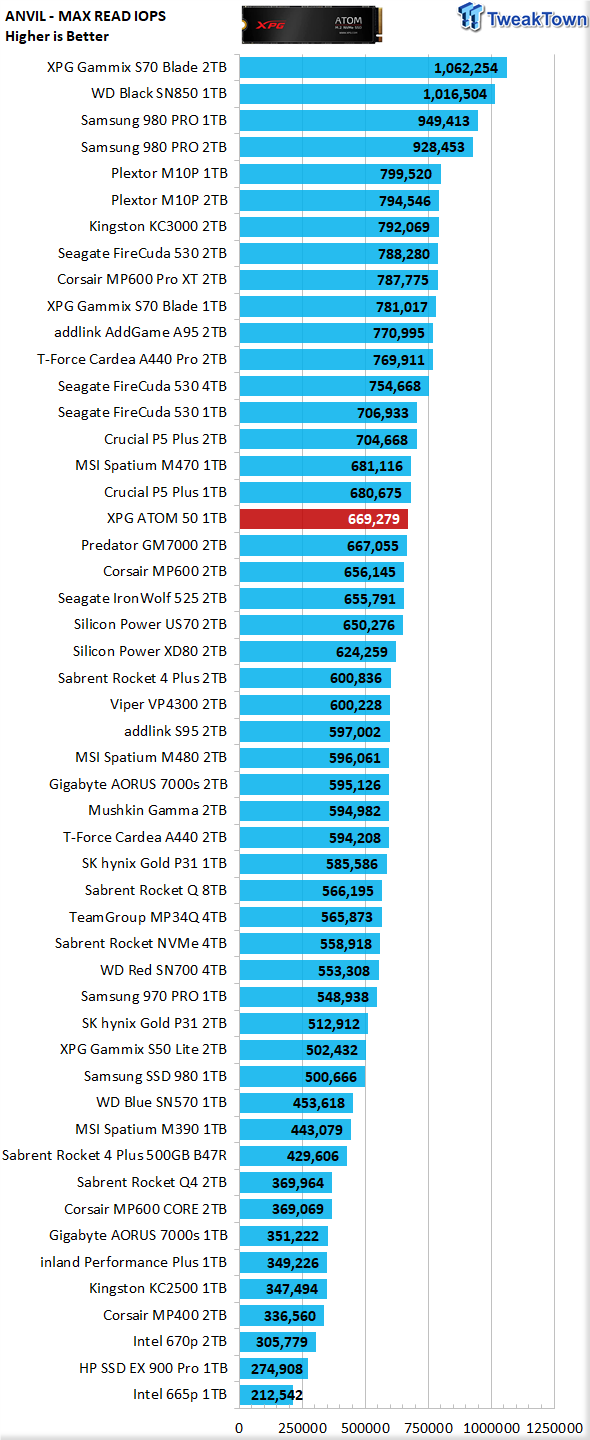
Almost 10K and nearly 2,500 points better than our previous DRAMless champion, the Samsung SSD 980 1TB. This is performance where we want to see it - performance where it matters. Read performance is everything in the world of consumer storage. Read frequently, write infrequently is the consumer usage pattern. We don't even bother with measuring write performance when we run this test.
Our Latest SSD Review Coverage
- Samsung 990 2TB SSD Review - Ninth Gen QLC at PCIe Gen4 Speeds
- Phison E37T SSD Controller Exclusive Preview - The Fastest DRAMless SSD Platform Yet
- Seagate FireCuda X1070 4TB SSD Review - A New Mainstream Contender
- Micron 3610 2TB SSD Review - DRAMless QLC at 11,000 MB/s
- SK hynix Platinum P51 2TB SSD Review - A Powerful Gen5 Alternative
ATTO
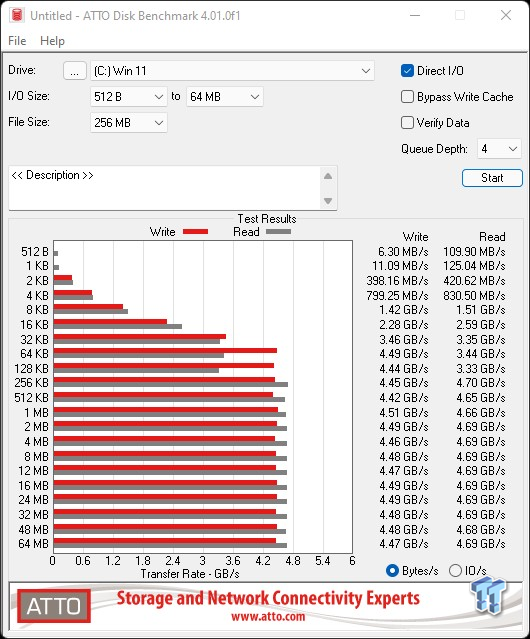
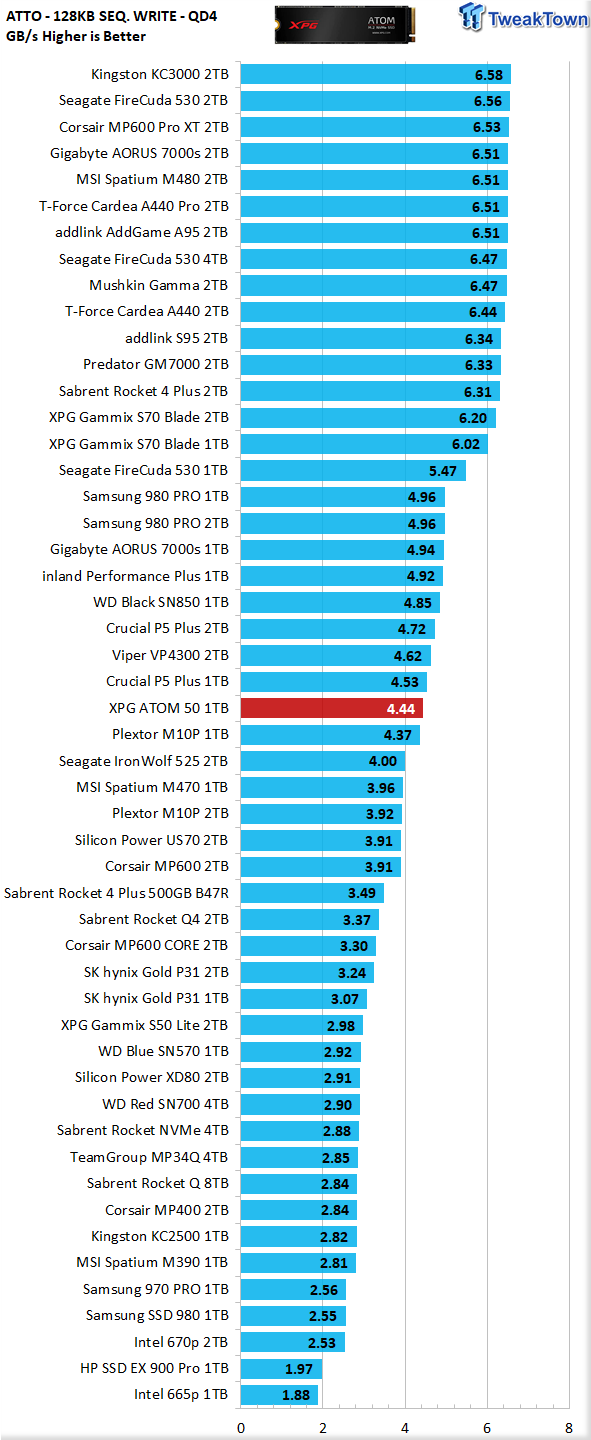
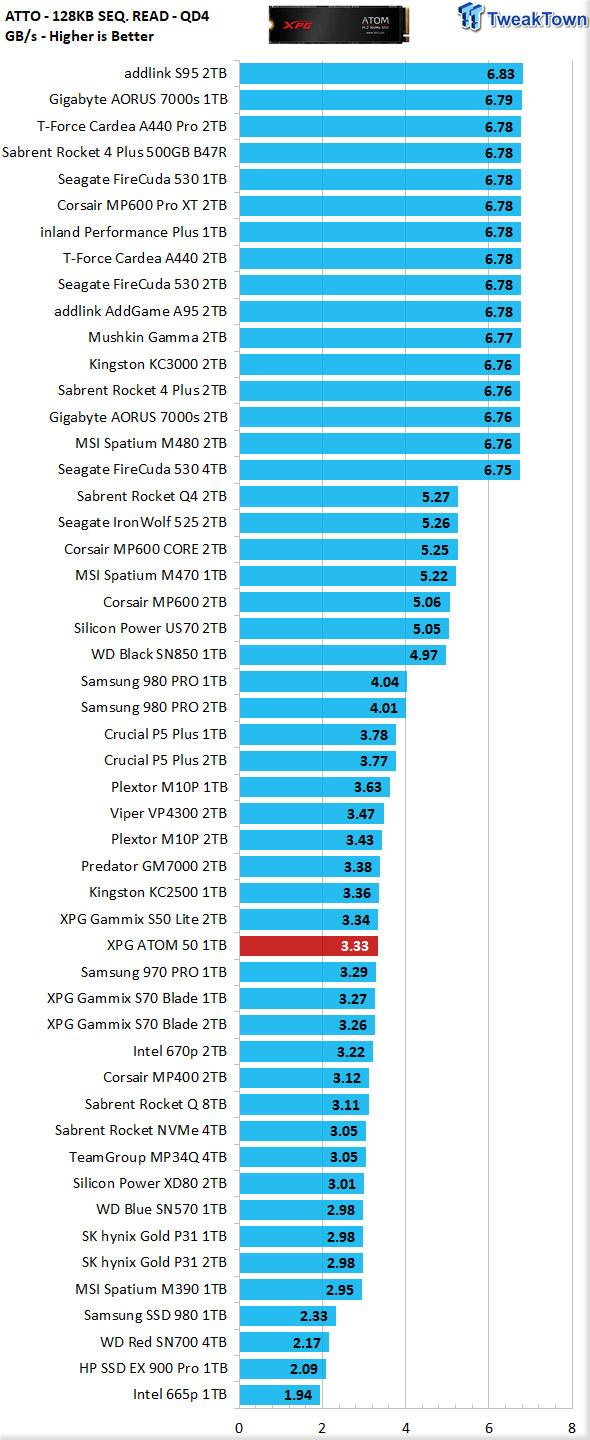
About average QD4 128K sequential write performance for the ATOM 50 in terms of comparing against our entire test pool. If we compare it with the next best DRAMless performance, it's massively better, as we would expect from the first Gen4 DRAMless SSD. The same goes for serving 128K data to host at QD4.
Real-World Testing: Transfers, 3DMark SSD Gaming Test, PCM10 Storage
Transfer Rates
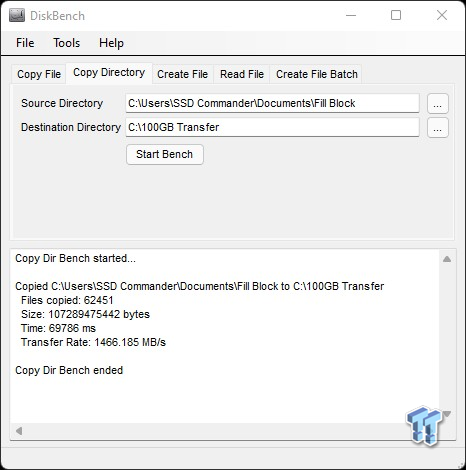
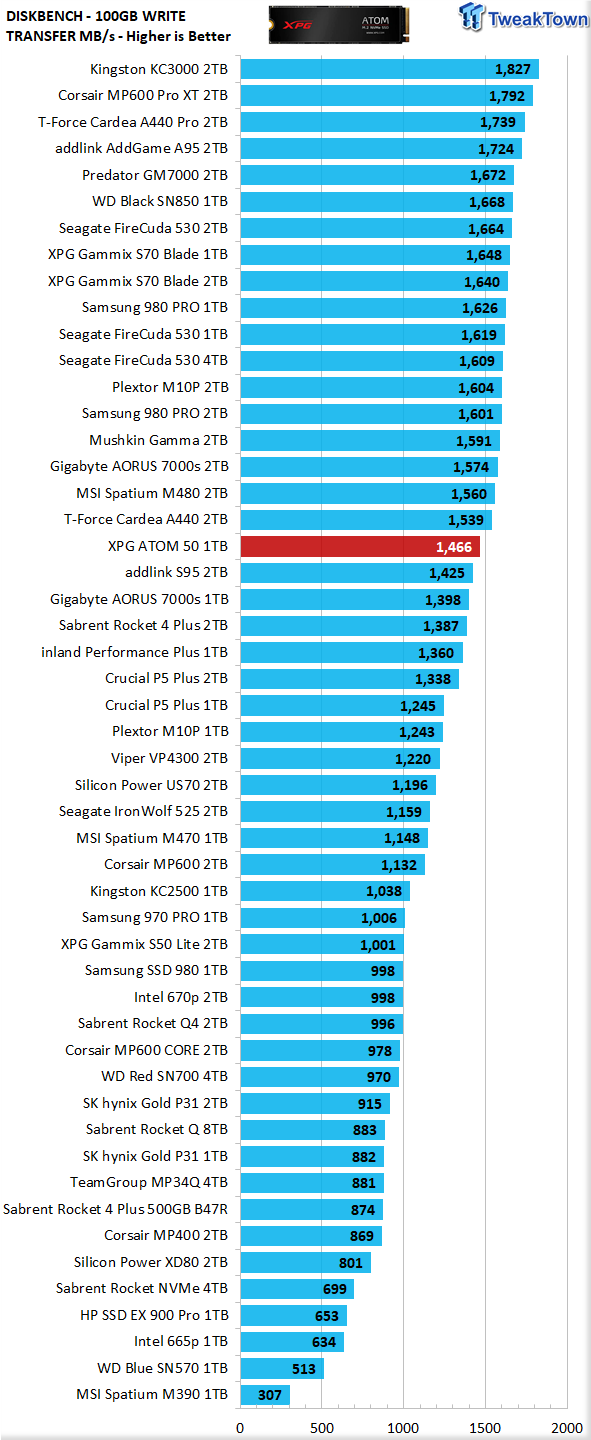
This result had us doing a double-take. How is this even possible for a 4-channel DRAMless SSD? Look at the fire-breathing 7,000 MB/s capable SSDs this DRAMless prodigy is beating, and exactly where conventional thinking says it could not. Magic? Ha, maybe so.
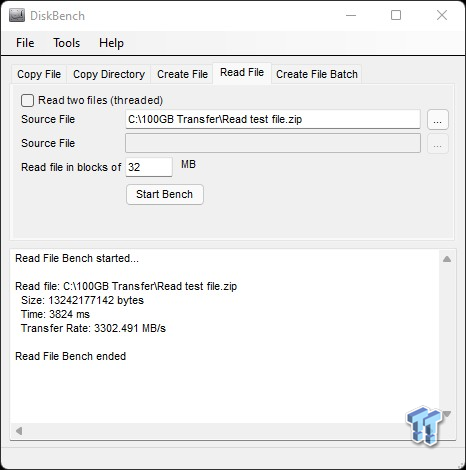
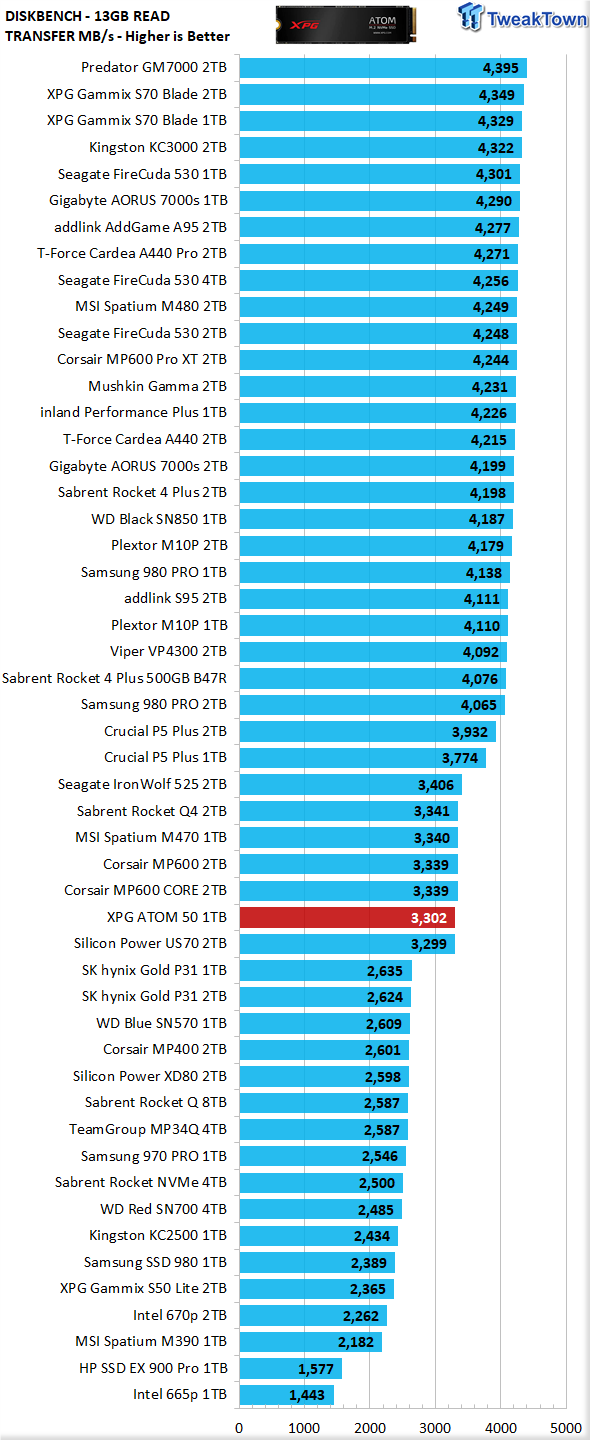
Again, BY FAR the best we've ever witnessed from a flash-based DRAMless SSD.
3DMark SSD Gaming Test
UL's newest 3DMark SSD Gaming Test is the most comprehensive SSD gaming test ever devised. We consider it superior to testing against games themselves because, as a trace, it is much more consistent than variations that will occur between runs on the actual game itself. This test is, in fact, the same as running the actual game, just without the inconsistencies inherent to application testing.
In short, we believe that this is the world's best way to test an SSDs gaming prowess and accurately compare it against competing SSDs. The 3DMark SSD Gaming Test measures and scores the following:
- Loading Battlefield V from launch to the main menu.
- Loading Call of Duty Black Ops 4 from launch to the main menu.
- Loading Overwatch from launch to the main menu.
- Recording a 1080p gameplay video at 60 FPS with OBS (Open Broadcaster Software) while playing Overwatch.
- Installing The Outer Worlds from the Epic Games Launcher.
- Saving game progress in The Outer Worlds.
- Copying the Steam folder for Counter-Strike Global Offensive from an external SSD to the system drive.
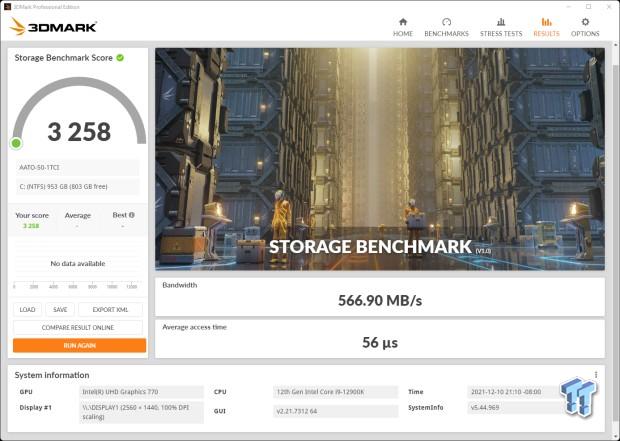
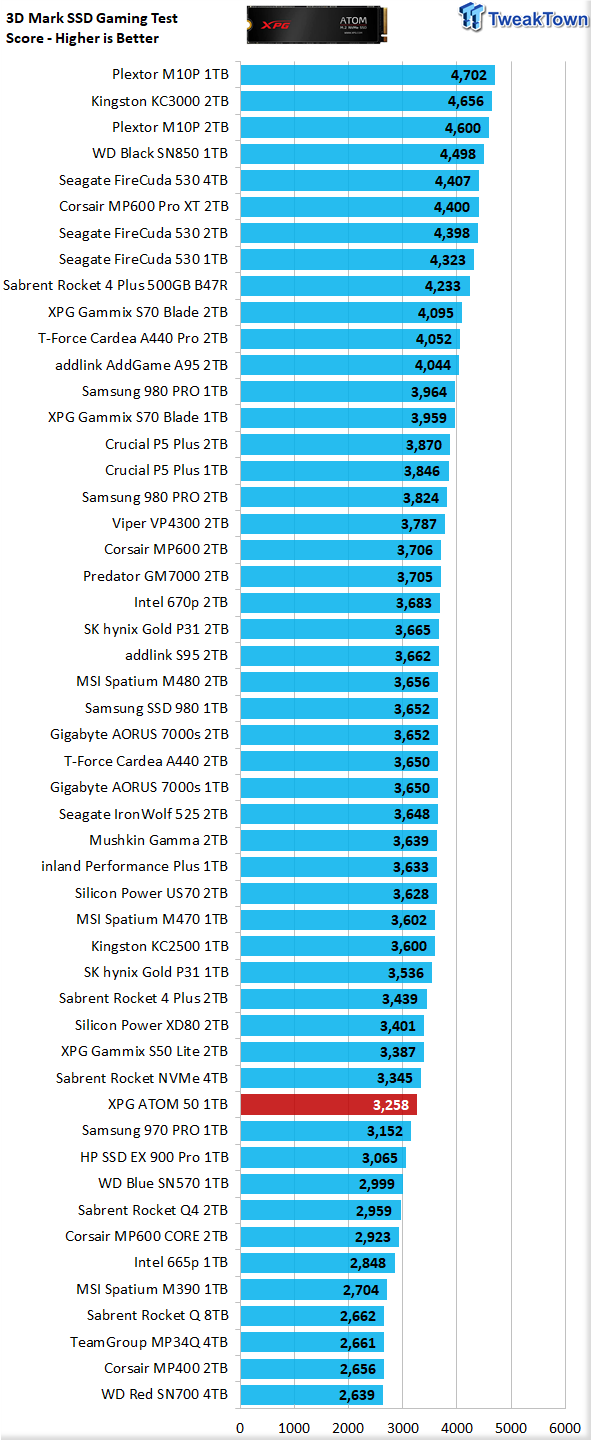
Gaming is a performance metric that matters to the majority of DIY consumers, especially to the enthusiast crowd that TweakTown caters to. We are looking for a minimum score of 3,000 here, and in that respect, the ATOM 50 delivers the goods. However, this is the one place out of all the tests we run where Samsung's SSD 980 can beat the ATOM 50. Nevertheless, more than acceptable.
PCM10 Storage Tests
PCMark 10 Storage Test is the most advanced and most accurate real-world consumer storage test ever made. There are four different tests you can choose from; we run two of them.
The Full System Drive Benchmark and the Quick System Drive Benchmark. The Full System Drive Benchmark writes 204 GB of data over the duration of the test. The Quick System Drive Benchmark writes 23 GB of data over the duration of the test. These tests directly correlate with mainstream user experience.
PCMark 10 Full System Drive Benchmark
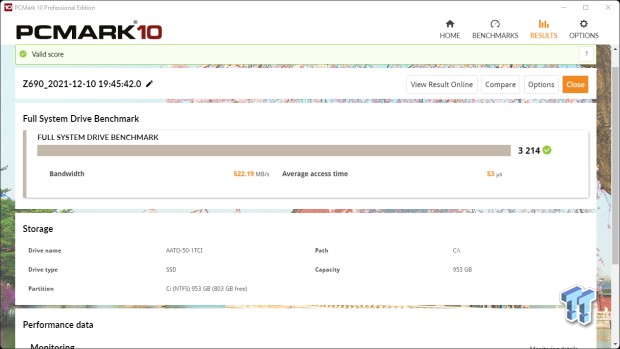
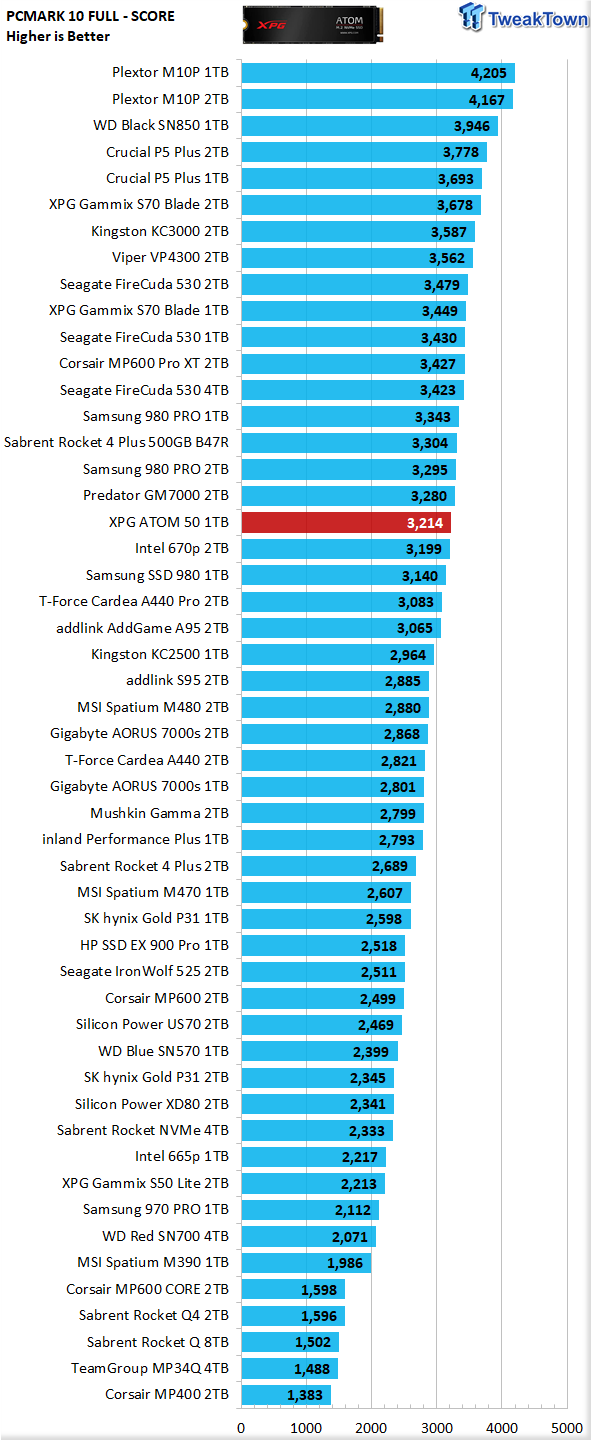
This particular test writes 204GB data and covers a broad range of common consumer tasks, including booting Windows 10, file transfers, Adobe and Office applications, and startup times for games including Battlefield V, COD Black Ops 4, and Overwatch. Unlike synthetic numbers, this is comprehensive real-world data which is why we use it to rank SSDs in terms of user experience.
We are looking for 500MB/s storage bandwidth along with 3000 points here. To our amazement, this DRAMless juggernaut delivers that and then some, beating out the Samsung SSD 980 for the best DRAMless SSD to tackle heavy consumer workloads. Again, we will point out that XPG ATOM 50 is beating SSDs with 8-channel controllers and up to 50% more throughput. Incredible really.
PCMark 10 Quick System Drive Benchmark
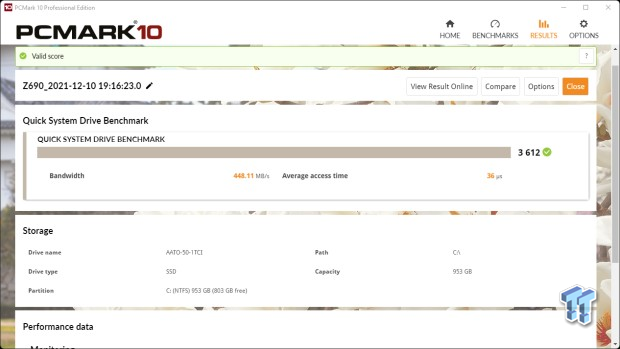
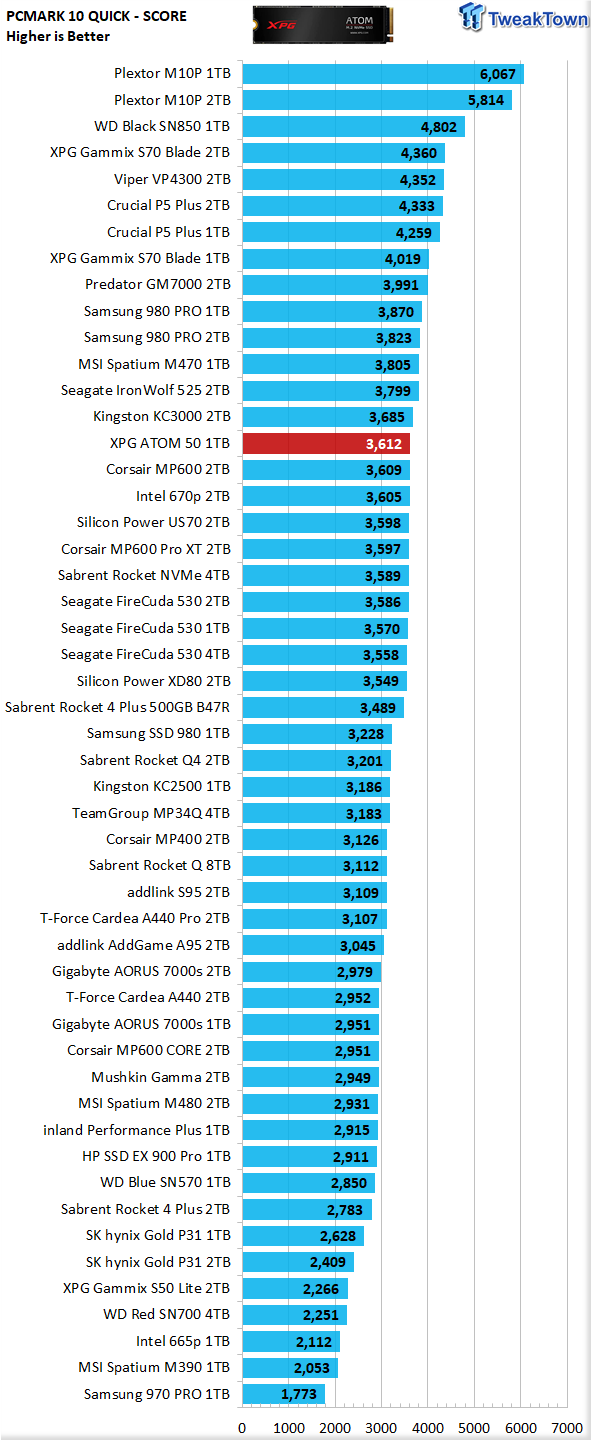
Your eyes are not fooling you. The DRAMless ATOM 50 can indeed deliver a user experience rivaling that of the mighty KC3000. This test is more representative of normal consumer usage than the previous test, and here we see a big advantage for the Atom 50 over our previous DRAMless champion Samsung SSD 980. Impressive.
Final Thoughts
When ADATA asked us if we wanted to review its newest value drive, we agreed and weren't expecting much as ADATA themselves referred to it as an average consumer SSD. When we saw it was DRAMless, we were certain we wouldn't be getting much in the way of performance.
Well, as demonstrated, our assumptions were spectacularly incorrect. It just goes to show that ADATA, InnoGrit, and Micron should never be taken lightly, as the ATOM 50 turns out to be one of the best performing SSDs we've ever tested.
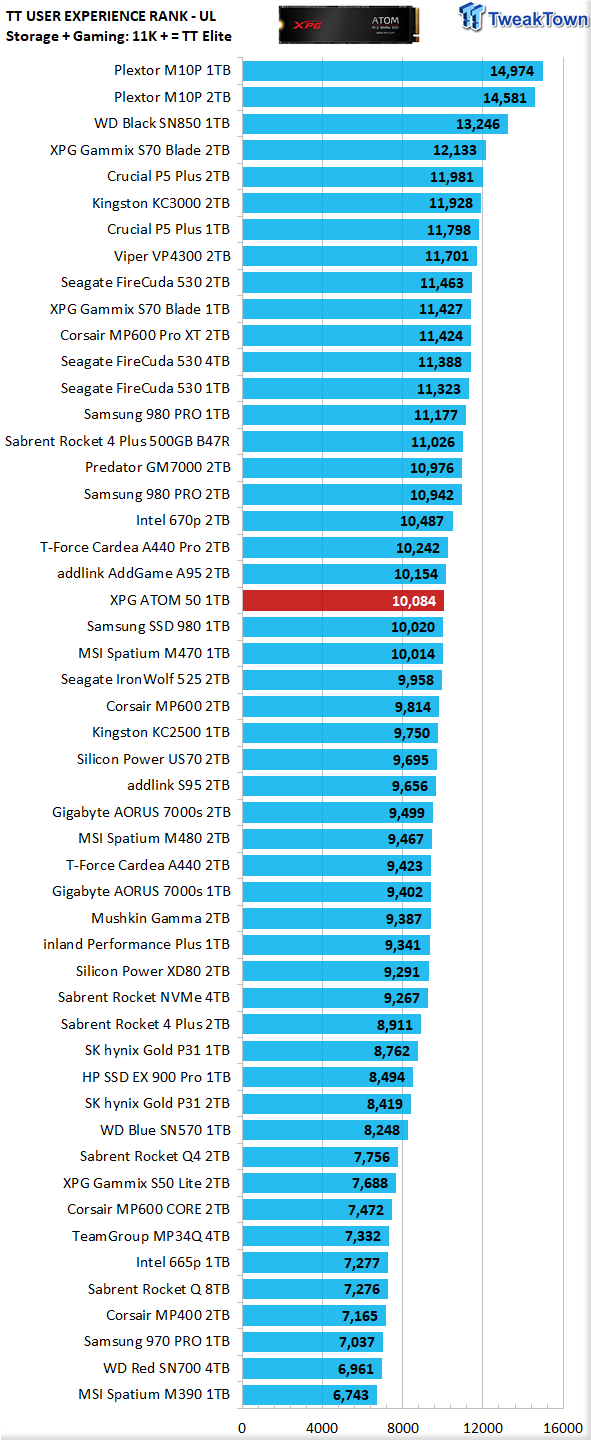
We rank SSDs in terms of overall user experience (performance where it matters most) as expressed by PCMark 10 storage and 3DMark gaming storage tests. We consider a user experience score of 11K or more to verify an SSD as a TweakTown Elite performer. While not TT Elite, the ATOM 50, for what it is, is best-in-class.
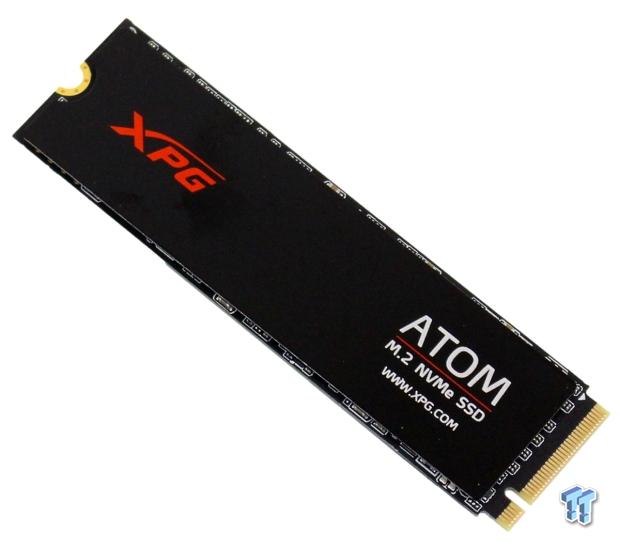
As we step back and take a broad view of our test results, one thing comes to mind. What we have here is the first legit hyper-class flash-based DRAMless SSD in the XPG ATOM 50. We never even considered such a thing possible. 4-channel controlled, 2.5-watt max, and DRAMless; yet delivers hyper-class performance? Incredible, really, and wholly worthy of our highest award and full recommendation. Wow.


 Samsung 990 2TB SSD Review - Ninth Gen QLC at PCIe Gen4 Speeds
 HighPoint Rocket 1604L Gen5 x16 NVMe Software RAID AIC Review: half the price with full 59 GB/s speed
 UGREEN NASync DXP4800 GT Review: powerful 4-bay NAS with AMD Ryzen and dual 10GbE ports
 Phison E37T SSD Controller Exclusive Preview - The Fastest DRAMless SSD Platform Yet
 Seagate FireCuda X1070 4TB SSD Review - A New Mainstream Contender
 Steam Workshop maps infected players with malware and took over a 100,000-member Discord
 MSI launches compact PRO MAX EDGE AI+ desktops, with up to Ryzen AI Max+ 395 and 128GB of memory
 ASRock launches new 27-inch QHD QD-OLED Phantom Gaming monitors
 Framework says current memory prices are 'far beyond anything we're able to absorb'
 US data centers on track to use up 20% of the entire country's power by 2035
 Valve can't catch a break as Snapdragon price hike threatens Steam Frame
 PlayStation gamers plan 'blackout' to hit Sony where they know it will hurt
 Microsoft is using the TPM chip required for Windows 11 to crack down on KMS activation piracy
 PS5 Emulation makes big progress again as it reaches GTA 5 loading screen
 Modders turn the PS Vita into a modern gaming handheld through Xbox Cloud Gaming
 Thrustmaster T.Flight HOTAS 5 MSFS Edition Review
 SteelSeries Arctis Nova Pro Omni Wireless Headset Review - One Headset to Rule Them All
 SteelSeries Arctis Nova 7 Wireless Gen 2 Headset Review - New and Improved, But Is It Enough?
 AMD Ryzen 7 7700X3D Review - Days of Future Past
 ASUS ExpertBook Ultra (Panther Lake) 14" Business Laptop Review
 ASUS ROG Raikiri II Xbox Wireless Controller Review - Ready to Take Control
 MOZA FMP18 Panel Bundle Review: authentic F/A-18 Hornet cockpit controls for flight sims
 Micron 6600 ION 245.76TB Enterprise SSD Review - Best in Class Programming Speeds
 MOZA MA3F EFCM Flight Control Module Review: authentic Airbus A320 autopilot panel for simulators
 Printer Not Working in Windows? How to fix detection, print queues and drivers
 The Ultimate Guide to Personalizing Your Windows 11 Taskbar
 How to Turn Your Windows Laptop Into a Second Monitor with Miracast and Wireless Display in Minutes
 6 Mistakes to Avoid When Buying a Windows Laptop
 I capped Windows Update's bandwidth with Delivery Optimization, and my downloads stopped choking
 I use this decade-old free tool that finds files faster than Windows Search does
 I install and update most of my apps with this Windows command now, and I stopped downloading sketchy installers
 Hisense U6SF 65-inch MiniLED TV: High Performance Meets Leisurely Convenience
 I stopped digging through Windows menus after I set up this one folder
 Don't sell your Windows laptop until you do these things