

Storage News - Page 7

Seagate Exos CORVAULT 4U106 system offers 2.5PB of Heat-Assisted Magnetic Recording storage
We've been following Seagate's HAMR or Heat-Assisted Magnetic Recording storage tech for a while now, with this new take on the traditional HDD created to deliver customers the highest capacity and efficiency. 32TB and 40TB on a single affordable drive is impressive.

The Seagate Exos CORVAULT 4U106 system, which offers mass data storage in the petabyte realm in a single solution that can improve total rack power efficiency by up to 30%, according to Seagate, makes use of the company's high-capacity Exos hard drives. And yes, this includes a 2.5 Petabyte configuration with Seagate HAMR storage.
Seagate Exos hard drives feature self-healing technology like Autonomous Drive Regeneration (ADR) and Advanced Distributed Autonomic Protection Technology (ADAPT) to reduce downtime, maintenance, and, in turn, carbon footprints and e-waste.
SABRENT's new 5-Bay USB-C Docking Station looks like a cryo-chamber for 2.5-inch HDDs and SSDs
Hard drive docking stations are a great way to easily access data stored on older drives that you do not need to install and connect directly to a motherboard. Pop the drive-in, fire up the docking station, and you have instant data access. But, when you add up all of the features and capabilities of Sabrent's new 5-Bay USB-C Docking Station for 2.5" SATA HDDs and SSDs - you've got a pretty powerful and affordable external storage solution.

Powered by USB-C, the transfer speed fully uses the USB 3.2 Gen 2 connection with 10Gbps on offer, bolstered by the included power adapter to ensure a stable and reliable connection while in use. Throw in an 80mm fan to keep the drives cool, and the overall look is reminiscent of a cryo-chamber or that thing Darth Vader sits in when he gets his helmet taken off in Star Wars Episode V: The Empire Strikes Back.
The Sabrent 5-Bay USB-C Docking Station for 2.5" SATA HDDs and SSDs (DS-5R15) supports up to five 2.5-inch drives, which can be used independently or simultaneously with tool-free plug-and-play hot-swappable functionality.
Sabrent's new Apex X16 Destroyer supports 16 x Gen4 SSDs, up to 128TB in a single-slot design
Sabrent has just given the world a cheeky look at its upcoming Apex X16 Destroyer, a new add-in card that can handle not just the 8 x M.2 NVMe SSDs on the front because there's another 8 x M.2 NVMe SSDs on the back for 16 in total.

Sabrent used its new Apex X16 Destroyer with 16 of its own 8TB Rocket 4 Plus SSDs for 128TB in total, as you can see in the photo of it above, there are 8 x 8TB Rocket 4 Plus SSDs on the front, while there are another 8 x 8TB Rocket 4 Plus SSD slots on the back that will allow for an eye-watering 128TB of Gen4 SSDs.
All of this can be had on a tight single-slot design, meaning if you've got both the PCIe slots and, most of all -- the PCIe lanes to handle it -- you could have a few of these in your PC for some truly mind-boggling amounts of Gen4 SSD storage on Sabrent Apex X16 Destroyer cards. Perfect for AMD's just-launched Ryzen Threadripper 7000 and Threadripper PRO 7000 series CPUs, where you've got pleeeeenty of PCIe lanes to handle a handful of Sabrent's new Apex X16 Destroyer cards, along with a ridiculous amount of their 8TB Rocket 4 Plus SSDs.
Global SSD shipments are down by 10.7%, but market leaders Kingston and ADATA are doing fine
A new report at TrendForce shares some not-so-bright news for the global SSD market, with shipments down 10.7% year-over-year. The report notes that SSD supply and demand issues have been normalized. However, with only 114 million SSDs shipped, the downward has affected the various flash memory and storage companies differently.

The top three SSD suppliers for 2022 were Kingston, ADATA, and Lexar, with Kingston and ADATA experiencing growth in market share compared to 2021. Kingston remains the global SSD market leader, with an impressive 28% share, followed by ADATA, with a 9% market share.
Also, the Chinese company Colorful "defied market trends" by making the top ten. The report explains the cost advantages of homegrown NAND Flash in the region have led to increased shipments.
This external SSD enclosure will turn your M.2 SSD into a Hot Wheels car
We all know you've wanted to turn your M.2 SSD into an even better portable SSD storage device. Enter the external SSD enclosure that turns your M.2 SSD into a Hot Wheels car... yeah, it's real and red, so it makes your SSD go faster.

Chinese manufacturer Jeyi has announced its new ThunderRate, an SSD enclosure shaped like a Formula 1 race car that has four working wheels. Yeah, the wheels turn... and your super-fast M.2 SSD sits inside of it. Jeyi has constructed its SSD enclosure out of aluminum alloy, which the company has painted red.
You'll need to install your M.2 SSD underneath the removable backplate that cools on both sides, keeping your transfer speeds as high as they can be without thermal throttling. Install your M.2 2280 SSD with a single screw holding your SSD and rear plate in place. There's no external power required, with the company using a Realtek RTL9210B-CG controller that supports both NVMe and SATA protocols.
Lexar's new NM790 SSD for the PlayStation 5 launches: 7.4GB/sec reads with a heatsink
Lexar has just announced that it has unveiled its new NM790 with Heatsink M.2 2280 PCIe Gen 4x4 NVMe SSD, which in layman's terms, is the Lexar NM790 SSD for the PlayStation 5 console.

The new Lexar NM790 SSD is an upgraded version of the award-winning NM790 SSD, with the new design featuring a heatsink to keep it cool when it's running inside of the PlayStation 5, as well as any gaming PC. Lexar offers some fantastic speeds out of the NM790 SSD, with up to 7400MB/sec (7.4GB/sec) sequential reads and up to 6500MB/sec (6.5GB/sec) sequential writes.
Joey Lopez, Director of Marketing, said: "We are thrilled to offer gamers a powerful SSD with an integrated heatsink that allows players to squeeze the full performance out of their PlayStation 5 gaming systems while keeping their consoles cool".
This Steam Deck modded with a massive 61TB SSD should be enough to install all your games
First of all, Steam Deck or not, modding a PC gaming rig or device with 61 Terabytes of storage for games is kind of crazy - but in the best possible way. With 61TB, you don't have to worry about games like Call of Duty: Modern Warfare 3 taking up well over 100GB of drive space. There's enough room for most PC gamers to install their entire Steam library and still have enough room to install all the additional games added during the upcoming Steam Holiday Sale.

The highest capacity off-the-shelf Steam Deck from Valve is 512GB of internal NVMe storage, so going up to 61TB is like watching a graph figure out that there's a thing called 'exponential growth.' The second and important point to make is that this mod isn't exactly something you can try at home as it makes use of the Solidigm P5336 61.44TB enterprise SSD.
An enterprise solution worth many thousands of dollars, which we reviewed last year - calling it "the king of capacity." How StorageReview managed to get this SSD working on Steam Deck is pretty cool - so let's take a look.
ADATA launches the world's first USB4 external SSD, can transfer 10GB 4K video in 3 seconds
It was only a matter of time before USB 4 hit the scene, beginning the transition from USB 3 to a new, faster, and more performative standard. Right now, USB 4 is "next-gen" technology, but with the arrival of ADATA's USB4 SE920 External SSD, we've got the first external storage solution sporting the new USB 4 technology.

ADATA's USB4 SE920 external SSD, which supports Thunderbolt 3 and 4 and is backward compatible with USB 3.2 and USB 2.0, can reach up to 3,800 MB/s per second in full USB4 mode. As we've seen in the desktop space and PCIe Gen5 SSDS, hitting speeds of up to 40Gbps on an external SSD generates quite a bit of heat.
The good news is that the USB4 SE920 external SSD features a proprietary and patented active cooling solution with a micro fan and a casing that can extend via a simple touch to increase air circulation when in use. Outside of the incredible speed, the casing design for the USB4 SE920 external SSD from ADATA is one of its most impressive features.
Western Digital is splitting into two companies, one focused on HDDs and one on Flash Memory
A week ago, we heard rumblings that Western Digital and KIOXIA were on the cusp of closing a deal that would see the two companies merge to create the world's largest manufacturer of flash memory solutions. A few days ago, the story changed. The deal fell through due to objections from SK Hynix, a competitor and KIOXIA investor.

None of this was confirmed by either party, but today, Western Digital has announced that it will split into two independent public companies - one that will focus on the HDD market and one on flash memory.
According to the announcement, the split will "better position each franchise to execute innovative technology and product development, capitalize on unique growth opportunities, extend respective leadership positions, and operate more efficiently with distinct capital structures." And it's set to happen in the second half of 2024.
KIOXIA and Western Digital merger has apparently been put on hold due to SK Hynix objecting
Recently, we posted on several rumors and sources pointing to a potential and imminent merger between flash memory and storage giants KIOXIA and Western Digital. A union that would make the resulting entity the world's biggest producer of memory and storage solutions for consumers and enterprises alike.

With both companies being closely linked regarding operating plants and technologies, the deal had got to the point where the terms were being finalized before being publicly announced. According to insiders, Western Digital shareholders would have acquired a 50+ percent majority stake in the new company, with the remainder to be held by KIOXIA shareholders.
It turns out that it's the latter that has been the issue when it comes to the merger. SK Hynix wasn't too happy with the deal. As one of KIOXIA's key investors, SK Hynix is also one of the largest manufacturers of DRAM and NAND flash. Japanese publication Nikkei Business Daily also reported that top Kioxia shareholder Bain Capital could not agree to the terms.
 SK hynix plans $14.6 billion on new chip fab in South Korea to meet 'soaring demand' of HBM
 You can pick up AMD's flagship RDNA 3 GPU, the Radeon RX 7900 XTX, for $850
 Tesla unveils new Model 3 Performance: 0-60 mph in 2.9 seconds, 163 mph top speed
 GIGABYTE confirms AMD Ryzen 9000 Series processors are coming soon
 Qualcomm details its Snapdragon X Elite: all SKUs have NPU with 45 TOPS for AI workloads
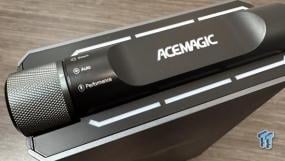 ACEMAGIC AD08 "Core i9 11900H" Mini PC Review
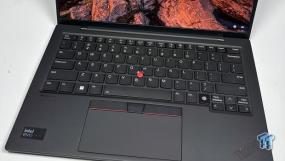 Lenovo ThinkPad X1 Carbon Gen 12 Review
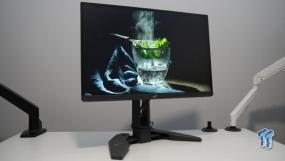 ASUS ROG Swift Pro PG248QP Gaming Monitor Review - Frames, frames, and more frames
 FlexiSpot C7B-Mesh Ergonomic Office Chair Review
 Samsung G8 34-inch QD-OLED Gaming Monitor Review - 175Hz for $900
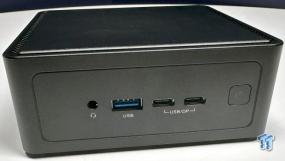 ASRock NUCBOX-155H Mini PC Review
 NuPhy Air96 V2 Wireless Mechanical Keyboard Review
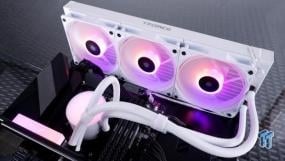 TEAM T-FORCE Siren DUO360 RGB Liquid CPU Cooler Review
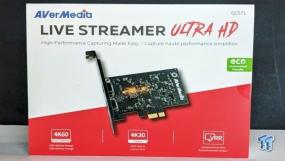 AVerMedia Live Streamer ULTRA HD Review
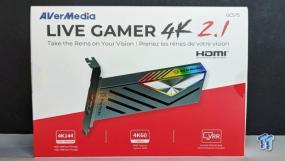 AVerMedia Live Gamer 4K 2.1 Review
 Everything you need to know about the latest ASUS NUC Mini PCs - NUC 14 Pro and ROG NUC
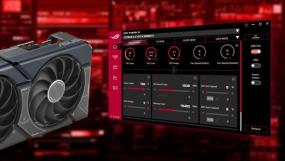 How to Overclock Your GPU and Boost Your PC Gaming with ASUS GPU Tweak III
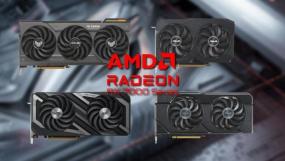 ASUS's AMD Radeon RX 7000 Series GPU lineup has something for every gamer
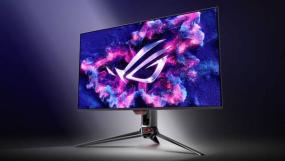 ASUS OLED Premium Care defends the ROG Swift OLED PG32UCDM gaming monitor from burn-in
 Patriot Viper Xtreme 5 Engineering Prototype 48GB Dual-Channel Memory Kit Preview