







Business, Financial & Legal - Page 12
Catch up on business, finance, and legal news shaping tech, gaming, and science - mergers, lawsuits, antitrust, IPOs, Big Tech earnings, and market trends. - Page 12
Stay Updated
Follow TweakTown for breaking tech news, reviews, and daily updates.


As an Amazon Associate, we earn from qualifying purchases. TweakTown may also earn commissions from other affiliate partners at no extra cost to you.
TSMC plans to make bleeding-edge chips in USA: next-gen A16 (1.6nm) fab in Arizona by 2030
TSMC at one point wouldn't make any of its advanced chips on US soil, but appears that this could be changing... with the Taiwan giant to make bleeding-edge (A16) 1.6nm chips in Arizona.

Now that President Trump is in office, TSMC's ambitions in the US can grow exponentially and have advanced semiconductor production in the United States. TSMC VP for Global Policy, Peter Cleveland, recently said that TSMC plans to produce chips at its upcoming third semiconductor fab soon under construction in Arizona, to sustain the United States' AI leadership.
TSMC has invested $65 billion into its Arizona semiconductor fabs so far, with plans to have 3 facilities in total, with the first fab responsible for making 4nm chips according to reports. TSMC plans to make higher-end chips including 3nm, 2nm, and possibly its bleeding-edge A16 (1.6nm) chips.
Ex-TSMC co-COO says Intel was once the 'king' of the chip industry, but has become a 'nobody'
The former co-chief operating officer (co-COO) of TSMC, Chiang Shang-yi, has had some fighting words against US chipmaker Intel... and how much he looks down on the company.

Chiang has a position of authority as he worked at TSMC until 2013, and even when he left, he was one of the company's core team members who helped cement the Taiwanese company to become a global contract chip manufacturing leader. Chiang recently attended a book launch in Taiwan this week, meeting with the dean of Taiwan's National Tsing Hua University, and boy he didn't hold back any punches towards Intel.
TSMC's former executive said Intel should get more into mature chip manufacturing processes -- and not bleeding-edge process nodes -- as Intel was too far away from catching up with TSMC. He also added that Intel was the former "king" of the chip industry, but was still a "nobody".
xAI acquires X, formerly Twitter in all-stock transaction confirms Elon Musk
Elon Musk has announced his AI startup company xAi has officially merged with X, the social media platform formerly known as Twitter in an all-stock transaction that puts the value of the social platform at $33 billion.

Musk announced the news via his personal X account, where he said the merger values the social media platform, or as he describes the digital town square for the world, at $33 billion ($45B less $12B debt), slightly less than the $44 billion he paid for it in 2022.
Additionally, the merger has valued xAI at $80 billion, with Musk saying the future of both companies is "intertwined," and now that the merger has taken place, "We officially take the step to combine the data, models, compute, distribution and talent."
NVIDIA could soon strengthen its position in the AI market even more
A new report has claimed NVIDIA is eyeing a potential acquisition of Lepton AI, a company that rents out servers that are powered by NVIDIA's AI hardware.

The report comes from The Information, which writes the green semiconductor giant is currently engaging in talks to move into the server rental market with the acquisition of Lepton AI in a deal worth several hundred million dollars. If true and the deal was inked, it would give NVIDIA a stronger foothold in the cloud-based AI computing market and the greater artificial intelligence sector.
As for the AI server rental market, reports indicate that it's an extremely fast-growing sector. Lepton AI was founded two years ago but secured an $11 million seed funding round from investors CRV and Fusion Fund. Lepton AI has positioned itself well in the emerging market as companies are looking for cost-effective ways of accessing high-performance AI computing hardware without having to fork out hundreds of thousands or potentially millions of dollars in AI server infrastructure, hence it attracting attention from NVIDIA for a potential acquisition.
Continue reading: NVIDIA could soon strengthen its position in the AI market even more (full post)
Intel's new CEO Lip-Bu Tan to deliver opening keynote at Intel Keynote 2025 on March 31
Intel's freshly-minted CEO Lip-Bu Tan will provide an opening keynote at the company's upcoming Intel Vision 2025 event on March 31.

Intel Vision 2025 is being hosted on March 31 in Las Vegas, where the company will be on the ground with executives and partners from around the world. We should expect to hear about its US semiconductor business with Intel Foundry Services and its upcoming Intel 18A process node, next-gen consumer and server CPUs, AI, AI, AI, and a vision of what's ahead for the company that has had many hard years.
On its website, the company explains: "Intel CEO Lip-Bu Tan will deliver an opening keynote at Intel Vision 2025 on March 31 in Las Vegas. The two-day event brings together Intel customers and partners from around the world to discuss opportunities to innovate across the compute continuum and foster collaboration that will shape the future of the industry".
Financial Times admits it's 'Tesla is missing $1.4 billion' report is completely wrong
The Financial Times has admitted it made a lapse in judgment when it posted the article "$1.4bn is a lot to fall through the cracks, even for Tesla," which highlighted a purported gap between the company's capital investment and asset values.

The author of the article, Dan McCrum, has posted a follow-up article titled "Filling in that Tesla 'crack'" where the first line of that article is "Mea culpa," which is a Latin phrase that translates to "my fault" or "through my fault." McCrum goes on to explain the purported discrepancy that he reported "may have a benign explanation," which seems to be gathered from an expert who got in touch with FT to explain how to look at Tesla's books correctly.
McCrum attempted to highlight the discrepancy between Tesla's $6.3 billion capital investment in the second half of last year and the smaller $4.9 billion rise in the value of gross assets the company reported, claiming Tesla seemingly lost the difference somewhere in the books. That simply isn't the case, or at least according to McCrum, who has now been informed about two explanations that can reconcile the figures: "payments for assets already purchased, and the possible disposal of depreciated property."
Analyst: Intel's new CEO to refocus on chip design, get major customers for its fab business
UBS analyst Timothy Arcuri says that Intel's freshly-minted CEO Lip-Bu Tan will most likely refocus on chip design in the short term, while securing big customers to strengthen its foundry business.

In his note to investors, Arcuri said that Intel is also reportedly working to finalize commitments from NVIDIA or Broadcom to use its semiconductor foundry business, while also advancing its new 18A manufacturing process. Intel is working on a new lower-power version of that 18A process node called 18AP, and should be appealing to chip companies.
Intel Foundry Services (IFS) is looking to compete directly against TSMC in the semiconductor space, with improvements to its advanced packaging technologies like its Embedded Multi-Die Interconnect Bridge platform that would compete against TSMC's CoWoS-L advanced packaging for HPC customers like NVIDIA and others.
DOJ says Google has 'robbed consumers and businesses,' demands Chrome be sold
The Department of Justice (DOJ) has published a new filing against Google that reaffirms its position that Google currently holds a monopoly over the search engine market and demands the company begin selling off Chrome.

The DOJ hasn't held back in these claims, with the regulatory body stating in the filing that a part of its "Revised Proposed Final Judgement" (RPF) is calling for Google to be prohibited from making search-related payments to Apple and non-Apple search distribution partners to make Google the default search engine on iPhone.
Google is also called for to be prohibited from making "exclusive agreements with content publishers" that include bundling, typing, or commingling its general search engine or search access point with any other Google product, along with the prohibition of Google entering into agreements that are related to the distribution of general search services. And the big one, Google Chrome to be sold.
EU launches crackdown on pricing tricks in games like Fortnite and Call of Duty
The European Union has introduced a new set of consumer protection rules that directly address how video games handle microtransactions, virtual currencies, and in-game purchases in games like Fortnite, Call of Duty, and EA Sports FC.

The new principles, laid out by the EU's Consumer Protection Cooperation Network (CPC), aim to bring greater transparency and accountability to how these systems are presented to players. While described as "principles," they're backed by existing EU consumer law and are legally enforceable.
One of the most significant changes targets how prices are shown. Under the new rules, games must clearly display the real-world currency equivalent of any in-game item. If a skin in Fortnite costs 2,500 V-Bucks, the game must also show that this translates to $20 USD. The same applies across the board - whether it's NBA 2K's VC or Call of Duty's COD Points, players need to see exactly how much they're spending in real terms.
Nearly $1.5 billion is mysteriously missing from Tesla's coffers
Since Elon Musk moved closer to the Trump administration and took up the reigns of the Department of Government Efficiency (DOGE), a new regulatory body designed to reduce fraud, waste, and operating costs in the US government, Musk's businesses have taken a sharp hit, notably Tesla.

Musk's political leanings have resulted in him becoming much more divisive, and that is being reflected in Tesla's stock price, which has seen a dramatic drop in value since December 2024, when its stock was priced at approximately $462 per share. Now, Tesla shares are valued at $236 per share, bringing them back down to September 2024 levels. However, that isn't all of Tesla's problems.
A new report from the Financial Times revealed that Tesla is missing approximately $1.4 billion from its books. The report cites an investigation into Tesla's cash flow statements and capital expenditures over the last six months of 2024. According to the FT report, the investigation found holes in the books totaling the reported missing $1.4 billion. Tesla's cashflow statements reveal the company spent $6.3 billion on "purchases of property and equipment excluding finance leases, net of sales" throughout the second half of 2024.
Continue reading: Nearly $1.5 billion is mysteriously missing from Tesla's coffers (full post)
X is now worth what Elon Musk bought Twitter for
Elon Musk purchased X, formerly Twitter, from its shareholders in 2022 for $44 billion. Following the purchase of the social media platform, there was an exodus of advertisers, dramatically reducing the valuation of now-X. That valuation has now reached the price at which Musk purchased the platform.

Shortly after Musk purchased X, the Tesla and SpaceX CEO went on to make some major changes, such as how content appears on the timeline for users and what content is served next to ads. These changes, combined with Musk's opening up of the X content guidelines, which enabled a wider variety of content to appear on the platform, resulted in many advertisers being concerned their ads would appear next to potentially offensive content. These concerns resulted in the exodus of advertisers we saw in the months that followed the acquisition.
In response to the spiraling of advertisers propping up the social media platform, Musk proceeded to run intense cost-cutting measures, which saw approximately 90% of then-Twitter staff being let go. Twitter staff dropped from about 7,500 employees to just 1,500. According to a recent report from Bloomberg, Musk has since raised close to $1 billion in new equity from investors, which values the company at approximately $32 billion. The report states Musk himself participated in the equity raise, along with Darsana Capital Partners, which bought some of X's debt earlier this year.
Continue reading: X is now worth what Elon Musk bought Twitter for (full post)
Elon Musk says US government prints unlimited cash with its 'magic money computer'
Elon Musk says that the US government has "magic money computers" that print money from absolutely "nothing", something he admitted DOGE found in a new chat with Senator Ted Cruz, check it out:

When talking about DOGE's recent discoveries, SpaceX and Tesla boss Elon Musk said: "you may think that government computers talk to each other, they synchronize, they add up what funds are going somewhere, and it's coherent. The numbers that you're presented to as a Senator (talking to Senator Ted Cruz) are actually the real numbers". Cruz replies "one would think" and Elon repeats him "'one would think" but quips "they're not'.
"They're not totally wrong, but they're probably off by 5% or 10% in some cases. What we've uncovered is pretty remarkable. I call a magic money computer any computer which can just make money out of thin air. That's magic money".
76ers' General Manager under scrutiny for using AI for basketball decisions
Amidst the AI revolution, programmers, writers and every type of white-collar worker has been affected by the rise of the tools. However, an unexpected area has emerged in the field of sports - using AI to assist with decisions on the basketball court.

Daryl Morey, the GM of the Philadelphia 76ers, was previously known for his 'Moreyball' strategy - utilizing analytics in the construction of a roster, and essentially min-maxing in terms of applying the team's strategies on the court by prioritizing threes and layups.
At a recent conference, Morey opened up about the use of analytics in the AI era. Notably, he expanded on his use of LLMs, in particular, their widespread use within the team's decision-making.
McDonald's ordered to pay $800K to child over hot chicken nuggets
McDonald's has been ordered to pay $800,000 in damages after serving "unreasonably" hot chicken nuggets to a four-year-old daughter.

The case dates back to 2019 and states a family visited a McDonald's in Tamarac, Florida, where their then four-year-old daughter was served "unreasonably" hot Chicken McNuggets, resulting in the daughter being burned. According to the mother of the child, a Happy Meal was purchased for herself and the daughter, and after collecting the meals at the drive-thru, she handed one of the meals to her daughter. Shortly after the handover, a chicken nugget became stuck in the child's car seat and burned the daughter's leg, resulting in second-degree burns.
In May 2023, a jury found McDonald's and the franchise owners were at fault for the incident, resulting in the jury being responsible for deciding how much in damages the family was owed. The family was requesting $15 million in damages and instead was granted $800,000 by the jury. Despite receiving much less than what she asked for, the mother of the child, Philana Holmes, said she was more than pleased with the outcome as she had "no expectations".
Continue reading: McDonald's ordered to pay $800K to child over hot chicken nuggets (full post)
NBC inks $3 billion deal to secure Olympics broadcasting until 2036
NBC has secured the rights to broadcast the Olympics until 2036 after huge ratings were generated with the Paris Olympics.

Comcast NBCUniversal has announced a $3 billion deal with the International Olympic Committee (IOC) to keep the Olympics on NBC and Peakcock until at least 2036, following a huge success with last summer's Paris Olympics that secured more advertisers than the 2016 Rio Games, and the 2020 Tokyo Games - combined.
According to NBC, digital ad revenue from the Paris Games doubled the ad revenue generated by Tokyo and was even so successful that it set a new record high for NBCUniversal. The newly inked deal secures the broadcasting and streaming rights for the 2034 Winter Games in Salt Lake City, along with the 2036 Summer Olympics, and is an extension of NBC's current contract with the IOC that states NBC maintains the Olympics rights until 2032, which the games are scheduled to take place in Brisbane, Australia.
Continue reading: NBC inks $3 billion deal to secure Olympics broadcasting until 2036 (full post)
Ex-Facebook director says Zuckerberg used to forget his passport and 'blame everyone else'
Personal stories about Zuckerberg have reached a new crescendo, after ex-Facebook director Sarah Wynn-Williams released her new book Careless People: A Cautionary Tale of Power, Greed, and Lost Idealism. The book is an expose detailing her time working at the company between 2011 and 2017.

The book makes some relatively scathing claims. Meta has condemned its release, calling it 'out of date' and filled with 'false accusations' about its executives. Meta spokesperson Erin Logan told SFGate that the book was 'defamatory', alleging that Wynn-Williams had skipped fact-checking processes conventionally associated with book publishing.
Wynn-Williams' includes anecdotes on stories that are already public. For example, the accusations that Zuckerberg lied during a 2018 senate hearing, and his alleged efforts to work with the Chinese Communist Party to get his app unblocked.
Taiwan worried over TSMC-Trump deal and US 'tech transfer': Taiwan will lose its chip dominance
President Trump recently announced that TSMC would be investing a further $100 billion into US semiconductor manufacturing, but it is leaving Taiwanese officials with a sour taste in their mouths as this sounds and feels like a technology transfer.

In a new report from UDN, we're learning that TSMC's new investment of another $100 billion into the US chipmaking industry has Taiwanese officials concerned it would lose its global dominance on the semiconductor industry, and that the US would take that position over.
TSMC has however assured Taiwan that its expansion into the US won't downgrade the country's importance on the semiconductor supply chain, and that its core technologies will remain in Taiwan. TSMC Taiwan has a massive R&D team on home soil, with its cutting-edge process node production only taking place at its Taiwan-based fabs, with other nations like the US making previous-gen chips.
Tesla has lost 49% of its market value in just 3 months
Tesla has suffered unprecedented market losses to start 2025, with nearly half of the company's value wiped out in just a few months.

As reported by Business Insider, Tesla was valued at $1.54 trillion in December 2024, but as of March 2025, that number has dropped to $777 billion - a staggering 49% decline.
JPMorgan analysts call it one of the largest and fastest stock crashes in automotive history, saying they struggle to find a comparable event in terms of both scale and speed. The closest examples, they note, were Japanese and Korean automakers losing sales in 2012 and 2017 due to diplomatic disputes with China. However, they highlighted that Tesla's decline is global, not confined to a single market.
Continue reading: Tesla has lost 49% of its market value in just 3 months (full post)
Intel stocks surge as Lip-Bu Tan is appointed CEO
Intel stocks have had a resurgence, trending 12% since the company's new chief executive Lip-Bu Tan was appointed. The move follows the retirement of former CEO Pat Gelsinger in December 2024, who was later found to have been pushed out.

As detailed in a company press release, Tan will be stepping into the CEO role March 18th, taking over from interim co-CEOs David Zinsner and Michelle Johnston Holthaus. Zinser will retain an executive role as Intel's CFO, and Holthaus will remain the CEO of Intel products.
The company outlined Tan's experience as a technology investor and widely respected executive in the sector. Tan has over 20 years of experience with semiconductors and software, and has established relationships across the ecosystem that the company believes to be beneficial.
Continue reading: Intel stocks surge as Lip-Bu Tan is appointed CEO (full post)
Apple and Google might face new rules as UK finds they are 'holding back innovation'
Apple's Safari and Google Chrome are the two largest browsers in the market at the moment - by quite a large margin. However, a recent investigation from the UK suggests that the large tech firms are holding back innovation and limiting growth in these markets.

The investigation, conducted by an independent inquiry group in the UK, was officially published on March 12. Margot Daly, the Chair of the Competition and Markets Authority (CMA), concluded that competition between different mobile browsers "is not working well" and that this is "holding back innovation in the UK."
The analysis set out to identify issues in the marketplace and outline potential interventions to facilitate the healthy functioning of digital markets. One of the key focuses was to identify whether Apple or Google have what they call 'strategic market status' (SMS) - which essentially refers to monopolistic power in a digital market. When firms are assigned this designation, the UK Government's Digital Markets Unit (DMU) is granted powers to implement pro-competitive interventions. While the investigation has flagged concerns, whether Apple and Google are designated with this status is part of an ongoing investigation expected to conclude later this year.
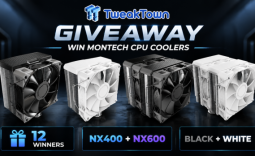 Giveaway: 12 Winners Will Score MONTECH NX400 and NX600 CPU Coolers
 GTA 6 leaks have reportedly led to a morale drop at Rockstar, with Netflix frustrated as well
 The Blood of Dawnwalker won't hit 60 FPS on any console, PS5 Pro tops out at 40 FPS
 AMD claws back ground against Intel in the CPU market, climbs to 35% share in desktop CPUs
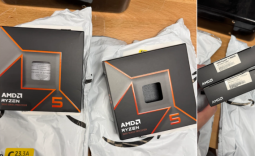 Redditor receives not one but TWO empty boxes of Ryzen 5 9600X from Amazon
 Xbox Series X25 Limited Edition Console is priced at $900, arrives November 2026
 Dave Bautista officially cast as Kratos in Amazon's 'God of War' TV Series, replaces Ryan Hurst
 Take-Two begins the hunt for GTA 6 leaker CyberLeek, subpoenas Microsoft and Discord
 PlayStation 6 handheld not expected to stay under $600, warns leaker
 AMD confirms the Radeon RX 9050 4GB will have a tiny 64-bit bus and just 16MB Infinity Cache
 Intel 'Nova-Lake-S' 28-core CPU with bLLC reportedly draws 296W at PL2
 Cooler Master MasterFan A120 Fan Review
 GIGABYTE MO27Q2A Gaming Monitor Review: 1440p, 280Hz, and QD-OLED is a winning combination
 Cooler Master V8 ACE 3DHP BLACK CPU Cooler Review
 ASUS ROG Strix XG129C Review: A $199 Gaming Monitor You Don't Play Games On
 Cooler Master HAF II 500 Mid-Tower Chassis Review
 Corsair HS35 v3 Wireless Gaming Headset Review - An Affordable Winner
 D-Link F518 5G Wi‑Fi 6 AX1800 Mobile Hotspot Review: All-Day Mobile Hotspot
 Bose Lifestyle Ultra Speaker Review - Impressively Detailed Room-Filling Sound
 MSI Z890 Gaming Plus WIFI6E Review - Z890 for under $200
 Mortal Kombat (1995) 4K Ultra HD Blu-ray Review
 Using Multiple Monitors? Change these Windows settings for a Better Experience
 Windows Sandbox is The Windows Security Feature Most People Never Use
 I ditched the Windows 11 context menu for this open-source tool, and here's why
 Windows 11 may be encrypting your drive already, and I checked where my recovery key went
 GIGABYTE's 40 Days of INFINITY celebrates 40 Years of Innovation with stunning GeForce RTX graphics cards and rewards
 I swapped File Explorer for this free file manager and finally got the layout I wanted
 How to tell if someone has been using your Windows PC without your permission
 6 Task Manager tips for troubleshooting Windows performance problems
 ASUS ROG's 20th Anniversary Line-up of Premium PC Gaming Gear has Arrived - Here's Everything You Need to Know
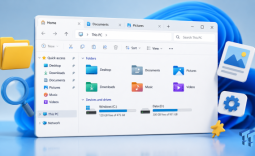 Six File Explorer tips every Windows user should know